
Heating and cooling can account for up to 40% of the average household's electricity usage in NSW. That's a significant portion of your budget going towards staying comfortable, especially when Sydney's humidity peaks or the winter chill sets in. Understanding the benefits of reverse cycle air conditioning sydney is the first step toward reclaiming control over your utility costs. If you're tired of seeing high electricity bills or dealing with inefficient gas heating, you aren't alone. Most homeowners just want a reliable, cost-effective way to manage their indoor climate without the confusion of multiple systems.
In this guide, you'll discover how reverse cycle technology provides the most energy-efficient heating and cooling for Sydney homes all year round. We'll explain how this system moves heat rather than creating it, making it a smarter investment than traditional methods. You'll also learn the functional differences between split and ducted systems and which authorised brands, such as Daikin or Mitsubishi Heavy Industries, best suit your specific property. By the end, you'll have a clear path toward lower energy bills and total home comfort with one versatile system.
Key Takeaways
- Understand the science of heat exchange and why moving heat is far more energy-efficient than creating it with traditional heaters.
- Discover the long-term benefits of reverse cycle air conditioning sydney homeowners experience, from reduced winter electricity bills to superior humidity control in summer.
- Compare the flexibility of split systems against the comprehensive comfort of ducted air conditioning to determine the best setup for your Sydney property.
- Learn how the NSW Energy Savings Scheme (ESS) may provide upfront discounts when you replace old, inefficient units with high-efficiency models.
- Gain insights into selecting authorised brands like Daikin or Mitsubishi and why professional sizing by a licensed electrician is vital for long-term performance.
How Reverse Cycle Air Conditioning Works: The Science of Heat Exchange
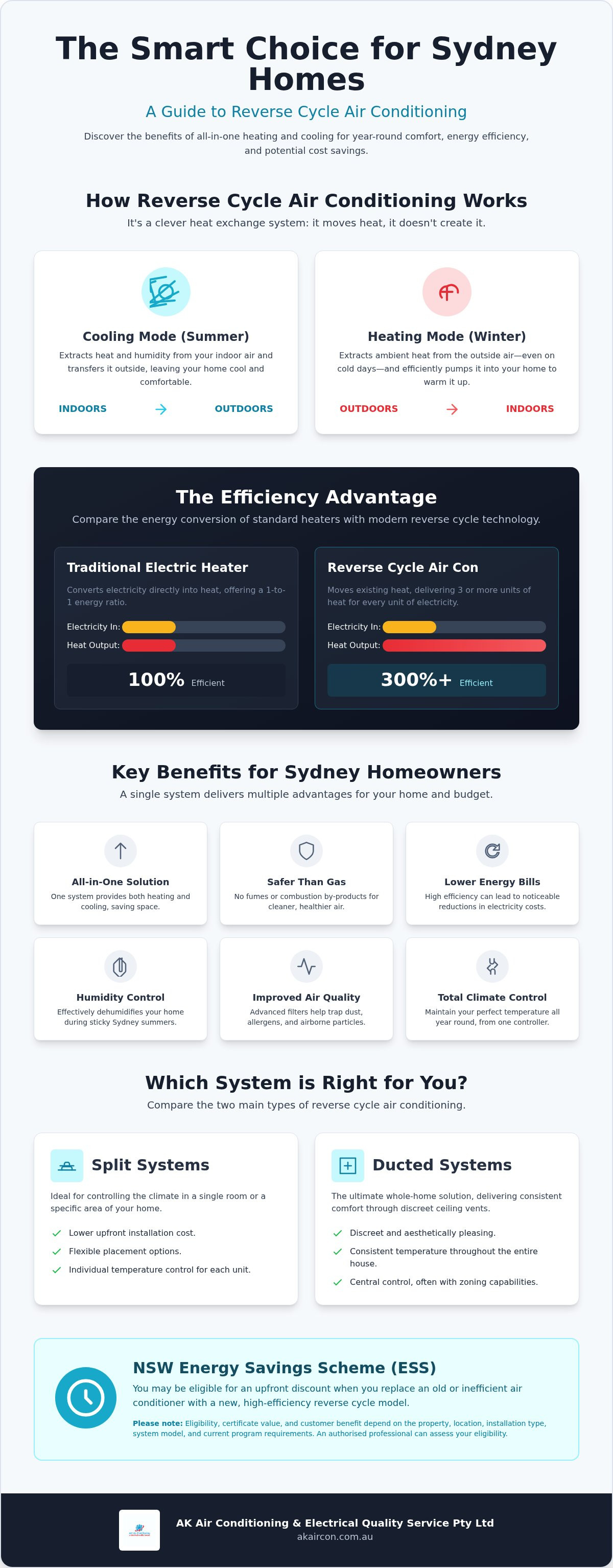
Most people think air conditioners create cold air from nothing, but they actually act as a transport system for thermal energy. Unlike traditional heaters that rely on inefficient resistance to create warmth, a reverse cycle system uses the science of heat exchange to move energy from one place to another. This technology allows a single unit to provide both cooling in summer and heating in winter by simply reversing the refrigeration cycle. It's a sophisticated process that relies on a compressor and a specialised refrigerant to absorb, transport, and release thermal energy where it's needed most.
One of the primary benefits of reverse cycle air conditioning sydney property owners enjoy is this remarkable efficiency. While a standard electric heater offers a one to one ratio of power to heat, a modern reverse cycle system can deliver significantly more thermal energy for every watt of electricity used. This makes it a much more sustainable and cost-effective choice for the local climate. For those looking to upgrade, our team at AK Air Conditioning & Electrical Quality Service can assist with air conditioning supply and installation tailored to your home's layout.
The Cooling Cycle: Beating the Sydney Humidity
Sydney's coastal location means humidity is often the biggest hurdle to comfort. During the cooling cycle, the system extracts heat from your indoor air and passes it over a cold evaporator coil. As the air cools, moisture condenses on the coil and is drained away, effectively dehumidifying your home. Modern inverter systems enhance this by running at variable speeds. They don't constantly stop and start like older models; instead, they ramp up or down to maintain a precise temperature with minimal noise and less wear on the compressor.
The Heating Cycle: Why it Beats Gas Heating
When the temperature drops, the system reverses its operation. It extracts ambient heat from the outside air, even when it feels cold, and pumps it indoors. Coefficient of Performance (COP) is the ratio of energy used to heat produced. Because the system isn't burning fuel to create heat, it's safer and cleaner than gas heaters. You don't have to worry about open flames, oxygen depletion, or the emission of combustion by-products inside your living space. It provides a consistent, healthy warmth that gas simply cannot match, all while maintaining a smaller carbon footprint.
Why Sydney Homeowners are Switching to Reverse Cycle Systems
Sydney weather is a game of two halves. While coastal suburbs deal with sticky humidity, residents in Western Sydney areas like Bankstown often face dry, scorching temperatures that can make indoor living unbearable without proper climate control. One of the primary benefits of reverse cycle air conditioning sydney residents value is the ability to manage these extremes with a single, reliable unit. Instead of cluttering your home with dusty fans for summer and inefficient bar heaters for winter, you can maintain a perfect 22 degrees all year round. This versatility is especially vital during bushfire seasons; modern systems include advanced filtration that helps scrub smoke and allergens from your indoor air, providing a level of safety that portable heaters simply cannot offer.
Energy Efficiency and Cost Savings
Many people are surprised to learn that reverse cycle systems are actually the most energy efficient way to heat a home in Australia. Unlike portable electric heaters that convert every watt of power into just one watt of heat, a reverse cycle system can deliver up to 300% efficiency or more. It achieves this by moving existing heat rather than creating it from scratch. Inverter technology further enhances this by allowing the system to run at a lower, more consistent power level once the desired temperature is reached. This prevents the heavy power spikes associated with older on/off units and can lead to a noticeable reduction in your quarterly electricity bills. For those considering a new setup, you can find more detail in our guide on Split System Aircon Installation Sydney.
Environmental Impact and Sustainability
As NSW moves toward a more sustainable future, many households are transitioning away from gas heating to reduce their reliance on fossil fuels. Reverse cycle systems are a cleaner alternative that eliminates indoor combustion and lowers your overall carbon footprint. Modern units now utilise R32 refrigerant, which has a significantly lower global warming potential than older gases. These systems also pair perfectly with Sydney solar panel installations. By running your air conditioning during the day while the sun is out, you can effectively heat or cool your home using your own generated power. If you are unsure if your current electrical board is ready for a high-efficiency upgrade, it's best to speak with a licensed professional for a proper assessment.
Choosing Your Setup: Split System vs. Ducted Reverse Cycle
Deciding between a split system and a ducted setup is one of the most important steps in securing the long-term benefits of reverse cycle air conditioning sydney property owners expect. The right choice depends on your building's structure, your budget, and how you use your living spaces. While both configurations offer the same high-efficiency heat pump technology discussed earlier, they deliver comfort in very different ways. For many in the Bankstown area, the decision often comes down to a balance between upfront costs and the desire for seamless, whole-home climate control.
Aesthetics also play a significant role in this decision. Wall-mounted split systems are visible in each room, though modern designs from brands like Daikin are increasingly sleek and unobtrusive. In contrast, ducted systems are almost entirely hidden, with only discreet ceiling or floor vents showing. This makes ducted air conditioning the preferred choice for high-end renovations or new builds where a minimalist look is a priority. Double-storey homes in Western Sydney present unique challenges, as installing ducts between floors can be complex, often making a combination of both systems a practical solution.
When a Split System is the Right Choice
Split systems are the go-to solution for apartments in suburbs like Auburn or Strathfield, where roof space is limited or non-existent. These units consist of an indoor head unit connected to an outdoor compressor. They offer a lower upfront cost and a much faster installation time compared to ducted alternatives. One of the major advantages is the inherent zoning; you only pay to cool or heat the specific room you're using. If you only need comfort in a single bedroom or a small open-plan living area, a split system aircon installation is often the most sensible path forward.
The Benefits of Ducted Reverse Cycle
For larger family homes in Revesby or Blacktown, a ducted system provides a level of uniform comfort that split systems struggle to match. A central unit, usually hidden in the roof, distributes air through a series of ducts to every room in the house. Modern ducted systems feature advanced zoning, allowing you to turn off the air in downstairs living areas while keeping the upstairs bedrooms cool at night. While the initial investment is higher, the value added to your property and the total climate control it offers are significant. For a deeper look at these systems, see our Ducted Air Conditioning Sydney Guide. If you're ready to upgrade your entire home, we specialise in ducted air conditioning installation tailored to Sydney's unique housing styles.
Energy Efficiency and NSW Government Rebates for Aircon
The NSW Government provides incentives to help households reduce energy consumption through the Energy Savings Scheme (ESS). This program is a major driver behind the benefits of reverse cycle air conditioning sydney families are now exploring to manage rising living costs. By providing an upfront discount on the installation quote, the ESS makes high efficiency technology more accessible. However, it's vital to understand that these rebates aren't a universal giveaway. They're specifically designed to encourage the replacement of old, power hungry units with modern, high efficiency reverse cycle systems.
Eligibility for these incentives is determined by several factors, including your property's postcode and the specific energy performance of the new model you choose. To access these benefits, you must work with an accredited provider. At AK Air Conditioning & Electrical Quality Service, our Bankstown based team are authorised installers for leading brands like Daikin and Mitsubishi Heavy Industries. We handle the technical side of the rebate process. This ensures the discount is applied directly to your invoice so you don't have to worry about complex paperwork or waiting for a refund from the government.
Understanding Energy Rating Labels
When shopping for a new unit, you'll see the Zoned Energy Rating Label (ZERL). This label is more detailed than older versions because it provides efficiency ratings based on three distinct climate zones across Australia. For Sydney residents, looking at the "Mixed" zone ratings provides a realistic view of how the system will perform in our local humidity and temperature ranges. Paying attention to these star ratings is essential for managing your long term running costs. Higher stars equal lower bills over the unit’s lifespan.
How to Check Your Rebate Eligibility
Determining if your property qualifies for an upgrade discount involves more than just a quick phone call. A licensed technician needs to assess your current system to verify its age and inefficiency. We also need to ensure your home's electrical infrastructure can support a new high efficiency model. This site visit is a mandatory step to provide a valid, accurate quote that reflects any applicable ESS discounts. Eligibility, certificate value, and customer benefit depend on the property, location, installation type, and system model.
For a detailed breakdown of the current requirements, visit our NSW Air Con Rebate 2026 Guide. We can help you navigate the criteria and select a system that maximises your comfort and your savings.
Professional Installation: Sizing and Brand Selection
Securing the full benefits of reverse cycle air conditioning sydney homeowners seek depends entirely on the quality of the installation. While it might be tempting to purchase a unit based on price alone, an incorrectly installed system will struggle to perform when Sydney's temperature hits 40 degrees. Professional installation isn't just about mounting a unit on a wall; it involves a complex calculation of heat loads and electrical requirements that DIY attempts simply cannot replicate. Choosing a local expert with a physical presence in the Bankstown area ensures you have ongoing support and a team that understands the specific demands of the local climate.
One of our key advantages at AK Air Conditioning & Electrical Quality Service is our dual expertise. As licensed electrical contractors, we don't just install the refrigeration components. We also ensure your home's switchboard can handle the additional load. Many older Sydney properties require a circuit upgrade to safely run a modern ducted or multi-split system. Skipping this step can lead to tripped breakers or, in worse cases, electrical fires. By handling both the air conditioning supply and installation and the necessary electrical work, we provide a seamless, safe solution for your property.
Calculating the Correct Capacity (kW)
Getting the size right is a science. If a unit is too small, it will run constantly without ever reaching the set temperature, leading to high electricity bills and early system failure. This is a common issue in Western Sydney sunrooms or open-plan living areas with high ceilings and large windows. We conduct thorough heat load assessments that account for your insulation quality, window orientation, and even the number of people typically in the room. This precision ensures your system operates at peak efficiency from day one, avoiding the stress of a unit that fails when you need it most.
Selecting a Premium Brand for Sydney Conditions
The brand you choose determines your long-term comfort and maintenance costs. We are authorised dealers for some of the most respected names in the industry, each offering unique advantages for the Sydney market:
- ActronAir: An Australian-owned brand designed specifically to handle the extreme heat of our local summers and the unique requirements of Australian building styles.
- Daikin and Mitsubishi: These brands are world leaders in inverter technology, famous for their whisper-quiet operation and exceptional reliability in residential settings.
Every home is different, and what works for a modern apartment in Bankstown might not be the best fit for a heritage house in Revesby. You can contact AK Air Conditioning & Electrical Quality Service for a personalised brand recommendation tailored to your budget and property needs.
Secure Your Year-Round Comfort with Reverse Cycle Technology
Choosing the right climate control system is an investment in your home's future value and your daily wellbeing. By understanding the benefits of reverse cycle air conditioning sydney property owners can move away from inefficient heating methods and embrace a single, high-efficiency solution that handles both humid summers and chilly winters. Whether you opt for a sleek split system or a comprehensive ducted setup, the focus should always be on professional sizing and quality components.
As licensed NSW Electrical Contractors and authorised Daikin and Mitsubishi installers, we take pride in delivering systems that are safe and reliable. Our team provides expert service across the Sydney region, including Bankstown and Parramatta, ensuring your electrical switchboard and air conditioning unit work in perfect harmony. We're here to help you navigate the technical details and any applicable energy rebates with honest, straightforward advice.
Making the switch to a more sustainable and cost-effective system shouldn't be a stressful process. With the right local partner, you can enjoy a perfectly tempered home and lower electricity bills for many years to come.
Frequently Asked Questions
Is reverse cycle air conditioning cheaper to run than gas heating in Sydney?
Reverse cycle air conditioning is generally cheaper to run than gas heating in Sydney due to its high Coefficient of Performance. While gas heaters create heat through combustion, reverse cycle systems move existing heat from outside into your home. This efficiency is one of the major benefits of reverse cycle air conditioning sydney families experience. For residents in Bankstown, switching to a modern heat pump can lead to significant reductions in winter utility bills.
What is the best temperature to set my reverse cycle aircon for efficiency?
The ideal temperature for maximum efficiency is usually between 22 and 24 degrees Celsius in summer and 18 to 20 degrees in winter. Every degree you adjust beyond these ranges can increase your system's energy consumption by approximately 10 percent. Moderate settings allow inverter technology to maintain a steady climate without overworking the compressor. This is one of the benefits of reverse cycle air conditioning sydney residents value for consistent, long term savings.
Can I get a NSW government rebate for a new reverse cycle air conditioner?
You can potentially access a NSW government rebate through the Energy Savings Scheme (ESS) when replacing an old, inefficient unit with a high efficiency model. Eligibility depends on your property location, the specific system model, and the installation type. As authorised installers, we conduct eligibility checks for residents in areas like Revesby and Panania. The discount is typically applied directly to your quote by an accredited provider, so there are no complex forms to submit.
How often should I service my reverse cycle system in Sydney?
We recommend a professional service at least once every 12 months to ensure your system remains efficient and safe. Regular maintenance helps prevent common issues like refrigerant leaks or blocked drainage, which can be costly to repair if left unchecked. Between professional visits, homeowners in suburbs like Greenacre should clean their indoor unit filters every three months. This simple task maintains airflow and prevents the build up of dust and allergens within your home.
Does reverse cycle air conditioning also purify the air?
Modern reverse cycle systems do more than just heat and cool; they also include advanced filtration to improve indoor air quality. Brands like Daikin and Mitsubishi Electric feature specialised filters that trap dust, pollen, and even some bacteria. This is a vital feature for Sydney residents during high pollen seasons or when bushfire smoke impacts air quality. These systems help circulate cleaner air throughout your home, providing a healthier environment for your family in Bankstown.
What size reverse cycle air conditioner do I need for a standard bedroom?
A standard Sydney bedroom usually requires a 2.0kW to 2.5kW split system unit. However, the correct size depends on several factors beyond floor area, including ceiling height, window orientation, and insulation quality. An undersized unit will run constantly and fail to cool effectively, while an oversized unit will cycle on and off too frequently. We provide professional sizing assessments to ensure your bedroom in Bass Hill stays perfectly comfortable without wasting energy.
How long does a typical reverse cycle installation take in Sydney?
A standard split system installation typically takes between four and six hours to complete. If you are opting for a whole home ducted system, the process is more complex and generally requires one to two full days depending on roof access and house layout. Our licensed electrical team ensures every installation in areas like Condell Park is conducted safely. We also handle any necessary switchboard upgrades during this time to prevent future electrical issues.
Is a split system or ducted system better for a two-storey Sydney home?
A ducted system is often the superior choice for a two storey Sydney home because it provides uniform temperature control across both levels. It allows you to zone specific areas; such as cooling bedrooms upstairs while leaving the downstairs living areas off at night. If your home doesn't have existing ducting or roof space between floors, a multi split system can be a more practical and cost effective alternative for properties in suburbs like Strathfield.
Important Information
This article provides general information only. Air-conditioning requirements, installation costs, energy savings and rebate eligibility vary between properties and systems. NSW program rules, certificate values and eligible models may change. Contact AK Air Conditioning & Electrical Quality Service Pty Ltd for a property-specific assessment and confirmation of current eligibility before making a purchase or installation decision.


