
Imagine walking from a freezing living room into a sweltering bedroom, all while your electricity meter spins faster than a Sydney ceiling fan in mid-January. For many families, the struggle with uneven temperatures and bulky wall units that ruin the home's aesthetic is a daily reality. It's frustrating to pay high energy bills for old, noisy units that only cool half the house at a time. A professionally designed ducted air conditioning system offers a discreet, whole-home solution that ensures every corner of your property remains perfectly tempered, regardless of how the Sydney weather behaves outside.
In this guide, you'll discover how the right system can transform your property into a year-round sanctuary of energy-efficient comfort. We'll explain how smart zoning technology allows you to customise the climate in every room, significantly lowering your running costs by only cooling the spaces you're actually using. You'll also learn about the latest R32 refrigerant standards and how a professional installation can unlock potential savings through the NSW Energy Savings Scheme (ESS) discounts. From comparing premium brands like Daikin and Mitsubishi to understanding the "one-stop" benefit of integrated electrical services, we've outlined everything you need to make an informed decision for your home's future.
Key Takeaways
- Learn how a ducted air conditioning system provides discreet, whole-home climate control while increasing the overall value of your Sydney property.
- Discover the financial benefits of smart zoning, which allows you to cool specific rooms instead of an empty house to reduce electricity bills.
- Understand how to correctly size a system for your home’s unique layout, considering factors like ceiling height and window orientation to avoid underperformance.
- Find out how to access NSW Government rebates and energy efficiency discounts when upgrading your old, inefficient air conditioning units.
- See why choosing a licensed expert for a seamless "supply and install" process is essential for maintaining your manufacturer warranty and long-term performance.
What is Ducted Air Conditioning and How Does it Work?
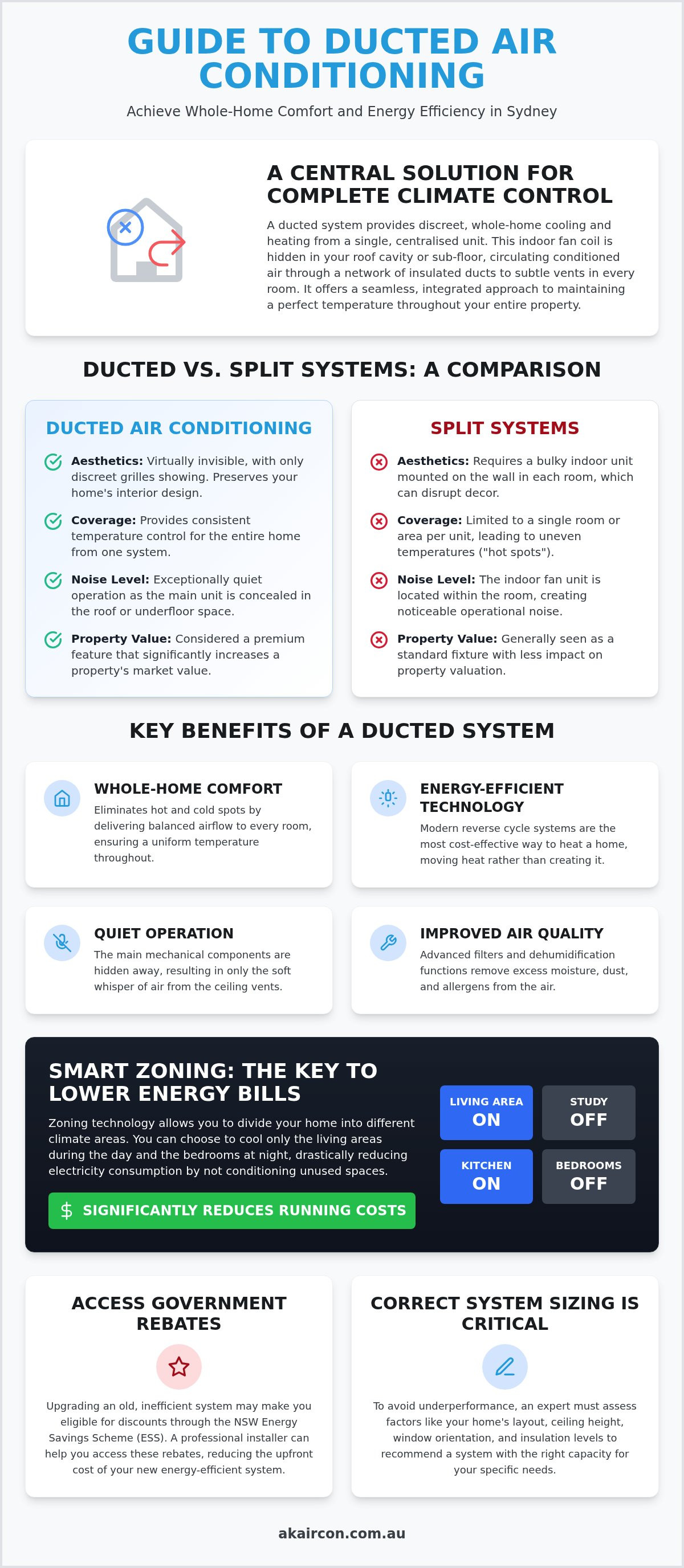
Ducted air conditioning is a comprehensive climate solution designed to manage the temperature of your entire home from a single, centralised point. Unlike individual units that only service one room, this system relies on a high-capacity fan coil unit. This internal component is usually tucked away in the roof cavity or under the floorboards, making it completely invisible to the eye. It acts as the lungs of your home, circulating air through a sophisticated network of insulated, flexible ducts.
These ducts carry conditioned air to every room in the house, where it's released through discreet vents or grilles. Outside, a powerful compressor unit handles the heavy lifting of the heat exchange process. This outdoor unit is the engine room of the system, responsible for cooling or heating the refrigerant that flows through the internal coils. Everything is managed by a central wall-mounted controller, giving you total command over your home's environment without needing a drawer full of different remotes. It's a seamless, integrated approach that ensures every corner of your property remains comfortable.
The Mechanism of Reverse Cycle Technology
Sydney's climate demands a system that can handle both humid summers and crisp winters. Reverse cycle technology is the standard for modern ducted air conditioning. In winter, the system extracts ambient heat from the outdoor air, even when it's cold, and transfers it inside. During summer, the process reverses; it pulls heat and humidity from your indoor spaces and pumps it outside. This method is widely recognised as the most cost-effective way to heat an Australian home because it moves heat rather than creating it through inefficient electric elements. It provides a consistent, dry warmth that is far more comfortable than the stuffy heat of portable heaters.
Ducted vs. Split Systems: The Main Differences
When choosing between these options, the differences often come down to aesthetics and performance. Split systems require bulky indoor units mounted on your walls, which can disrupt your interior design. In contrast, ducted systems use subtle ceiling vents that blend into the architecture. The coverage is also vastly different. A split system is excellent for a single lounge room, but a ducted setup provides consistent climate control across the whole property simultaneously. Noise levels also favour the ducted approach. Because the main fan coil unit is located in the roof or sub-floor, the operational sound is muffled. This makes it a much quieter choice for bedrooms, ensuring a restful night's sleep without the constant hum of a wall-mounted unit near your head.
The Benefits of Installing a Ducted System in Your Sydney Home
Investing in ducted air conditioning is often seen as the gold standard for Sydney residential properties. Unlike multiple split systems that clutter your exterior walls and interior décor with bulky plastic casings, a ducted setup is virtually invisible. You only see discreet ceiling grilles and a sleek wall controller that blends into your architecture. This minimalist look is a significant advantage in the competitive Sydney real estate market. Buyers often view a fully integrated climate system as a premium asset that justifies a higher property valuation and sets a home apart during a sale.
Beyond the visual appeal, the operational silence is a major drawcard for families. Because the heavy mechanical components sit high in the roof cavity or are tucked away in the sub-floor, the only sound you hear in your living areas is a soft whisper of moving air. This is complemented by advanced air filtration and dehumidification. Sydney's coastal humidity can often lead to indoor dampness and a "sticky" feeling during a February heatwave. These systems are designed to strip excess moisture from the air, creating a crisp, dry environment that is far healthier for your family. If you're planning a renovation or a new build, it's a good idea to consult with a local installation expert who can design a layout tailored to your home's specific orientation.
Whole-Home Comfort and Uniform Temperature
One of the most frustrating aspects of older cooling methods is the "hot spot" effect. You might have a freezing lounge room while the back bedrooms remain stiflingly hot. Ducted systems eliminate this by creating balanced airflow throughout every room in the house. With modern Wi-Fi controllers, you can even pre-cool your entire property while you're still at the office or commuting home. This ensures that when you step through the door on a 40-degree afternoon, your home is already a sanctuary. This consistency is just as vital during the crisp mornings of July and August, providing a gentle, uniform warmth that portable heaters simply can't match.
Energy Efficiency through Smart Design
Modern ducted air conditioning systems are built with high-efficiency inverter technology. Instead of constantly switching on and off, the compressor adjusts its speed to maintain a steady temperature, which uses significantly less power over a 24-hour period. Most new installations now use R32 refrigerant, which has a much lower Global Warming Potential (GWP) than older gases. By replacing several old, inefficient window or wall units with a single, high-performance central system, you're choosing a more sustainable path that reduces your home's overall carbon footprint while keeping your electricity bills under control.
Understanding Zoning: The Key to Lower Energy Bills
Zoning is the feature that truly unlocks the potential of a ducted air conditioning system. In simple terms, it involves dividing your home into separate climate-controlled areas that you can manage independently. Instead of the unit pumping air into every room simultaneously, you choose exactly where the airflow goes. It's a common-sense approach that addresses one of the biggest complaints about central cooling: the unnecessary cost of conditioning empty guest bedrooms, laundries, or home offices during the day. By directing air only where it's needed, you prevent massive energy waste.
The sophistication of your zoning depends on the hardware you choose. Standard zoning usually operates on a simple on/off basis; a damper in the ductwork is either fully open or completely shut. For even greater efficiency, linear or variable zoning allows for precise airflow adjustment. This means you can set a room to receive 25% or 50% airflow, preventing that "ice box" feeling in smaller rooms while maintaining a gentle breeze in larger living areas. Integrating smart controllers like AirTouch or specialised brand-specific systems allows the unit to communicate with these dampers more effectively, optimising the compressor's output to match the exact demand of the active zones.
Common Zoning Configurations for Families
Most Sydney families benefit from a "Day/Night" split. During the day, the system focuses on the kitchen, lounge, and study. As evening approaches, you can simply switch the airflow to the bedrooms. This targeted approach can reduce your running costs by up to 50% compared to running a non-zoned system at full capacity. For larger multi-storey homes, individual room control is often the best choice. This allows every family member to set their own preferred temperature, ending the "thermostat wars" and ensuring everyone stays comfortable without overworking the system.
Smart Controllers and Wi-Fi Integration
The real power of modern zoning lies in smartphone integration. Most premium systems allow you to control your ducted air conditioning via an app while you're still at the office or picking up the kids. You can set detailed schedules to match your weekly routine, ensuring the house is cool exactly when you need it to be. Many smart controllers also provide real-time data on your energy usage. This transparency helps you identify which zones are costing the most to run, allowing you to make small adjustments that lead to significant long-term savings on your quarterly electricity bills.
How to Choose and Size the Right System for Your Property
Choosing the right capacity for your ducted air conditioning isn't a simple calculation of floor space. While many online calculators suggest a basic kilowatt (kW) per square metre rule, this often leads to undersized systems that struggle during a Sydney heatwave. To get it right, you must consider the total volume of the air, not just the floor area. High ceilings in older Victorian terraces or modern open-plan designs require significantly more cooling power. Window orientation is another critical factor; a north-facing lounge room with large glass doors will absorb far more heat than a shaded bedroom, demanding a system with enough "grunt" to compensate for that thermal load.
Getting the sizing wrong has two consequences. An undersized unit will run constantly at maximum speed, sky-rocketing your electricity bills and wearing out the compressor prematurely. Conversely, an oversized unit will "short-cycle," turning on and off too frequently, which fails to remove humidity properly. If you're unsure about which unit will fit your ceiling cavity or meet your cooling needs, you can request a professional site assessment to get an accurate recommendation based on your home's unique layout.
Roof Space and Structural Requirements
The physical installation depends heavily on your roof's architecture. A standard indoor fan coil unit typically requires a clearance of at least 600mm to 800mm in the ceiling cavity. For Sydney homes with tight roof lines or flat roofs, we often recommend slimline ducted units that are designed to fit into narrow spaces. Before any work begins, a structural check is essential. The outdoor compressor unit is heavy and needs a stable, level base, usually a concrete slab or reinforced wall brackets. We also plan the ducting runs to ensure they don't interfere with structural beams while maintaining maximum airflow efficiency.
Selecting the Best Brand for Your Needs
The brand you choose should match how you intend to use the system. Every property is different, but three manufacturers consistently lead the Australian market:
- ActronAir: Proudly Australian-owned and designed. Their systems are specifically engineered to keep performing even when Sydney temperatures hit 46°C, whereas some imported brands may struggle or shut down.
- Daikin: A global leader known for its advanced air purification and "Night Quiet" modes. They are also a top choice for retrofitting older homes that previously used R22 refrigerant.
- Mitsubishi Heavy Industries: Highly regarded by technicians for their sheer reliability and build quality. These units are often the quietest on the market, making them ideal for high-density Sydney suburbs where noise regulations are strict.
Professional Installation and NSW Government Rebates
Professional installation is the final, most critical step in ensuring your system performs at its peak. While we've discussed the technical advantages of modern hardware, those benefits are only realised when the refrigeration and electrical components are integrated perfectly. At AK Air Conditioning & Electrical Quality Service, we provide a seamless "one-stop" installation because our team consists of both licensed electricians and AC specialists. This eliminates the need for you to manage multiple contractors or worry about trade coordination. Choosing a certified professional is also a mandatory requirement for maintaining your manufacturer's warranty. Most premium brands will only honour a parts and labour guarantee if the system has been commissioned by a technician holding a valid Australian Refrigeration Council (ARC) licence.
Accessing the NSW Energy Savings Scheme (ESS)
Upgrading an old, inefficient system is now more affordable thanks to the NSW Government's Energy Savings Scheme (ESS). This program provides an upfront discount on the supply and installation of high-efficiency air conditioning, meaning the savings are applied directly to your quote rather than being a post-purchase cash rebate. If you're currently running a system that's over 10 years old, the ROI on a replacement is significant. You'll benefit from lower electricity bills and a much smaller carbon footprint. AK Air Conditioning & Electrical Quality Service handles the entire rebate eligibility check as part of our initial consultation, ensuring you don't miss out on these government-backed incentives when installing your new ducted air conditioning.
The Installation Process: What to Expect
A complete ducted air conditioning installation typically takes between one and two days, depending on your home's layout and roof access. On the first day, we focus on the "rough-in" phase, which includes positioning the indoor fan coil unit and carefully routing the insulated ductwork to your chosen zones. We pride ourselves on a tidy workspace, using drop sheets and ensuring your home remains clean throughout the process. Once the outdoor compressor is mounted and the electrical wiring is finalised, we move into the commissioning stage. This involves balancing the airflow in every room and providing you with a full demonstration of your new smart controller. To see how much you could save on your upgrade, Book your free Sydney site inspection and rebate check today!
To keep your system running efficiently for years to come, simple owner maintenance is essential. We recommend checking your return air filters every three months; a blocked filter can force your system to work significantly harder, leading to higher power consumption and unnecessary wear. Additionally, ensure the outdoor unit remains clear of garden debris and leaves. These small efforts, paired with a professional annual service, will ensure your home remains a perfect sanctuary through every Sydney season.
Transform Your Sydney Home with Smart Climate Control
Investing in a ducted air conditioning system is a strategic move that enhances your family's daily comfort and increases your property's market value. By moving away from noisy, inefficient wall units, you gain a discreet solution that provides uniform temperatures across every room. The addition of smart zoning technology ensures you only cool the spaces you're using, which is the most effective way to keep your electricity bills manageable during a Sydney summer. Choosing premium brands like Daikin, ActronAir, or Mitsubishi ensures your system has the reliability to perform when the mercury hits its peak.
The path to a more efficient home is straightforward when you partner with the right experts. Our team of fully licensed Sydney electricians and AC technicians manages the entire "one-stop" installation process, including all structural and electrical requirements. We also take the stress out of the paperwork by assisting with your NSW Government energy-saving rebate eligibility check, ensuring you receive the maximum upfront discount available for your upgrade. Don't spend another season struggling with hot spots or high running costs.
Get a Free Quote and Rebate Eligibility Check for Your Sydney Home
Take control of your indoor environment today and enjoy the peace of mind that comes with a professionally installed, high-efficiency climate solution. We look forward to helping you create a year-round sanctuary for your family.
Frequently Asked Questions
How much does ducted air conditioning cost to run in Sydney?
Running costs for ducted air conditioning in Sydney vary based on the unit's kW rating and your zoning habits. You'll likely spend between A$1.50 and A$3.50 per hour for whole-home climate control. Using smart zoning can cut this cost by up to half by only cooling active living spaces. It's often more economical than running multiple old split systems that lack modern inverter efficiency.
Can I install ducted air conditioning in an existing two-storey home?
We can certainly install these systems in existing two-storey Sydney properties. The process involves running vertical duct "droppers" through wardrobes or internal void spaces to reach the ground floor. It's a common retrofit that requires a bit more planning than a single-storey house but produces the same seamless result. A quick site inspection helps us identify the best path for the ducting without disrupting your home's structure.
How often should I have my ducted air conditioning serviced?
You should book a professional service at least once every 12 months. This annual check ensures your refrigerant levels are correct and that your electrical components are functioning safely. It's the most reliable way to prevent a breakdown during the peak of summer. Regular maintenance also keeps your filters clean, which improves air quality and prevents your electricity bills from creeping up due to restricted airflow.
Is ducted air conditioning better than having several split systems?
Ducted systems are usually the superior choice for whole-home comfort and property value. Unlike split systems that require bulky units in every room, ducted air conditioning is virtually invisible and operates much more quietly. It provides a uniform temperature throughout the house rather than creating "ice boxes" in some rooms and hot spots in others. It's a more integrated, long-term solution for modern Australian living.
What is the best brand of ducted air conditioning for the Sydney climate?
ActronAir is often the best choice for Sydney because their systems are Australian-designed to handle local heatwaves up to 50°C. Many imported units start to lose efficiency once the temperature climbs past 40°C. Daikin and Mitsubishi Electric are also fantastic premium options if you prioritise advanced air purification or exceptionally quiet operation. We'll help you compare these brands based on your home's specific insulation and window orientation.
How long does a ducted air conditioning installation take?
A standard installation usually takes between one and two days to complete. Our technicians spend the first day positioning the indoor unit and running the flexible ductwork to your ceiling vents. The second day focuses on the outdoor compressor, electrical connections, and system commissioning. We don't consider the job finished until we've tested every zone and shown you how to use your new smart wall controller.
Are there government rebates available for ducted air conditioning in NSW?
There are significant upfront discounts available through the NSW Energy Savings Scheme (ESS) for energy-efficient upgrades. These incentives are applied directly to your quote by the installer rather than being a post-purchase cash rebate. Eligibility is based on the efficiency rating of the new system you're installing. We can perform a quick check to see if your property qualifies for these government-backed savings before you commit to the work.
What happens if I don’t have enough roof space for a ducted system?
If your roof cavity is tight, we can use "slimline" units that are designed for narrow spaces. These low-profile systems provide the same cooling power as standard units but require much less vertical clearance. If your home has a flat roof with no cavity at all, we can sometimes install the unit in a bulkhead or even under the floorboards. There's almost always a solution once we've assessed the property's structural layout.
Important Information
This article provides general information only. Air-conditioning requirements, installation costs, energy savings and rebate eligibility vary between properties and systems. NSW program rules, certificate values and eligible models may change. Contact AK Air Conditioning & Electrical Quality Service Pty Ltd for a property-specific assessment and confirmation of current eligibility before making a purchase or installation decision.


