
A higher star rating doesn’t automatically mean lower electricity use in your home. If you’ve searched “air conditioner efficiency ratings explained australia”, you’re likely trying to make sense of labels that look simple but don’t tell the whole story.
More stars can indicate better efficiency, but the result also depends on the system’s capacity, your local climate and whether the unit is selected and installed to suit the space. In Australia, the Zoned Energy Rating Label (ZERL) shows separate heating and cooling ratings, with information for different climate zones. For Sydney, including Bankstown, the Average/Mixed zone is the relevant point of comparison.
This guide explains what the label’s star ratings, capacity and estimated annual energy use can tell you, and what they can’t predict about your household’s actual consumption. You’ll learn how to compare systems of a similar size in the right climate zone, consider factors that affect real-world performance and prepare useful questions for an installer. A site-specific assessment can help connect the label to the needs of your home or business.
Key Takeaways
- Use an efficiency rating to compare tested products, not as a guarantee of your household’s energy use.
- Check the Australian energy label for heating and cooling performance in the climate zone relevant to your location.
- Compare systems with similar capacity and intended use to make a fair, useful comparison.
- Consider Sydney weather, room exposure and how you use the space when assessing likely real-world performance.
- Use this guide to air conditioner efficiency ratings explained australia to prepare practical questions about system suitability and installation.
What Australian air conditioner efficiency ratings tell you
An air conditioner’s efficiency rating helps you compare products. It doesn’t predict exactly how much electricity your household will use. In plain language, efficiency is how much useful heating or cooling a system produces relative to the electricity it takes to run. A higher rating can help identify a more efficient option among comparable systems, but it isn’t a promise of a particular bill or saving.
In Australia, the Zoned Energy Rating Label (ZERL) provides information to compare a model’s heating and cooling performance across climate zones. Its purpose is to make product comparisons easier, as outlined in this overview of the Energy Rating Label. For Sydney, the Average/Mixed climate zone is the relevant one to check.
This video discusses SEER, a rating term used in some markets. Australian labels use a different system, so treat the video as general context rather than a guide to reading a ZERL.
What does an air conditioner star rating mean in Australia?
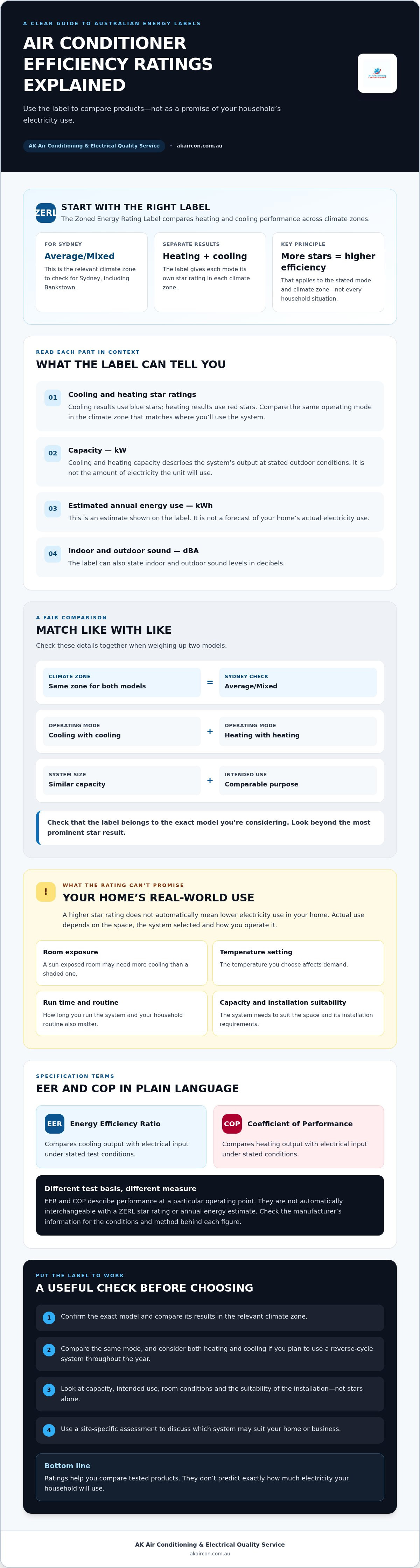
The ZERL displays separate star ratings for cooling and heating in each of its three climate zones. More stars indicate higher efficiency for that mode and zone. When comparing models, check the rating for the climate where you’ll use the system, not just the highest star result shown on the label. Heating and cooling ratings are separate, so consider both if you plan to use a reverse-cycle system throughout the year.
Why an efficiency label is useful, but not a bill estimate
The label provides a consistent basis for comparing products, but your actual use depends on the space and how you operate the system. A sun-exposed room may need more cooling than a shaded one. Your chosen temperature, run time and household routine also affect demand. Capacity and installation suitability matter as well. That’s why “air conditioner efficiency ratings explained australia” is about using the label as a guide, not treating it as a forecast of household electricity use.
Use the rating to narrow your options, then consider the room, intended use and installation requirements. A site-specific assessment can help you discuss which system may suit the space.
How to read Australian air conditioner efficiency labels
Start by confirming that the label belongs to the exact model you’re considering. The Australian Zoned Energy Rating Label (ZERL) presents efficiency information by climate zone, so look beyond the most prominent star result. For Sydney homes, compare the figures in the Average/Mixed zone. A product listing or manufacturer’s specifications may provide further technical details, but check that they refer to the same model and operating mode.
Understanding cooling and heating information on a label
The ZERL shows separate star ratings for cooling and heating across its climate zones. Cooling results use blue stars and heating results use red stars. The label can also state cooling and heating capacity in kilowatts (kW), estimated annual energy use in kilowatt-hours (kWh), and indoor and outdoor sound levels in decibels (dBA).
Read each figure in the context of its mode and climate zone. For example, compare one model’s cooling rating with another model’s cooling rating in the same zone, rather than comparing a heating result with a cooling result. Capacity gives you another useful point of comparison: it describes heating or cooling output at stated outdoor conditions, not the electricity the unit will use.
What EER, COP and seasonal ratings describe
You may see EER or COP in a product specification. EER, or Energy Efficiency Ratio, compares cooling output with electrical input under stated test conditions. COP, or Coefficient of Performance, compares heating output with electrical input under stated conditions. These figures describe performance at a particular operating point. They aren’t automatically interchangeable with a ZERL star rating or annual energy estimate.
A rating is only meaningful alongside its test basis. A single-condition EER or COP figure and a climate-based seasonal result describe performance in different ways. Check the manufacturer’s information for the conditions and method behind each figure before using it to compare models.
As you read the label, check these details together:
- Model: Confirm the label and product listing match the unit you’re assessing.
- Mode and zone: Match cooling with cooling, heating with heating, and use the relevant climate zone.
- Capacity and annual use: Consider the stated output alongside estimated energy consumption, rather than relying on stars alone.
- Other operating information: Review noise figures and manufacturer notes that may matter for your space.
Label layouts and available information can vary by product, and requirements may change. Check the current label and manufacturer specifications before deciding. If you’re weighing up options for a Sydney property, a site-specific air conditioning assessment can help you discuss suitable capacity and installation needs alongside the rating.
How to compare air conditioner efficiency ratings fairly
A fair comparison starts before you look at the stars. First decide what type of system suits the space, then compare models with similar capacity and intended use. A rating describes efficiency under its rating basis, while capacity describes heating or cooling output. Neither figure answers both questions, and a high star result alone can’t identify the right system for your home.
Match system capacity and type before comparing stars
Assess the room or home and how you’ll use the system before comparing models. A system intended for one room isn’t a direct match for a whole-home ducted system. Multi-split systems serve a different setup, with multiple indoor units connected to an outdoor unit. Compare systems of the same type wherever possible, rather than treating their ratings as interchangeable.
Capacity suitability and efficiency are separate checks. A suitable output doesn’t automatically mean a model is more efficient, and a strong rating doesn’t confirm that the system suits the space. If you’re considering a single-room option, this guide to split system air conditioning installation can help you understand the installation context.
Compare ratings under equivalent conditions
Use the same operating mode, climate zone and rating basis for each model. For Sydney, compare the relevant Average/Mixed zone figures. Don’t put a cooling result beside a heating result, or compare a seasonal label figure with a single-condition specification as if they were the same measure. Check current manufacturer documentation against the exact model label, as available information and label layouts can vary.
Use a simple comparison sheet like this to keep the details consistent:
| What to compare | What to record |
|---|---|
| System type | Split, multi-split or ducted. Compare like with like. |
| Capacity | Stated heating and cooling output in kW; check that the models are in a similar capacity range. |
| Rating basis | ZERL rating or another stated measure, such as EER or COP. Note the test or rating context provided. |
| Operating mode and climate zone | Match cooling with cooling, heating with heating, and use the same relevant zone. |
| Model documentation | Confirm the model number and details against current manufacturer information. |
This framework makes “air conditioner efficiency ratings explained australia” practical: it helps you spot when two headline figures aren’t genuinely comparable. The table can narrow your options, but it can’t account for every room condition or confirm installation suitability. Treat it as a shortlist tool, then discuss the space and intended use as part of a site-specific assessment.
What can change real-world air conditioner efficiency in Sydney?
A model’s published rating gives you a comparison point, but your home’s conditions and the way you run the system shape its actual energy use. Sydney’s hot summer days and cooler winter periods can create different heating and cooling demands. The rating itself doesn’t change with the weather or your routine, but the amount of work the system needs to do can.
Room conditions and day-to-day operation
Before choosing a system, consider the space it needs to condition. Room size, ceiling height, insulation, windows and direct sun exposure all affect how quickly the room gains or loses heat. Occupancy and heat from appliances can also add to the load. A sunny living room may need a different approach from a smaller, shaded bedroom, even if both are in the same home.
Your settings matter too. A very low cooling target or high heating target can ask the system to work harder, while longer operating hours generally mean more time using electricity. Think about when the room is occupied and which areas need conditioning. These practical details help explain why two households with the same model may use it differently, without changing its published label rating.
Why installation and system condition matter
Choosing a capacity that suits the space is a separate decision from comparing efficiency ratings. An assessment should consider the room or home, intended use and system type. Placement also deserves attention: the indoor unit needs to serve the area effectively, and the outdoor unit needs a suitable location. A system that isn’t selected or installed to suit the site may not operate as intended.
Regular maintenance is another part of looking after system operation. Dust or an issue that needs attention can affect how the unit runs, so follow the manufacturer’s care instructions and seek qualified help when servicing or repairs are needed. Maintenance doesn’t rewrite the product’s rating, and it can’t guarantee a particular level of efficiency.
For reverse-cycle systems, consider both your household’s cooling and heating needs, rather than judging suitability from one mode alone. That practical context is central to air conditioner efficiency ratings explained australia: the label helps with product comparison, while a site-specific assessment helps connect that comparison to your space.
AK Air Conditioning & Electrical Quality Service supplies and installs split, multi-split and ducted systems across Sydney. Its local areas include Bankstown, Yagoona, Greenacre, Punchbowl, Bass Hill, Condell Park, Revesby, Padstow, Panania, Chester Hill, Auburn, Parramatta, Liverpool, Fairfield, Strathfield, Campsie, Blacktown, Seven Hills and Lalor. The business also provides air conditioning repairs and servicing.
Choose an efficient air conditioner with an informed assessment
Use the rating label to shortlist options, then check whether each system suits the space and how you plan to use it. A practical decision follows three steps: identify the rooms you want to condition, compare suitable models using equivalent rating information, then review the installation requirements. This keeps a high star result in perspective. It’s one useful measure, not a substitute for checking system suitability.
A practical checklist before selecting a system
Before discussing options, jot down a few details about the property. Clear notes make it easier to assess the system type and capacity that may suit your needs.
- Rooms and areas: Record which rooms need heating or cooling, and whether you want to condition one area or several.
- Expected use: Note when the spaces are usually occupied and whether you expect to use heating, cooling or both.
- Property constraints: Mention relevant details such as room layout, window exposure and possible locations for indoor and outdoor units.
- Model comparisons: Compare current labels for systems with suitable capacity and intended use. Match the operating mode, climate zone and rating basis.
- Installer questions: Ask what information supports the proposed system type and capacity, and what site conditions may affect placement.
Check the model number against current manufacturer information before making a choice. If the label and product listing show different details, confirm which information applies to the exact model being considered.
When to speak with an air-conditioning installer
Get professional input if the highest-rated option may not suit the room, or if the property presents installation constraints. An onsite assessment can consider the layout, intended use and available system options together. That gives you a clearer basis for weighing a label against practical requirements.
AK Air Conditioning & Electrical Quality Service supplies and installs split, multi-split and ducted systems across Sydney, including Bankstown, Yagoona, Greenacre, Punchbowl, Bass Hill, Condell Park, Revesby, Padstow, Panania, Chester Hill, Auburn, Parramatta, Liverpool, Fairfield, Strathfield, Campsie, Blacktown, Seven Hills and Lalor. Review the business’s air conditioning supply and installation information before discussing your project.
For readers searching “air conditioner efficiency ratings explained australia”, the next step is to bring the label comparison together with the needs of the property. Ask questions, confirm current model information and discuss installation suitability before choosing a system.
Make your next air conditioning choice with confidence
The key to air conditioner efficiency ratings explained australia is knowing what the label can and can’t tell you. Use the stars and other rating details to compare suitable models on a like-for-like basis, but don’t treat them as a forecast of your household’s electricity use. Capacity, room conditions, settings and installation all shape how a system performs in practice.
A considered choice starts with the space you want to condition, how you’ll use it and which system type may suit. AK Air Conditioning & Electrical Quality Service supplies and installs split, multi-split and ducted systems across Sydney, including Bankstown and surrounding local areas. An assessment can help you discuss your property and system options together.
With the right questions and a clear comparison, you can take the next step towards a system that better fits your space and needs.
Frequently Asked Questions
What is a good energy efficiency rating for an air conditioner in Australia?
A good rating is one that compares well with similar systems and suits your climate and intended use. On Australia’s Zoned Energy Rating Label, more stars indicate higher efficiency for that heating or cooling mode in the stated climate zone. Don’t choose by stars alone: check capacity, annual energy use and whether the system suits your space. For Bankstown and Sydney homes, refer to the Average/Mixed zone.
How do I read an air conditioner energy rating label in Australia?
Check the exact model, then read its separate heating and cooling star ratings for the relevant climate zone. The Zoned Energy Rating Label also displays capacity in kilowatts, estimated annual energy use in kilowatt-hours and indoor and outdoor noise levels in decibels. Match the operating mode when comparing models, and check current manufacturer information to confirm the details apply to the product you’re considering.
What is the difference between EER and COP for air conditioners?
EER, or Energy Efficiency Ratio, compares cooling output with electrical input under stated test conditions. COP, or Coefficient of Performance, compares heating output with electrical input under stated conditions. They describe performance at particular test points, so don’t assume they’re interchangeable with a Zoned Energy Rating Label star rating or annual energy estimate. Check the product documentation for the measure, mode and conditions behind each figure.
Does a higher star rating mean an air conditioner will use less electricity?
A higher star rating indicates greater tested efficiency for the relevant mode and climate zone, but it doesn’t guarantee lower electricity use in every home. Actual consumption also depends on system capacity, room conditions, temperature settings and operating hours. For example, a system running for long periods in a sun-exposed room may use more electricity than one used briefly in a shaded space, even if their ratings are similar.
Are air conditioner efficiency ratings different across Australian climate zones?
Yes. The Zoned Energy Rating Label shows separate heating and cooling ratings for three climate zones, reflecting that operating conditions differ by location. Sydney, including Bankstown, is in the Average/Mixed zone. When comparing products for a local home, check the figures for that zone and match heating with heating or cooling with cooling. A different zone’s result may not be the most relevant comparison for your situation.
Can I compare a split system and a ducted system by their star ratings?
Star ratings can offer a starting point, but a split system and a ducted system aren’t necessarily a like-for-like comparison. They serve different layouts and coverage needs, and their capacities and product information may differ. First decide which system type suits the property, then compare relevant ratings among suitable options of that type. Check current manufacturer documentation for each model rather than choosing by the headline star result alone.
Does air conditioner installation affect efficiency?
Yes. System selection and installation suitability can affect how well a unit operates in its intended space, though installation doesn’t change the model’s published rating. Capacity, indoor and outdoor unit placement and the property layout all deserve consideration. AK Air Conditioning & Electrical Quality Service supplies and installs split, multi-split and ducted systems across Sydney, including Bankstown, Yagoona, Greenacre, Punchbowl, Bass Hill, Condell Park, Revesby, Padstow, Panania, Chester Hill, Auburn, Parramatta, Liverpool, Fairfield, Strathfield, Campsie, Blacktown, Seven Hills and Lalor. A site-specific assessment can help you discuss suitable options.
Important Information
This article provides general information only. Air-conditioning requirements, installation costs, energy savings and rebate eligibility vary between properties and systems. NSW program rules, certificate values and eligible models may change. Contact AK Air Conditioning & Electrical Quality Service Pty Ltd for a property-specific assessment and confirmation of current eligibility before making a purchase or installation decision.


