
A good plan for air conditioning installation Campbelltown homeowners are considering starts with the home, not the unit. Choosing a system before thinking about your rooms, layout and daily routines can leave you with a setup that doesn’t suit the way you live.
If you’re planning an upgrade in Campbelltown, start by deciding which areas need better comfort and how you use them. A split system may suit a frequently used living area, while a multi-split or ducted system may better suit several rooms. You’ll also want to understand the installation scope, licensing and compliance, and whether your project may meet current rebate requirements.
AK Air Conditioning & Electrical Quality Service is based in the Bankstown area and works across nearby suburbs including Yagoona, Greenacre, Punchbowl, Bass Hill, Condell Park, Revesby, Padstow, Panania, Chester Hill, Auburn, Parramatta, Liverpool, Fairfield, Strathfield, Campsie, Blacktown, Seven Hills and Lalor. This guide explains how to compare system types, prepare for an assessment and review an installation proposal, whether you’re planning a project in Campbelltown or elsewhere in the region.
Key Takeaways
- For air conditioning installation Campbelltown, first identify which rooms need conditioning and when your household uses them.
- Compare a split system for a defined area with multi-split or ducted options for several spaces.
- Room layout, unit placement and installation requirements all affect which setup suits your property.
- Prepare for a clear process: discuss your needs, assess the property, review the proposal and agree on the installation plan.
- NSW rebate eligibility depends on the current program rules and your property and system details. Consider it separately from licensing and compliance.
Planning air conditioning installation in Campbelltown around your property
Room comfort, existing equipment and the shape of your property all affect an air conditioning plan. If you’re planning an installation in Campbelltown, identify where you need better comfort before choosing a unit. A system for one frequently used living area has different requirements from a setup intended to serve bedrooms and shared spaces.
Think about how you use each space throughout the day. A bedroom used overnight, a living room where the household gathers and a home office may have different priorities. If you’re replacing equipment, note which areas it currently serves and what you’d like to improve. Sharing these details helps an installer understand what you need from the new system.
Which air conditioning system suits your Campbelltown property?
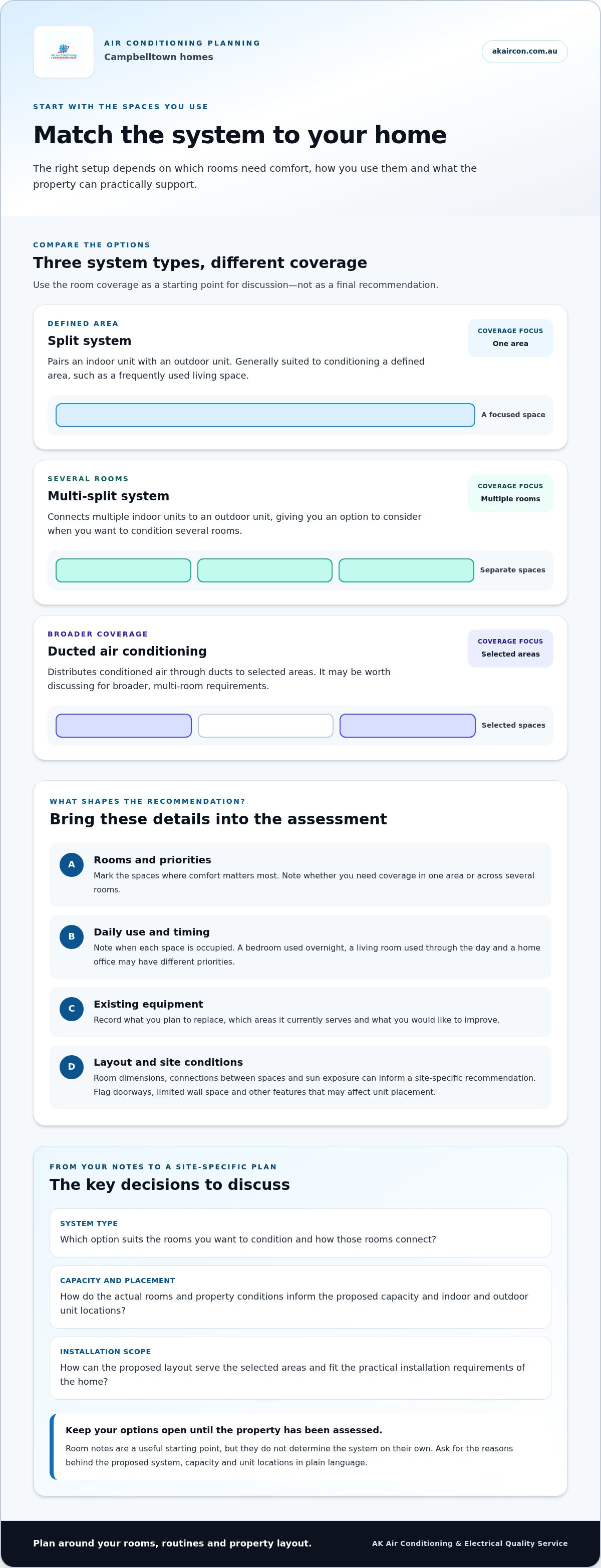
A split system pairs an indoor unit with an outdoor unit and is generally suited to conditioning a defined area. A multi-split system connects multiple indoor units to an outdoor unit, giving you an option for several rooms. Ducted air conditioning distributes conditioned air through ducts to selected areas, making it an option to consider for broader, multi-room requirements.
Compare the options against the rooms you want to condition, the way those rooms connect and the installation requirements of your home. For a plain-language overview of system types and how air conditioning works, see Understanding Air Conditioning Systems. If you’re weighing up a single-room option, the split system installation guide explains that setup in more detail.
What should you consider before choosing a system?
Make a short list of the rooms you want conditioned and how each one is used. Note whether you need coverage in one area or across several rooms, and record any existing equipment you plan to replace. Room dimensions, connections between spaces and exposure to sun can all inform a site-specific recommendation.
- Mark the rooms where comfort matters most.
- Note when each space is typically occupied.
- Record existing equipment and the areas it serves.
- Sketch the layout and flag features that may affect unit placement, such as doorways or limited wall space.
These notes give an assessment a useful starting point, but they don’t determine the system on their own. An installer can consider room use alongside the property layout and practical placement requirements before recommending an approach. Indoor and outdoor unit locations need to work with the site, not just look convenient on a basic floor plan.
Keep your options open until the property has been assessed. A single room may be your starting point, while future plans or the way rooms connect may make a multi-room solution worth discussing. Sharing both your current priorities and any planned changes helps shape a proposal around how you actually use the home.
How an installer assesses system type, placement and installation needs
A useful assessment connects the comfort you want in each room with what the property can practically support. For an installation in Campbelltown, an installer considers the areas to be conditioned, how you use them, existing equipment and likely installation requirements. This makes the recommendation specific to the site rather than relying on room count alone.
Before an assessment, note which rooms feel uncomfortable, when they’re occupied and whether existing equipment is staying or being replaced. The installer can discuss suitable options and assess the conditions that influence the proposed system, its capacity and placement.
How room use and layout affect the recommendation
Start with your priorities, not assumptions. A room used for sleeping may need a different approach from a living area occupied throughout the day. Tell the installer which spaces matter most and when people are usually in them. The floor plan also matters: open connections between rooms and enclosed spaces can affect how a system serves the areas you want conditioned.
Share any relevant changes you’re planning, such as using a spare room as a home office. This helps the assessment reflect how the property will function, not just how it’s used today. The installer can recommend a system type and capacity after considering the actual rooms and site conditions, rather than relying on a generic room-size rule.
Planning indoor and outdoor unit locations
Placement is part of the design, not a last-minute detail. During an assessment, the installer considers practical locations for indoor and outdoor units, how the system can be installed within the property, and how those choices fit your preferred room coverage. The final plan depends on the layout and installation requirements, so a suitable location in one home may not work in another.
For a whole-home approach, ducted air conditioning installation is one option to discuss. The installer can consider how ducts may serve selected areas and how the proposed layout fits the property. This conversation can clarify the scope before you decide whether a central system suits your needs.
Installation recommendations should reflect the rooms you use and the practical conditions of your property.
Ask the installer to explain why the proposed system, capacity and unit locations suit your requirements. You should be able to understand the key decisions without needing to interpret technical specifications alone. For general HVAC&R industry information, AIRAH shares industry resources for heating, ventilation, air conditioning and refrigeration.
Before the assessment, make a simple floor plan, note existing equipment and list any questions about unit locations. To discuss installation requirements in Bankstown and surrounding suburbs, contact AK about an installation assessment. Your notes give the conversation a practical starting point, while the property assessment guides the recommendation.
What happens during air conditioning installation in Campbelltown?
A well-planned air conditioning installation Campbelltown homeowners can feel confident about starts with a clear understanding of the home and the people using it. The process moves from discussing your requirements to assessing the property, reviewing a proposal, completing the installation and explaining how to operate the system. The work depends on the system selected and the conditions at the property, so the plan is specific to your project.
Here’s the usual sequence:
- Discuss your requirements. Explain which rooms you want conditioned, how you use them and whether you’re replacing existing equipment.
- Assess the property. The installer considers the areas involved and practical installation requirements, including suitable unit locations.
- Review the proposal. Check the proposed system, work scope and placement plan. Raise questions or clarify details before agreeing to proceed.
- Complete the installation. The installer carries out the work according to the agreed system and scope.
- Go through the operation. Before handover, the installer explains the system’s basic controls and operation so you know how to use it.
This sequence gives you clear decision points. Reviewing the proposal before installation helps you understand what the agreed work covers. A project involving one split system may have a different scope from a multi-room or ducted installation, and site conditions can also affect the work involved.
What to prepare before the site assessment
A little preparation helps the assessment focus on how you want the system to work in your home. List the rooms to be conditioned and describe how each is used, such as for sleeping, working or shared family time. Note any existing air conditioning equipment, where it is located and any concerns you’ve noticed.
- List priority rooms and when they’re usually occupied.
- Note existing equipment and the areas it serves.
- Share access, parking or scheduling requirements when arranging the assessment.
- Make sure the installer can access relevant rooms and existing equipment on the day.
If you rent or manage the property, organise access with the relevant people beforehand. Making the rooms involved accessible helps the installer assess the areas included in your plans.
What to expect on installation day
On the day, the installer follows the agreed system plan and work scope. Make sure the agreed work areas and existing equipment are accessible. If anything about the planned work or the areas involved is unclear, raise it with the installer before work begins so you understand what to expect.
Once the installation is complete, the installer explains the system’s basic operation. Ask how to use the controls and what to expect during normal operation. This handover gives you a practical starting point for using your new system and closes the loop from the initial assessment to the finished installation.
Licensing, compliance and NSW rebate eligibility for Campbelltown installations
Before agreeing to an installation, understand who will carry out the work and what the proposal includes. For air conditioning installation Campbelltown homeowners can look for clear information about licensing, compliance and any rebate eligibility being considered. These are separate considerations: a suitable system and installation plan don’t automatically mean a property qualifies for a government incentive.
AK provides licensed and compliant installation through licensed and insured technicians, and is ARC-licensed. Check that the proposal sets out the work scope for your property and explains how the installation will be carried out.
What licensed and compliant installation means for the customer
Air conditioning installation involves specialist work, so it’s reasonable to want confidence that qualified professionals are responsible for the job. AK provides licensed and compliant installation through licensed and insured technicians, and is ARC-licensed. You can discuss who will complete the work, the proposed scope and how electrical requirements fit the installation plan.
If the project includes electrical work, make sure the proposal explains what is included. Requirements depend on the work involved, so don’t assume that every installation has the same scope. For background on licensing questions relating to electrical work, use current information from the relevant NSW authority.
How to understand air-conditioning rebate eligibility
A NSW air-conditioning rebate isn’t automatic. Eligibility and any customer benefit depend on the applicable program rules and individual circumstances. Factors can include the property, its location, installation type and system model, as well as the requirements in force when the work is arranged. A system or household that appears suitable at first glance may still need to meet specific program criteria.
AK provides NSW rebate eligibility checks and installs rebate-eligible systems. An eligibility check can help clarify whether the proposed installation may fit current program requirements, but it doesn’t guarantee approval or a particular benefit. Find out which program is being considered and what property and system details matter, then review the latest NSW Government information before making a decision.
Keep the rebate discussion tied to the installation proposal. If the system model or installation scope changes, eligibility may need to be considered against the updated details. Treat an incentive as unconfirmed until the applicable requirements have been assessed for your circumstances.
As you review the proposal, check that you understand the work scope, the system being installed and any rebate-related conditions that apply. For questions about electrical work, refer to current NSW guidance rather than relying on general assumptions. This keeps the installation and incentive discussions clear and specific to your project.
Arrange an air conditioning installation assessment with AK
Once you’ve identified the rooms you want conditioned, discuss the options and arrange an assessment. For air conditioning installation Campbelltown homeowners can make an enquiry more useful by sharing a few practical details upfront. AK can consider your requirements, assess the property and prepare a proposal for you to review.
You don’t need to settle on a system before getting started. Outline what you need and mention whether you’re considering a split, multi-split or ducted setup. The assessment connects your preferences with the rooms, property layout and installation requirements. Review the proposal before deciding how you’d like to proceed.
What to include when requesting an installation assessment
Keep your enquiry focused on the project. Include the property location and type, the rooms you want conditioned, and how those spaces are used. If you already have air conditioning, note where it is and whether you’re looking to replace it or add coverage elsewhere.
- Property location and type, such as a house, unit or small business premises.
- Rooms involved and whether you need one area or several conditioned.
- Existing equipment and any concerns you want considered.
- Your initial preference for split, multi-split or ducted air conditioning, if you have one.
- Any access or scheduling requirements that may help plan the assessment.
A short description is enough to begin the conversation. You can add detail during the assessment, when the installer can consider the property and discuss relevant options with you.
How AK can help plan your installation
AK supplies and installs split, multi-split and ducted air conditioning systems. The discussion can focus on what you want the system to do, which spaces are involved and what the property can accommodate. Daikin, Mitsubishi, ActronAir and Fujitsu are among the brands AK supplies. The recommendation depends on the assessment and your requirements.
As you review the proposal, check that it reflects the rooms you discussed, the selected system and the agreed installation scope. If anything is unclear, ask for an explanation before confirming the work. A clear understanding of the plan helps you make a considered decision without assuming one system type suits every home.
The decision path is straightforward: identify the spaces, share your needs, arrange an assessment, then review the proposal. Whether you’re considering one area or a broader setup, AK can discuss supply and installation options in relation to your property.
Make your next air conditioning decision with confidence
A considered plan gives you a stronger starting point for your home upgrade. Before moving ahead, think about what comfort means for your household: which spaces matter most, how you use them and what you’d like a new system to make easier. A clear brief makes air conditioning installation Campbelltown easier to plan around your priorities.
You can keep your first enquiry simple. Share the property location, the areas involved and any existing equipment, then use the assessment and proposal to understand the options for your home. Review the proposed scope and raise any questions that will help you feel comfortable with the decision. The aim is a setup that reflects the property and your needs, not a rushed choice.
With your priorities clear and a practical plan in front of you, you can take the next step at a pace that feels right for your home.
Frequently Asked Questions
How do I choose an air conditioning system for my Campbelltown home?
Choose based on the areas you want to condition and how you use them. For air conditioning installation Campbelltown homeowners might compare a split system for a living area with multi-split or ducted options for several rooms. Note which rooms are used at different times, such as a study during the day and bedrooms overnight. An installer can assess these priorities alongside your floor plan before recommending a setup.
How long does air conditioning installation take?
Installation time varies with the system, property layout and agreed scope, so there isn’t one timeframe that applies to every home. Replacing one existing unit may involve different work from installing a system for several areas. During the assessment and quotation process, discuss the expected sequence and any site factors that could affect scheduling. This gives you a project-specific guide rather than relying on an estimate that may not fit your home.
Can I install air conditioning in a rental property?
Discuss the proposed installation with the property owner or authorised decision-maker before arranging work. Share which rooms need conditioning, the system type you’re considering and any preferred unit locations. For renters and property managers in Campbelltown or nearby south-west Sydney, the building’s practical requirements may also affect the plan. Confirm any permissions or property conditions with the relevant parties, as tenancy requirements can depend on the circumstances.
Are Campbelltown homes eligible for an NSW air-conditioning rebate?
Some installations may meet current NSW program criteria, but eligibility isn’t automatic. The property, location, installation type and chosen system model can all matter, along with the rules in force at the time. AK provides NSW rebate eligibility checks, but a check doesn’t guarantee approval or a particular benefit. Before deciding, review current details from the relevant NSW program and make sure they match the proposed installation.
What happens during an air conditioning installation assessment?
The installer discusses your requirements and considers the property before preparing a proposal. To make the visit productive, arrange access to the rooms involved and any existing air conditioning equipment. If a particular room is uncomfortable at a certain time of day, mention that too. This practical context helps the installer understand how you use the space and discuss options suited to the project, rather than relying only on a rough room count.
Do I need a licensed installer for air conditioning installation?
Use appropriately licensed professionals for the installation and ask for clear information about the work covered in the proposal. If your project includes electrical work, discuss how that work fits the installation scope. For specific NSW licensing requirements, refer to current guidance from the relevant authority rather than relying on general advice.
Can an existing air conditioner be replaced during an installation?
Yes, replacing existing equipment can form part of an air conditioning upgrade. Tell the installer what system you have, which rooms it serves and what you’d like to change. For example, you may be replacing a unit in one area or considering a different setup for several rooms. AK supplies and installs replacement systems; the proposed option depends on the property and installation requirements. Any rebate eligibility is assessed separately against current program criteria.
Important Information
This article provides general information only. Air-conditioning requirements, installation costs, energy savings and rebate eligibility vary between properties and systems. NSW program rules, certificate values and eligible models may change. Contact AK Air Conditioning & Electrical Quality Service Pty Ltd for a property-specific assessment and confirmation of current eligibility before making a purchase or installation decision.


