
A high star rating doesn’t guarantee the right result for your home. If a system is poorly sized or doesn’t suit how you use the space, it may not run as efficiently as you expect. Choosing energy efficient air conditioning Sydney homeowners can rely on means looking beyond the label and matching the system to the property.
It can be difficult to compare efficiency claims when your home’s layout affects the choice and NSW upgrade incentives have eligibility requirements. This guide explains how system size, design and everyday settings affect air conditioning performance. You’ll learn how split, multi-split and ducted systems compare, what to look for on energy ratings, and why a property assessment and licensed, compliant installation matter. It also covers practical steps for planning an upgrade and checking incentive eligibility without assuming every property or system qualifies.
Key Takeaways
- Energy efficient air conditioning Sydney choices depend on more than a star rating or an energy-efficiency claim.
- System capacity and the layout of your space both affect comfort and operation.
- Compare ratings, system suitability, installation factors and everyday habits before choosing a system.
- Prepare for an assessment by noting the rooms you use, comfort priorities, existing equipment and property constraints.
- Compare split, multi-split and ducted options from brands AK supplies, including Daikin, Mitsubishi, ActronAir and Fujitsu.
What makes air conditioning energy efficient in Sydney?
Efficiency isn’t an automatic promise of lower power bills. An energy-efficient system meets your heating and cooling needs while using energy thoughtfully in the space where it operates. Its performance depends on more than the unit: system selection, installation, building conditions and how occupants use it all play a part.
Equipment efficiency describes the unit; whole-home performance depends on how well it suits your property and daily routines. This distinction matters in Sydney, where homes vary in age, design and sun exposure. A rating helps you compare equipment, but it can’t account for every feature of your home.
How Sydney property conditions affect air conditioning performance
Room size and ceiling height affect how much air a system needs to condition. Insulation, windows and direct sun exposure also influence how readily heat enters or leaves a space. For example, a west-facing living area exposed to strong afternoon sun may have different cooling needs from a shaded bedroom, even if the rooms are similar in size.
Sydney homes range from compact apartments to older brick houses and renovated properties with open-plan living areas. These examples can help frame the decision, but they don’t replace an assessment of your property. A site assessment considers the rooms, building conditions and intended use, rather than relying on a broad room-size formula.
What an energy rating can, and can’t, tell you
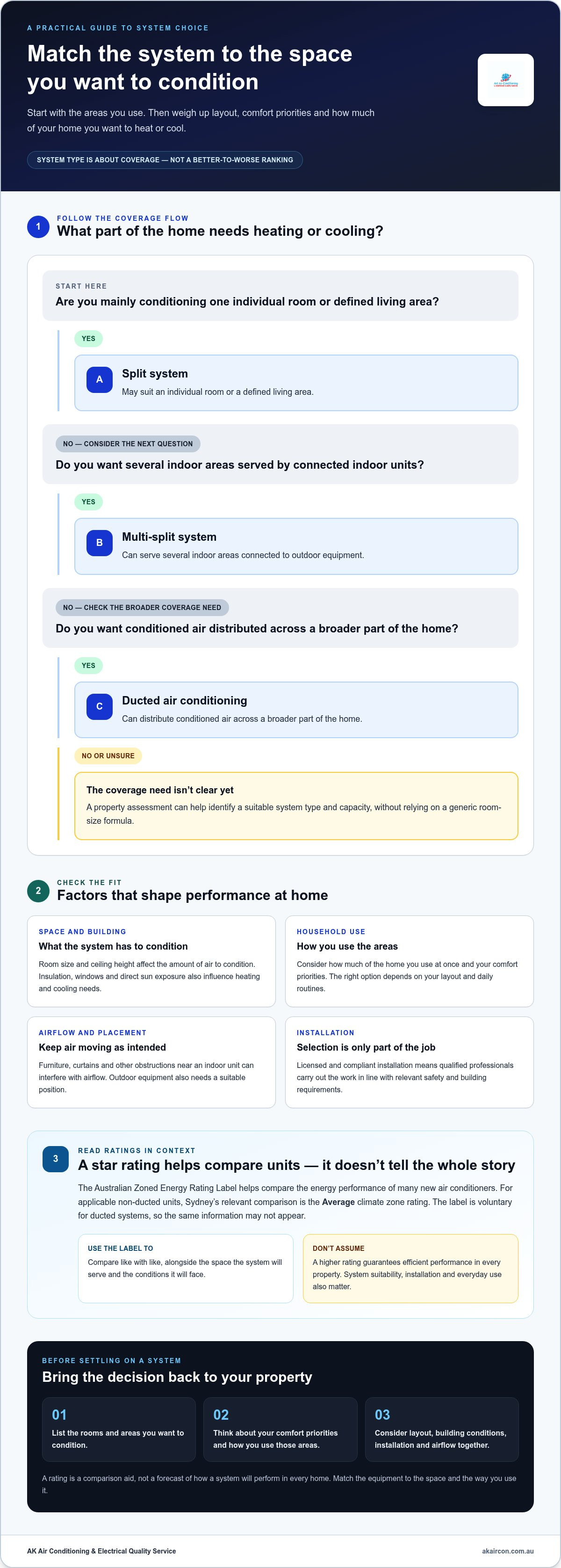
The Australian Zoned Energy Rating Label helps buyers compare the energy performance of many new air conditioners. For applicable non-ducted units, it shows separate ratings for Hot, Average and Cold climate zones. Sydney is in the Average zone, so that rating is the relevant point of comparison for local conditions. The label is voluntary for ducted systems, so you may not see the same information for those models.
A higher rating can help you compare products, but it doesn’t predict how a system will perform in every home. Performance still depends on whether the unit suits the space, how it’s installed and how you operate it. Compare like with like, and consider your home and usage alongside the label instead of choosing on stars alone.
For a general explanation of air conditioning and its energy considerations, see this overview of energy efficient air conditioning. For your property, consider how a system’s rated performance relates to the space it will serve and the conditions it will face. That’s how to connect the label with a practical equipment choice.
Which factors determine energy efficient air conditioning in Sydney?
A highly rated unit is only part of the decision. Its capacity needs to suit the area it serves, and the system must be installed and positioned to support useful airflow. A poorly matched unit may struggle to maintain comfort or cycle in a way that doesn’t suit the household. The same equipment can perform differently in different properties.
System fit, installation, property conditions and everyday use all shape air conditioning performance. An energy efficient air conditioning Sydney recommendation should start with the rooms you want to heat or cool, not a model name on its own.
Split, multi-split or ducted: match the system to the space
A split system may suit an individual room or defined living area. A multi-split system can serve several indoor areas connected to outdoor equipment, while ducted air conditioning can distribute conditioned air across a broader part of the home. These systems suit different coverage needs; they aren’t a simple ranking from better to worse.
For example, you may mainly use one living room, or want comfort across several bedrooms and shared areas. The right option depends on your layout, how much of the home you use at once and your comfort priorities. A property assessment helps determine a suitable system type and capacity without relying on generic room-size formulas.
Installation and airflow matter after you select a unit
Placement affects how air moves through a room and whether the indoor unit can serve the area as intended. Furniture, curtains and other obstructions near the unit can interfere with airflow. Outdoor equipment also needs a suitable position. These details matter because a system can’t perform as intended if its placement or airflow is compromised.
Licensed and compliant installation means qualified professionals carry out the work in line with relevant safety and building requirements. Careful installation helps set up the selected system for its intended space. AK provides split system aircon installation as part of its Sydney services.
For broader technical background, ASHRAE’s HVAC resources cover heating, ventilation, air conditioning and refrigeration. For your property, the practical priority is matching system selection and installation to its conditions, rather than assuming a product rating tells the whole story.
If you’re weighing up options for your home, you can arrange an air conditioning assessment to discuss the space, intended use and system fit.
Does a high-rated air conditioner always use less energy?
No. A strong product rating is useful when comparing units, but it doesn’t guarantee efficient performance in every property. The rating describes the product under defined test conditions. At home, performance also depends on whether the system suits the space, how it’s installed and how you use it.
When choosing energy efficient air conditioning in Sydney, weigh the rating against the conditions the system will actually face. A well-rated unit selected for one room may not suit another area with different sun exposure, layout or heating and cooling needs.
Product rating versus whole-system performance
Think of a product rating as a comparison aid, not a forecast of your household’s energy use. The Australian energy-rating label provides information to compare applicable products. For current details on how to read a label and which systems it covers, refer to the Australian Government’s Energy Rating guidance.
Use the rating as one part of your decision. Capacity, room exposure and installation can all affect comfort and system operation. The table below shows how to consider the product alongside the wider system.
| Factor | What it tells you | What to consider |
|---|---|---|
| Product rating | How a product performs under the label’s test conditions. | Compare relevant labels, but don’t treat a rating as a promise of household performance. |
| System suitability | Whether the type and capacity fit the space you want conditioned. | Consider the area served, layout and how you use the room. |
| Installation factors | How placement and setup support the system’s intended operation. | Consider unit position and whether airflow can reach the area without obstruction. |
| Operating habits | How everyday settings and usage shape demand on the system. | Think about which rooms you condition and when you use them. |
The same model may operate differently in a frequently used, enclosed room than in a connected living area used throughout the day. The product hasn’t changed, but the property and household routine alter the conditions in which it runs.
Reverse-cycle systems and Sydney’s year-round needs
Reverse-cycle air conditioning can provide both heating and cooling by transferring heat, rather than serving only one purpose. It may suit households looking for one system to provide comfort across different seasons. Whether it’s right for you depends on the areas you want to condition, your household routines and the property.
Consider both heating and cooling needs before deciding: which rooms need cooling in warmer weather, where you want warmth in cooler periods, and whether you use those spaces at the same time. Looking at your full usage pattern helps put a high rating in perspective. No system type or label rating guarantees the same performance in every Sydney home.
How can you improve air conditioning efficiency at home?
A useful upgrade starts with your household’s needs, not a product shortlist. Before arranging an assessment, note which rooms you use, when you use them and what currently affects comfort. This gives the installer a clearer picture of how the system needs to work in your home.
Prepare for an air conditioning assessment
Make a note of the areas you want heated or cooled and when they’re usually occupied. You may want consistent comfort in shared living areas, or heating and cooling in bedrooms at different times. Include rooms that are difficult to keep comfortable and explain what you’d like to improve.
Gather details about existing equipment, including where it’s located and which areas it serves. Mention property constraints that could affect system choices, such as limited outdoor space, a multi-level layout or restrictions on equipment placement. You don’t need to calculate capacity yourself. AK assesses the space and tailors system recommendations to the property and your requirements.
- Rooms: Note which areas need heating or cooling.
- Usage: Describe when those areas are usually occupied and whether they’re used together.
- Comfort priorities: Explain what matters most, such as comfort in a particular room or coverage across the home.
- Existing equipment: Share what system you have and which spaces it currently serves.
- Property constraints: Flag layout, access or equipment-placement considerations.
These details make an assessment more practical than a general conversation. If you’re planning to condition several areas or the whole property, discuss ducted air conditioning installation alongside your coverage needs and layout.
Use current NSW upgrade guidance carefully
Incentive programs can change, and a system’s efficiency rating alone doesn’t establish eligibility. Whether an upgrade qualifies, and what customer benefit may apply, depends on the property, location, installation, system and current program rules. Don’t assume an existing unit, a particular home or every replacement will qualify.
Before making a decision based on an incentive, read the latest NSW Government guidance and consider whether the current program conditions apply to the proposed work. AK assists with NSW air-conditioning rebate eligibility checks. Eligibility and customer benefit depend on the relevant requirements, so treat the rebate as one part of upgrade planning alongside system fit and household routines.
With these details ready, you can have a more focused conversation about options for energy efficient air conditioning in Sydney. A considered assessment connects your priorities with a system and installation suited to your home, without relying on generic sizing rules.
Plan an energy-efficient air conditioning upgrade with a Sydney installer
Once you’ve considered which areas need conditioning and how your household uses them, a property-specific assessment can turn your research into a practical upgrade plan. AK Air Conditioning & Electrical Quality Service supplies and installs split, multi-split and ducted air conditioning systems across Sydney. The focus is on matching the system to your space and requirements, rather than choosing on a rating alone.
What AK can help with across Sydney
A split system may suit a room or defined area, while a multi-split system can serve several areas. Ducted systems provide another option for homes seeking broader coverage. AK supplies and installs systems from Daikin, Mitsubishi, ActronAir and Fujitsu. The right system depends on your property and priorities.
AK serves Bankstown and surrounding suburbs including Yagoona, Greenacre, Punchbowl, Bass Hill, Condell Park, Revesby, Padstow, Panania, Chester Hill, Auburn, Parramatta, Liverpool, Fairfield, Strathfield, Campsie, Blacktown, Seven Hills and Lalor. Licensed and insured technicians provide licensed and compliant installation in line with relevant requirements. The installation plan considers your property, proposed system and intended spaces.
If you’re considering whole-home coverage, ducted air conditioning can be assessed against your layout and household use. For a smaller or more defined area, a split or multi-split arrangement may be more suitable. An assessment compares these options against the spaces you use, your comfort priorities and any site constraints.
Move from research to a property-specific recommendation
Before an assessment, note which rooms you want heated or cooled, when they’re typically occupied and what equipment is already in place. Include relevant details such as the home’s layout or limits on equipment placement. This helps AK tailor a recommendation to your needs and existing conditions.
AK also assists with NSW air-conditioning rebate eligibility checks. Eligibility and any customer benefit depend on the property, location, installation type, system and current program rules, so an assessment isn’t a guarantee of approval. Check the latest NSW Government guidance before making a decision based on an incentive, as requirements can change.
When comparing energy efficient air conditioning options in Sydney, bring together system fit, installation planning and any relevant eligibility considerations. A clear assessment helps you understand which options suit your property, without assuming one system or incentive will work for every household.
Take the next step towards a system that suits your home
Choosing energy efficient air conditioning in Sydney starts with a clear picture of what matters in your home. Note the rooms you want conditioned, when you use them and any limits that could affect equipment placement. Those details turn general research into a useful discussion about your property.
An assessment is also an opportunity to discuss how installation and equipment choices fit together. AK Air Conditioning & Electrical Quality Service provides ARC-licensed services, with recommendations shaped around your space and requirements. NSW incentive eligibility remains subject to current program rules and your circumstances, so treat it as a consideration rather than an assumed outcome.
You don’t need to settle on a system before discussing your needs. A property-specific assessment can help you understand the options and decide on a practical way forward.
Frequently Asked Questions
How much electricity does an energy-efficient air conditioner use?
There isn’t one fixed amount. Electricity use varies with the unit, the conditions it operates in and how long you run it. Check the product information for its rated electrical input, but treat that as a guide rather than a precise forecast for your home. To track actual use, note your meter readings over comparable periods and account for other appliances running at the same time.
Can I use rooftop solar to run my air conditioner?
Yes. Rooftop solar can supply electricity to an air conditioner while your panels are generating power, depending on household demand at the time. The air conditioner and other appliances may draw on the same solar generation during the day. Solar output varies, so don’t assume it will cover the air conditioner’s full electricity use at every hour. Your solar system’s monitoring information can help you understand its output and household use.
Is reverse-cycle air conditioning suitable for Sydney winters?
It can be suitable, depending on your home’s heating needs and the areas you want to keep comfortable. Consider which rooms you occupy most on cold mornings and evenings, and whether the proposed system can serve those spaces as intended. If you’re replacing another heating source, include how you currently use it in the assessment so the recommendation reflects your household routine.
Can renters install an energy-efficient air conditioner?
Renters should discuss a fixed installation with the property owner or managing agent before making arrangements, as the work can affect the property. Share the proposed indoor and outdoor unit locations and discuss how the installation would be handled. If you’re unsure about your tenancy situation, consult current NSW Fair Trading guidance or seek appropriate advice rather than relying on a general rule.
What happens if my existing air conditioner is too large for the room?
An oversized unit may cool a room quickly but remove less moisture during short operating periods, which can leave the space feeling cool yet uncomfortable. Don’t assume the unit must be replaced: have its condition, settings and suitability reviewed first. Note when the room feels uncomfortable and how the system behaves. Those observations can help a technician assess the issue and discuss suitable next steps.
Does NSW offer an air-conditioning rebate for every household?
No. NSW assistance isn’t automatically available to every household or air conditioner. Some schemes provide an upfront discount through participating installers rather than a cash-back payment after installation. Check current NSW Government program information before committing, including any required paperwork and when it must be completed. A scheme’s availability and conditions can change, so don’t assume an upgrade will qualify or that you can claim support afterwards.
Important Information
This article provides general information only. Air-conditioning requirements, installation costs, energy savings and rebate eligibility vary between properties and systems. NSW program rules, certificate values and eligible models may change. Contact AK Air Conditioning & Electrical Quality Service Pty Ltd for a property-specific assessment and confirmation of current eligibility before making a purchase or installation decision.


