
A well-known air conditioner still needs to suit your home. A Daikin split system in Sydney may be a suitable option, but the right choice depends on the room, property and how you plan to use it. Choosing by brand alone can leave important questions unanswered.
To choose confidently, consider the room’s size and layout, its insulation and sun exposure, and how often you’ll use the system. Installation matters too. Ask who will carry out the work, and check that anyone handling refrigerant holds the required ARC licence.
This guide covers what to consider when choosing a Daikin split system, what to discuss with an installer, and how to check whether a NSW Energy Savings Scheme discount may apply. Eligibility and any discount depend on the system, property and current programme requirements. AK Air Conditioning & Electrical Quality Service supplies and installs Daikin split systems across Sydney, including Bankstown and surrounding areas, and can discuss your property’s requirements.
Key Takeaways
- Discuss room dimensions, layout, insulation and sun exposure with an installer before choosing a system.
- A Daikin split system Sydney property owners consider should suit the space and intended use, not just the brand they recognise.
- Compare suitable options by their features and installation requirements. One unit won’t necessarily suit every space.
- Ask how access, unit placement and electrical requirements may affect the installation plan.
- A site assessment can help match your room requirements to a suitable Daikin system and installation approach.
Why consider a Daikin split system for your Sydney home?
A split system heats or cools the room where its indoor unit is installed, without requiring ducts throughout the home. It can suit households that want to condition a bedroom, living area or home office rather than several rooms at once. Whether it’s the right option depends on the space and how you plan to use it.
A split system has an indoor unit that circulates conditioned air and an outdoor unit connected to it by refrigerant pipes and electrical cabling. Together, the units transfer heat. For a general overview of the technology and different system types, see Air conditioning.
This video offers another perspective on comparing air-conditioning brands. Check that any product details it discusses apply to systems available in Australia.
What does a split system do?
In cooling mode, a split system moves heat from indoors to outdoors. A reverse-cycle system can also heat a room by moving heat in the other direction. Features vary by product, so check the specifications for the exact system rather than assuming every Daikin unit has the same functions. For more context on heating and cooling, refer to a reverse-cycle air-conditioning guide.
Unlike ducted air conditioning, which distributes air through ducts to several areas, a standard split system serves the room where its indoor unit is installed. This focused approach may suit you if your main priority is comfort in one particular space.
Why consider Daikin in Sydney?
AK Air Conditioning & Electrical Quality Service supplies and installs Daikin systems as part of its split-system service. Brand is only one part of the decision. A Daikin split system Sydney households consider should also suit the room, property and people using it.
Think about which rooms you use most, whether they’re occupied during the day or overnight, and whether you need heating as well as cooling. An assessment can take the room’s layout and intended use into account. Ask the installer to explain why the proposed system suits the space instead of relying on the brand name alone. You can also read about split-system air conditioning installation to understand the service AK provides.
How to choose a Daikin split system for your Sydney property
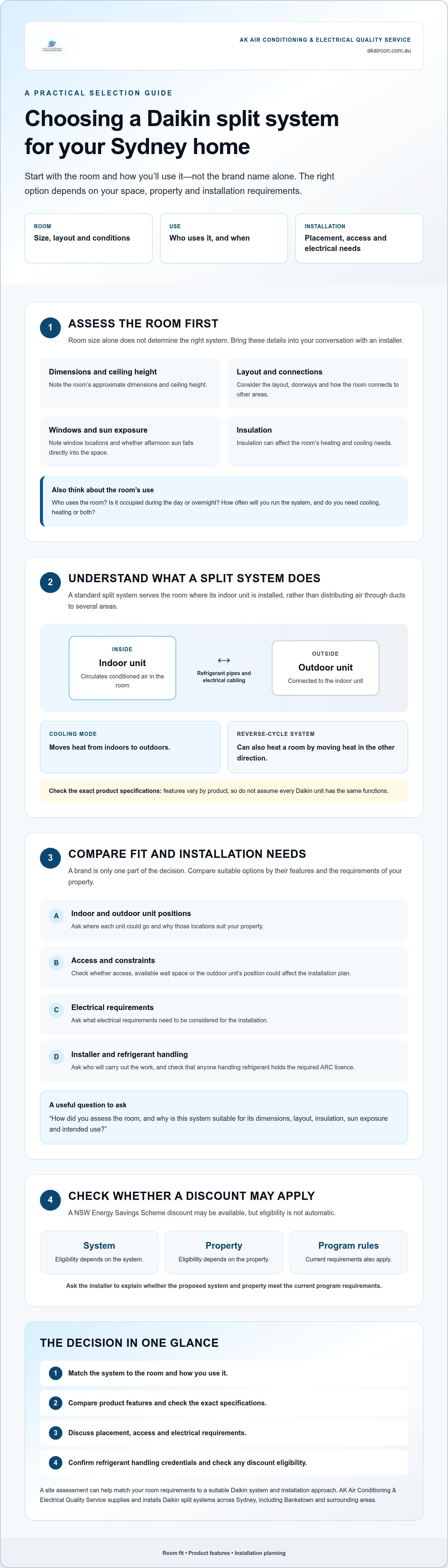
Start with the room, not a model name. A suitable system depends on more than floor area. Layout, insulation, windows and sun exposure can all affect the room’s heating and cooling needs. An on-site assessment also lets the installer consider the property’s access, installation options and electrical requirements.
What should you assess before choosing?
Before speaking with an installer, note the room’s approximate dimensions and ceiling height, the window locations and whether afternoon sun falls directly into the space. Consider insulation, doorways and how the room connects to other areas. These details help explain the conditions the system will need to handle.
Also consider who uses the room and when. A bedroom used overnight has a different pattern of use from a living area occupied throughout the day. Think about how often you’ll run the system and whether you need cooling, heating or both. If you’re comparing reverse-cycle options, YourHome’s guidance on energy-efficient heating and cooling explains factors to consider, including product energy-rating information.
Room size alone doesn’t determine the right system. For more detail on matching equipment to a space, consult a separate guide to air-conditioner sizing for Sydney homes, then ask an installer to confirm a recommendation for your property.
What should you ask an installer?
Ask how the installer assessed the room and why the proposed system is suitable. The recommendation should account for factors such as dimensions, layout, insulation, sun exposure and intended use, rather than relying on one measurement.
- Unit positions: Where would the indoor and outdoor units go, and why do those locations suit the property?
- Access and constraints: Could access, available wall space or the outdoor unit’s position affect the installation plan?
- Electrical requirements: What needs to be checked at the property before installation can proceed?
- Product details: Which exact system is proposed, and what features or requirements should you confirm for that model?
Before accepting a proposal, check that it clearly identifies the equipment and installation scope. This gives you a chance to confirm the recommendation reflects your room and that site conditions or electrical work have been discussed. AK Air Conditioning & Electrical Quality Service supplies and installs split systems and can discuss your property’s requirements. You can contact the Sydney team about an assessment to discuss your space and installation needs.
Compare Daikin split systems by fit, features and installation needs
A recognised brand doesn’t automatically make a system suitable for your room. The right option depends on how you’ll use the space, the product’s confirmed specifications and whether your property can accommodate the installation. Compare options against the same needs and site conditions, not just model names or advertised features.
Daikin series listed as available in Australia include the following. This does not mean every series is available from AK Air Conditioning & Electrical Quality Service. Product ranges and availability can change, so confirm current options and exact model details before deciding.
| Daikin series listed in current research | What to compare for your room | What to confirm |
|---|---|---|
| Alira X | Fit for the intended room and your heating or cooling needs | Current model specifications, controls and operating modes |
| Alira | Fit for the intended room and your heating or cooling needs | Current model specifications, controls and operating modes |
| Cora | Fit for the intended room and your heating or cooling needs | Current model specifications, controls and operating modes |
| Lite | Fit for the intended room and your heating or cooling needs | Current model specifications, controls and operating modes |
| Zena, US7, XL and XL Premium | Fit for the intended room and your heating or cooling needs | Exact model details and current availability |
Which features deserve a closer look?
Focus first on the features that matter to you. If remote control or particular operating modes are important, check the manufacturer’s current information for the exact model. Don’t assume a feature applies to every product in a series. Ask the installer to distinguish confirmed specifications from recommendations, and avoid relying on unverified claims about noise, efficiency, durability or likely savings.
How can you compare options fairly?
Use the same checklist for each option: intended room, heating or cooling needs, confirmed controls and features, proposed indoor and outdoor unit positions, and access or electrical considerations. This helps you separate differences in the product from differences in the installation plan. Ask why each recommendation suits your property, and request clarification if a specification or feature hasn’t been confirmed.
For a Daikin split system Sydney homeowners are considering, the model name is just a starting point. Confirm the exact model, current manufacturer information and local availability with the installer before proceeding. If you’re also checking whether a system may qualify under a current NSW incentive, ask for eligibility to be assessed separately. It depends on the system, property and programme requirements.
What to expect from Daikin split system installation in Sydney
The unit is only part of the decision. The installation plan must also account for your property, access to the proposed locations and any electrical requirements. An assessment gives you and the installer an opportunity to discuss these details before work begins, rather than leaving important questions until installation day.
What happens during an installation assessment?
The installer reviews the room, considers possible positions for the indoor and outdoor units, and assesses how they could be connected. They’ll also look at access and site conditions that may affect the proposed work. The plan depends on your property, so raise any concerns about unit placement, access or electrical requirements during the assessment.
Ask what the assessment has confirmed and whether anything still needs checking. If the installer identifies a possible electrical requirement or site constraint, ask how it affects the proposed scope and what needs to happen before work proceeds. You don’t need to make technical decisions yourself. You should receive a clear explanation of the options and anything that remains unconfirmed.
What should you confirm before work begins?
Before accepting a proposal, check that it identifies the system being supplied and explains what the installation includes. Confirm the proposed locations, any agreed site-related work, and how requirements that depend on the property will be handled. Ask who will carry out the work, and confirm relevant licences and insurance with the provider.
For work involving refrigerant, check that the person handling it holds the relevant Australian Refrigeration Council (ARC) Refrigerant Handling Licence. Also ask the provider to confirm that the proposed work meets current NSW requirements.
Make sure you understand the product and installation details before work starts. The exact model, site conditions and agreed scope should be clear, including any identified electrical requirements. For a step-by-step overview of the service, see the Sydney split-system installation guide.
For a Daikin split system Sydney installation, a clear assessment helps connect the equipment choice with the practical requirements of your home. AK Air Conditioning & Electrical Quality Service supplies and installs Daikin split systems and can discuss your property’s requirements.
Arrange Daikin split system supply and installation with a Sydney team
Your room’s needs, the system you choose and the site conditions all shape the installation plan. Discussing them together helps clarify whether the proposed Daikin system suits how you use the space and what your property can accommodate. Product availability and specifications can change, so confirm current options with the installer before deciding.
How AK can help with your Daikin system
AK Air Conditioning & Electrical Quality Service supplies and installs split systems, including Daikin, for residential and commercial clients across Sydney. Based in the Bankstown area, the business can discuss which rooms need heating or cooling, how you plan to use them and what may affect installation.
That conversation is a practical starting point, not a substitute for checking the site and confirming the proposed equipment. AK can also check air-conditioning rebate eligibility, subject to current programme rules and your circumstances. You can learn more about the split-system supply and installation service.
What information should you have ready?
A few details can make your initial discussion more useful. Be ready to share:
- Your suburb and property type: For example, a house, unit or small business premises in Sydney.
- The room or rooms involved: Note where you want heating, cooling or both, and when those spaces are usually occupied.
- Existing equipment: Mention whether you’re replacing an air conditioner or planning a new installation.
- Access and placement preferences: Flag any access constraints and where you’d prefer the indoor unit to sit.
- Questions about options: Ask which current Daikin systems may suit your needs and what product details need confirmation.
If you’re interested in a NSW incentive, ask whether an eligibility check is relevant to your proposed system. Eligibility and any potential benefit depend on the property, system and current programme requirements, so don’t assume a discount applies before it’s assessed.
Once you have these details, discuss your requirements and arrange an assessment or quotation. The installer can consider the room, proposed system and site conditions together before confirming a recommendation.
Make your next air-conditioning decision with confidence
A suitable Daikin split system Sydney homeowners choose should match the room, how they’ll use it and the property’s conditions. Brand preference is a useful starting point, but compare current product details and ask an installer to explain how the recommendation fits your space.
Before proceeding, clarify the proposed unit locations, site and electrical requirements, and what the installation includes. Confirm relevant licences and insurance with the provider. Ask about rebate eligibility separately if it may apply, as this depends on current programme requirements and individual circumstances.
AK Air Conditioning & Electrical Quality Service supplies and installs split systems, including Daikin, and can discuss your property’s requirements. A property assessment can help bring your room requirements and installation questions together.
With clear information and a suitable assessment, you can take the next step with greater confidence.
Frequently Asked Questions
Is a Daikin split system suitable for every room?
No. A Daikin split system may suit a particular room, but suitability depends on its dimensions, layout, insulation, windows and sun exposure, as well as how you use the space. A bedroom used overnight and a living area used throughout the day may have different requirements. Ask an installer to assess the room and explain why the proposed system fits, rather than choosing by brand alone.
How do I choose the right Daikin split system for my home?
Start by noting the room’s size, ceiling height, layout, insulation and sun exposure. Then consider who uses the space, how often it’s occupied, and whether you need heating, cooling or both. Ask an installer to assess these factors and explain the proposed system’s specifications and features. For a Daikin split system Sydney homeowners are considering, confirm the exact model and current availability before proceeding.
Can a Daikin split system provide both heating and cooling?
Some split systems use reverse-cycle operation to provide both heating and cooling, but don’t assume every system or model has the same functions. Check the manufacturer’s current information for the exact unit you’re considering, and ask the installer to confirm its operating modes. Explain whether you want to heat the room, cool it or use the system for both.
What should I check before installing a split system in Sydney?
Confirm the proposed indoor and outdoor unit locations, access to the installation areas, site conditions and any electrical requirements. Ask the provider to explain the agreed supply and installation scope, identify who will do the work, and confirm relevant licences and insurance. If refrigerant handling is involved, check that the technician holds the relevant ARC Refrigerant Handling Licence. Raise questions about current NSW requirements before work begins.
Does every Daikin split system qualify for an air‑conditioning rebate?
No. A system isn’t automatically eligible for a NSW air‑conditioning rebate. Under the NSW Energy Savings Scheme, a potential upfront discount depends on factors such as the property, location, system and current programme requirements. Ask who will assess eligibility and manage the process before installation. AK can check eligibility, but cannot guarantee that a property or system qualifies.
Can AK Air Conditioning supply and install Daikin split systems in Sydney?
Yes. AK Air Conditioning & Electrical Quality Service supplies and installs split systems, including Daikin, for residential and commercial clients across Sydney. Its local targeting includes Bankstown, Yagoona, Greenacre, Punchbowl, Bass Hill, Condell Park, Revesby, Padstow, Panania, Chester Hill, Auburn, Parramatta, Liverpool, Fairfield, Strathfield, Campsie, Blacktown, Seven Hills and Lalor. Contact the team to confirm coverage for your address and discuss an assessment.
Important Information
This article provides general information only. Air-conditioning requirements, installation costs, energy savings and rebate eligibility vary between properties and systems. NSW program rules, certificate values and eligible models may change. Contact AK Air Conditioning & Electrical Quality Service Pty Ltd for a property-specific assessment and confirmation of current eligibility before making a purchase or installation decision.


