
Could a new air conditioner qualify for support, or does a NSW rebate only apply when you replace an old unit? Both replacement and new-installation pathways may be considered, but air conditioning rebate eligibility checks look at more than the type of job. The property, location, system model, installation details and current scheme requirements can all affect the outcome.
It’s understandable to feel unsure when rebate claims don’t clearly explain what applies in NSW. The Energy Savings Scheme (ESS) and Peak Demand Reduction Scheme (PDRS) use certificate-based incentives that may be applied as an upfront discount through an eligible installation pathway. They aren’t guaranteed cash rebates, and eligibility and certificate value can vary.
This guide explains what an initial check may consider, which property and system details to gather, and how to plan your next step. It also explains how the right system and licensed installation fit into an upgrade for homes and small businesses in Bankstown and surrounding Sydney suburbs.
Key Takeaways
- Use air conditioning rebate eligibility checks as an initial assessment, not confirmation that a rebate will be approved.
- Have the property location, existing equipment and planned installation or replacement details ready for a more useful assessment.
- Compare replacement, new-installation and system-format scenarios, but treat each as a prompt for assessment, not a guaranteed qualifying upgrade.
- Check the proposed system against the current requirements for the relevant NSW program, as criteria can change.
- After the assessment, AK can help you consider suitable system supply and installation in light of the findings and current program requirements.
What do NSW air conditioning rebate eligibility checks actually assess?
An air-conditioning rebate eligibility check is an early review of a property and a proposed air conditioning upgrade. It helps identify whether a pathway under a NSW program may apply. It isn’t formal approval, a promise of a discount or confirmation that a particular system qualifies.
A headline rebate claim may describe one example, not the circumstances of every home or business. The outcome can depend on the property, its location, the work proposed, the system model and the rules in force at the time. Even a project that looks similar to an advertised example may have a different outcome.
An eligibility check can indicate whether an upgrade may fit a current rebate pathway. The relevant program assessment determines the outcome.
What does an eligibility check mean in NSW?
For air conditioning upgrades, NSW incentive pathways include the Energy Savings Scheme (ESS) and Peak Demand Reduction Scheme (PDRS). Their requirements and processes can differ, and program rules may change. An initial check considers the proposed job against relevant current requirements rather than treating a general rebate claim as universal.
Energy efficiency is part of the wider policy context, but it doesn’t make every rating or assessment a rebate test. For background, the Nationwide House Energy Rating Scheme (NatHERS) assesses residential energy efficiency. It is distinct from checking whether an air conditioning upgrade meets a particular NSW program’s requirements.
In practical terms, the check helps clarify whether it’s worth progressing with an upgrade assessment and which details may need closer review. It doesn’t replace program-specific steps or establish a final customer benefit.
Who may need an air conditioning rebate eligibility check?
Homeowners planning a replacement or a new installation can use a check to understand which details may affect their proposed pathway. Landlords and property managers may also find it useful when planning an upgrade for a rental property or coordinating work across several premises. The property’s circumstances and the scope of the planned work still matter.
For example, a homeowner in Bankstown replacing an existing unit is considering a different project from a property manager planning a first-time installation in Parramatta. Neither example establishes eligibility. They show why an assessment needs to reflect the actual property and proposed work. A split system and a ducted system are different installation formats, so details from one project shouldn’t be assumed to apply to another.
AK Air Conditioning & Electrical Quality Service provides air conditioning rebate eligibility checks alongside system supply, replacement and installation across Bankstown and nearby Sydney suburbs. The check is a practical starting point, helping you define the property and proposed upgrade before deciding what to do next.
Which NSW property and system details can affect rebate eligibility?
A useful assessment looks at the whole upgrade, not just the air conditioner’s brand or whether an old unit is being replaced. The property’s location, existing setup, planned work and specific model may all be relevant. These details help establish whether a proposed installation could fit a current NSW program pathway.
Eligibility rules can differ between programs and may change. The Energy Savings Scheme (ESS) and Peak Demand Reduction Scheme (PDRS) have their own requirements, so an answer for one pathway shouldn’t automatically be applied to another. Rebate eligibility is assessed case by case because properties, installation plans, system models and current program requirements differ.
How can the property and existing system affect the check?
Start with the property’s location and what is already installed. An assessment may need to distinguish between replacing an existing unit and adding air conditioning where there was none. The proposed work matters too: a single-room split system, a multi-split system serving several rooms and a ducted setup are different installation formats, each with its own project details.
For example, a home in Greenacre replacing one existing unit has a different scope from a property in Revesby planning a new ducted system. That doesn’t determine whether either project qualifies. It shows why a check should reflect the actual address, existing equipment and intended work, rather than relying on a broad claim about a suburb or upgrade type.
If a property has several units or a mixed setup, describe which equipment you plan to replace, retain or add. This keeps the assessment focused on the proposed job. Don’t assume that an outcome for one room or system applies automatically to other equipment at the same address.
Why do model and program requirements matter?
The proposed system model and installation details may need to be considered together under the relevant program’s current rules. A brand name alone doesn’t establish eligibility. AK supplies systems from brands including Daikin, Mitsubishi and ActronAir, but the exact model and planned installation still need assessment against the applicable requirements.
Program information may specify which equipment or installation pathways can be considered, and may set out steps for documenting eligible work or creating certificates. Check those requirements against current NSW program information rather than relying on an older promotion or general product description. An advertised discount, model family or previous installation isn’t proof that your project will receive the same outcome.
For air conditioning rebate eligibility checks, gather the property location, details of the existing system and any available information about the proposed system model. AK can assess your proposed upgrade and provide support with an eligibility check. An initial assessment isn’t confirmed approval.
How do common Sydney air conditioning upgrade scenarios compare?
The type of air conditioning project describes what you plan to do, but it doesn’t determine rebate eligibility by itself. A replacement, a first-time installation and a change in system format can raise different questions during an assessment. Use the comparisons below to organise your project details, then consider them against the current requirements of the relevant NSW program.
These examples are prompts for an assessment, not a list of upgrades that will qualify. The same system format may be assessed differently depending on the property, proposed work, model and applicable program rules.
| Upgrade scenario | Details to describe | What the assessment needs to establish |
|---|---|---|
| Replace an existing split system | Where the current unit is installed, what equipment is being removed and what replacement is proposed. | Whether the specific replacement project and proposed model fit a current program pathway. |
| Install air conditioning where there is none | Which rooms or areas the system will serve, the property location and the proposed system format. | Whether the new-installation scope meets the applicable program requirements. |
| Install a multi-split system | The number and location of indoor units, the areas served and the proposed system model. | How the overall configuration is treated under the relevant pathway. |
| Install ducted air conditioning | The areas served, proposed system and broad installation scope. | Whether that particular system and project meet current requirements. |
Does replacing an existing split system differ from installing a new one?
Yes, the project description differs. For a replacement, record what is already installed and which unit or units the work will replace. For a new installation, explain that there’s no existing system in the area and outline where the new equipment will serve. In either case, the exact model and proposed work matter. Replacement alone doesn’t establish eligibility, so compare the project with the current criteria for the specific NSW program rather than relying on a general rebate claim.
How might ducted and multi-split projects be assessed?
These formats serve spaces differently, so describe the configuration clearly. A multi-split setup connects multiple indoor units to a system, while ducted air conditioning distributes conditioned air through ducts. System type helps define the project scope, but it doesn’t override program requirements or guarantee an outcome. If you’re weighing up a ducted layout, AK’s ducted air conditioning installation information can help you understand the format before you prepare project details.
For air conditioning rebate eligibility checks, keep system type separate from eligibility. First describe the job accurately, then have the proposed model and installation assessed against current rules. This makes it easier to compare options without assuming a particular format qualifies or that different projects will receive the same consideration.
How to prepare for an air conditioning rebate eligibility check in Sydney
A little preparation can make an initial assessment clearer. You don’t need to guess which program applies or choose a system before making an enquiry. Start with what you know about the property and planned work, then assess any possible pathway against current NSW program information. Promotions and older advertisements may describe rules or offers that no longer apply.
What information should you gather before the check?
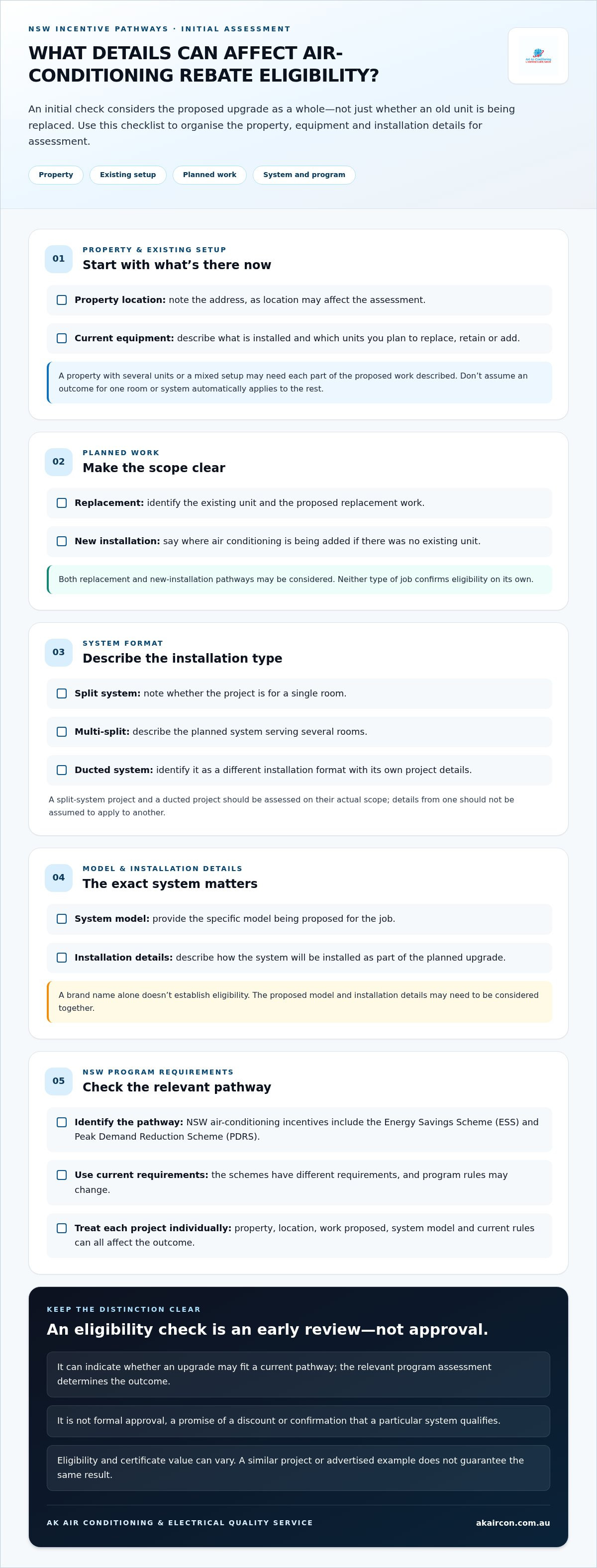
Use this sequence to organise the details:
- Identify the property. Note the suburb and whether the upgrade is for a home, rental property or small business. The location helps put the proposed work in context.
- Describe the existing setup. Record whether air conditioning is already installed, the general system type and which area it serves. If you’re replacing equipment, state what you plan to remove or retain.
- Outline the proposed work. Explain whether you’re considering a replacement or new installation, and whether you’re planning a split, multi-split or ducted system.
- Include model details if available. If you have the proposed system’s make and model, have those details ready. You can still make an initial enquiry before choosing a specific model.
Keep your description factual. If you’re unsure about the existing unit or proposed configuration, say so rather than filling gaps with assumptions. Gather extra paperwork only if the current program rules call for it.
What happens during an initial assessment?
During an initial assessment, the property details and planned work are reviewed to identify whether a current NSW program pathway may be relevant. The information you provide clarifies the type of project and which details may need further assessment. It doesn’t turn an early conversation into a formal program decision or confirm a rebate outcome.
Program requirements can change, so refer to current NSW information for the scheme you’re considering. Treat old adverts, broad online claims and examples from other properties as background only. A claim that sounds relevant may not account for your location, system model or installation scope. If an assessment identifies a possible pathway, the next steps depend on current requirements and your project details.
For readers comparing advertised claims with the NSW process, keep the distinction clear: preparation makes an enquiry more useful, but doesn’t guarantee eligibility. AK Air Conditioning & Electrical Quality Service provides air conditioning rebate eligibility checks and can assess your proposed upgrade in light of the information available.
What happens after an air conditioning rebate eligibility check with AK?
After AK reviews the property information and proposed upgrade, the next step depends on what the assessment indicates and the current requirements of the relevant NSW program. There may be a potential pathway to explore, a system or installation detail to clarify, or an indication that the proposed work doesn’t appear to fit the available criteria.
This gives you a clearer basis for deciding what to do next. It doesn’t mean a rebate, certificate or customer benefit has been approved. Eligibility and any benefit depend on the property, location, installation type, system model and program rules that apply at the time.
What can a preliminary check tell you?
A preliminary check can help identify whether your proposed upgrade may merit further assessment and which details matter for the next step. Before committing to an installation, compare the findings with current NSW program information. Requirements and processes may change, so don’t rely on an old advertisement or assume a previous example applies to your project.
If the assessment points to a possible pathway, the appropriate next steps depend on the program’s current process and the specifics of your proposed work. If it doesn’t, you can still consider the project on its own merits without treating a possible rebate as certain. The purpose is to make your choices clearer, not to promise an outcome.
How can AK support a suitable air conditioning upgrade?
AK provides air conditioning rebate eligibility checks, system supply and installation, and replacements. If the assessment supports progressing with an upgrade, the proposed system can be considered alongside the project requirements. AK works with split, multi-split and ducted systems. The right format depends on the property and the areas you want to condition.
For a single room or defined area, explore AK’s split system air conditioning installation service. For other layouts, AK can supply and install a system suited to the project. Licensed and insured technicians carry out installation, with a licensed and compliant installation approach.
For homeowners, landlords and property managers in Bankstown and surrounding suburbs, the process is straightforward: understand what the initial assessment indicates, review current program requirements, then decide whether to proceed with a suitable system and installation. AK can support that process without presenting an eligibility check as guaranteed approval. Local suburbs served include Bankstown, Yagoona, Greenacre, Punchbowl, Bass Hill, Condell Park, Revesby, Padstow, Panania, Chester Hill, Auburn, Parramatta, Liverpool, Fairfield, Strathfield, Campsie, Blacktown, Seven Hills and Lalor.
Take the next step with a clear upgrade plan
Use air conditioning rebate eligibility checks as one part of a considered upgrade decision, not the only reason to choose a system. A potential program pathway can inform your plans, while the system and installation still need to suit your property and intended use. Keep your options open until you understand the current program requirements and how they relate to your proposed work.
AK provides eligibility checks and air conditioning system installation for customers across Bankstown and surrounding Sydney suburbs. AK’s licensed and insured technicians and ARC licensing support a professional approach from assessment through to installation. An assessment won’t promise a rebate outcome, but it can help you approach the next decision with better direction.
If you’re ready to discuss an upgrade, share what you know about the property and planned work. A clear starting point makes the next conversation more useful.
Take the process one step at a time, and move ahead when the pathway and system suit your circumstances.
Frequently Asked Questions
Is an air conditioning rebate eligibility check the same as approval?
No. A check is an initial review, not program approval. Treat any early indication as provisional until the relevant NSW process confirms the outcome. For example, changing the proposed model or installation scope after the check could affect the assessment. Before arranging the upgrade, confirm the requirements for the specific program and make sure the details being assessed still match the system you intend to install.
Can renters get an air conditioning rebate in NSW?
Possibly, but a renter shouldn’t assume they qualify. Current program rules and property circumstances may matter, including who owns or controls the equipment and who can approve the planned work. Permission to install a unit doesn’t necessarily establish that the project meets rebate criteria. Check the current NSW requirements for the specific upgrade, and describe the tenancy, existing equipment and proposed installation accurately.
Do all air conditioning brands qualify for an NSW rebate?
No. A brand name on its own doesn’t establish eligibility. The assessment may need to consider the exact model, proposed installation and current program criteria. AK supplies systems from brands including Daikin, Mitsubishi and ActronAir, but that doesn’t mean every model from those brands qualifies. Use current NSW program information to check product requirements, and don’t rely on a brand name or advert as proof of eligibility.
Can a new air conditioner qualify if there was no old system to replace?
It depends on the current program and the type of upgrade it covers. A new installation may be treated differently from replacing existing equipment, so don’t assume it is either eligible or excluded. Explain that the room has no existing unit and identify the system you’re considering. The assessment can then consider the actual scope against the relevant NSW criteria.
Do ducted systems follow the same rebate rules as split systems?
Not necessarily. Program requirements may assess the system format, project scope, property and selected model. A split system and a ducted system shouldn’t be treated as interchangeable for eligibility purposes. If you’re considering ducted air conditioning, describe the areas the proposed system will serve and its configuration. Then check the current criteria for that particular installation before relying on an advertised rebate claim.
What happens if my property doesn’t meet the current rebate criteria?
A property that doesn’t fit one rebate pathway can still be considered for an air conditioning upgrade, but you shouldn’t assume another rebate applies. Keep system selection separate from the rebate decision: consider what suits the property and intended use, then assess whether a current program applies. AK provides system supply and installation, so you can discuss an upgrade even if a rebate pathway isn’t available.
How often should I recheck NSW air conditioning rebate eligibility rules?
Recheck the rules whenever you’re planning an upgrade, particularly if your information comes from an older advert or past example. Program criteria and product requirements can change, so use current NSW information rather than relying on details from a previous project. Make sure the check reflects the property, intended system model and installation scope as they stand now.
Important Information
This article provides general information only. Air-conditioning requirements, installation costs, energy savings and rebate eligibility vary between properties and systems. NSW program rules, certificate values and eligible models may change. Contact AK Air Conditioning & Electrical Quality Service Pty Ltd for a property-specific assessment and confirmation of current eligibility before making a purchase or installation decision.


