
An ActronAir system may look more efficient than a Daikin on paper, but the result can differ in your Sydney home. Electricity use depends on the specific systems and how they’re selected, installed and operated. That makes actronair vs daikin running costs harder to compare fairly than brand names or broad efficiency claims suggest.
It’s understandable to want a clear winner before choosing a new air conditioner. But systems can use different amounts of electricity depending on their capacity, your home’s layout, thermostat settings, ducted zones and maintenance.
This guide explains which figures can help you make a fair comparison, including the Zoned Energy Rating Label and annual energy use for Sydney’s climate zone. You’ll also learn how installation and everyday habits affect consumption, and why matching a system to your home matters as much as the brand. AK Air Conditioning & Electrical Quality Service supplies and installs both brands across Bankstown and Sydney, helping homeowners compare options for their home and comfort needs.
Key Takeaways
- For a fair actronair vs daikin running costs comparison, line up systems with the same type and suitable capacity.
- Use current efficiency information to compare likely energy use, rather than relying on brand claims alone.
- Consider how your home’s insulation and layout, temperature settings and operating hours may affect electricity consumption.
- Keep energy use in kWh separate from your electricity tariff when estimating what operation may add to your bill.
- Use a local assessment to weigh system suitability, installation and ongoing service alongside brand reputation.
ActronAir vs Daikin running costs: why the brand name is not enough
It makes sense to want a clear idea of electricity use before choosing an air conditioner. But actronair vs daikin running costs can’t be settled by comparing brand names alone. Running costs refer to the electricity expense of operating a system over time, and the result depends on the system and how you use it.
Separate electricity consumption from your retailer’s tariff. Consumption is the electricity the air conditioner uses, usually measured in kilowatt-hours (kWh). Your tariff is the rate your retailer charges for each unit. Your bill reflects both, so the same system can have different running costs for households on different plans.
A video comparison can provide context, but it can’t predict how a particular system will perform in your home:
What does an air conditioner’s running cost depend on?
Electricity consumption changes with operating hours, temperature settings, room conditions and system capacity. A unit that runs for longer or has to condition a challenging space may use a different amount of electricity from a similar unit in a well-suited room. Insulation, sunlight, ceiling height and how much of the home you’re conditioning can all affect demand.
For a useful comparison, match systems of the same type and similar capacity, then consider how each will be used in comparable home conditions. This keeps the focus on relevant differences rather than unrelated systems. For a plain-language introduction to how air conditioning works, see this overview, including how reverse-cycle systems provide heating and cooling.
Why ActronAir and Daikin cannot be ranked as whole brands
Both manufacturers offer different system types and models, with specifications that vary. A split system shouldn’t be judged against a ducted system as though they serve the same purpose. Even two systems of the same type may differ in capacity and efficiency information.
Neither brand can be called cheaper to operate across the board. A reliable model-level comparison needs current manufacturer data for the specific systems you’re considering, alongside an assessment of your home and expected use. AK Air Conditioning & Electrical Quality Service supplies and installs both brands in the Sydney region, so you can focus on system fit and relevant product information rather than brand loyalty.
How to compare ActronAir and Daikin energy use fairly
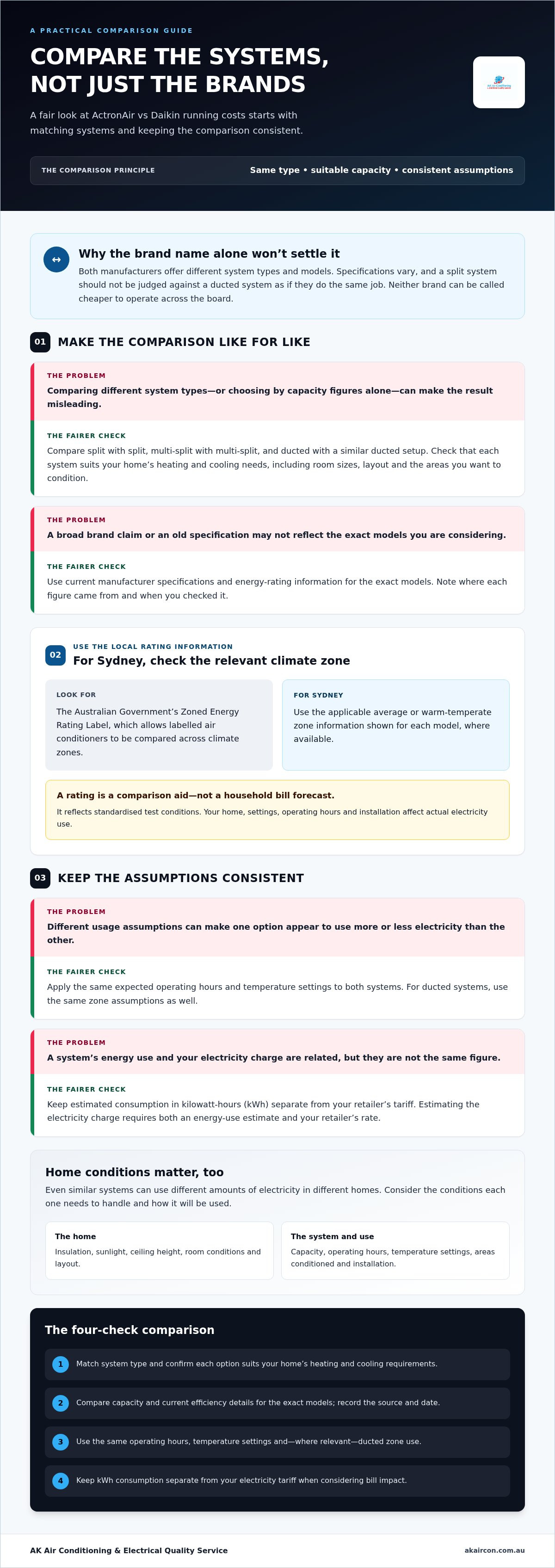
A useful comparison starts with two specific systems, not broad claims about either manufacturer. For actronair vs daikin running costs, work through the same checks for each option and keep your assumptions consistent.
Match system type and capacity before comparing brands
Compare like with like: split system with split system, multi-split with multi-split, and ducted with a similar ducted setup. The system’s capacity needs to suit your home’s heating and cooling requirements. Room sizes, layout and how much of the home you want to condition all matter, so matching capacity figures alone may not establish that two systems are suitable alternatives.
For a ducted comparison, consider the proposed layout and which areas you expect to condition. AK Air Conditioning & Electrical Quality Service can assess your home and discuss ducted air conditioning installation options across Sydney.
Use current efficiency information and consistent assumptions
Use current manufacturer specifications and energy-rating information for the exact models you’re considering. Record where you found each figure and the date you checked it. The Australian Government’s Zoned Energy Rating Label provides a way to compare labelled air conditioners across climate zones. For Sydney, use the applicable average or warm-temperate zone information shown for each model, where available.
A rating helps compare performance under standardised test conditions, but it can’t predict the exact electricity use or bill in your home. Your rooms, settings, operating hours and installation affect real-world use. Compare equivalent published figures and test conditions where possible. A star rating on its own isn’t a bill forecast.
Use this method to keep the comparison consistent:
- 1. Match the system type and check that each option suits your home’s heating and cooling requirements.
- 2. Compare relevant capacity and current efficiency details for the exact models, noting the source and date.
- 3. Apply the same expected operating hours, temperature settings and, for ducted systems, zone use to both options.
- 4. Keep estimated consumption in kWh separate from the electricity tariff on your bill. A bill-impact calculation needs both an energy-use estimate and your retailer’s rate. Without your tariff, you can’t estimate your electricity charge.
If you’d like help comparing options for your home, discuss an air conditioning assessment with the local Sydney team.
What changes ActronAir vs Daikin running costs in a Sydney home?
The same air conditioner can use different amounts of electricity in different homes. For a fair actronair vs daikin running costs comparison, look beyond the model. Consider the conditions it needs to handle, how you operate it and how well it’s installed.
| Factor | How it can affect electricity use | What to consider |
|---|---|---|
| System sizing | A system that doesn’t suit the space may struggle to maintain comfort or operate differently from a correctly matched unit. | Consider the area being conditioned, ceiling height, layout and heating as well as cooling needs. |
| Insulation and windows | Heat entering through the roof or sun-exposed windows can increase the work the system needs to do. | Note insulation, direct sunlight and how well rooms retain the desired temperature. |
| Room layout | Partitions, open-plan areas and airflow paths affect how conditioned air reaches the spaces you use. | Compare the actual rooms or ducted zones you intend to condition. |
| Temperature settings | Settings that demand more heating or cooling can increase system workload. | Use realistic comfort settings when comparing expected use. |
| Operating hours | Longer or more frequent operation generally means more total electricity consumption. | Estimate your typical use across different seasons, not just a single day. |
How home conditions and daily habits affect electricity use
For example, a living area with large sun-facing windows may need more cooling during a warm spell than a shaded room in the same home. In cooler weather, household heating needs can also change how often a reverse-cycle system runs. Sydney’s conditions vary through the year, so compare systems using operating assumptions that reflect your routine rather than treating one season as representative.
Electricity tariffs also vary by retailer, plan and household. Keep consumption, measured in kWh, separate from the rate on your bill. Without your own tariff, a calculation can’t estimate the bill impact. For extra context on comparing models, consult independent air conditioner reviews.
Why installation and system condition matter
A suitable system also needs a well-planned installation to perform as intended. A poor fit between the system, home layout and use can undermine a comparison based on product data alone. Over time, servicing can help identify issues that affect operation, though it can’t promise a particular efficiency result. AK Air Conditioning & Electrical Quality Service provides air conditioning services and repairs across the Bankstown area and Sydney region.
How to estimate your own electricity use without misleading comparisons
A useful estimate is only as fair as the information behind it. For actronair vs daikin running costs, compare specific systems using the same usage pattern, then keep estimated electricity consumption separate from what your retailer charges.
Which information should a homeowner gather?
Start with the exact model details for each option. Use current manufacturer specifications and energy information, and record the source and date so you know which figures you relied on. Don’t compare a figure from one model with an old or differently measured figure from another.
Next, estimate how long you’re likely to run the system during the seasons when you use it. A rough, realistic pattern is more useful than a precise-looking guess. Include differences such as heavier use during hot spells or occasional heating in cooler weather. Also note the temperature settings and, for ducted systems, which zones you expect to use.
Finally, find the electricity tariff on your current bill. The tariff is the retailer’s charge for each unit of electricity. It isn’t the amount of electricity the air conditioner consumes.
How to read a comparison result responsibly
Use one method and the same time period for both systems. If you use a published annual consumption figure, treat it as an estimate based on the information and conditions associated with that figure. If you use a power-input specification to estimate use over your expected operating hours, remember that it describes specified conditions. An inverter system may vary its power use as demand changes, so multiplying a rated input by hours gives an indicative estimate, not a precise prediction of actual consumption.
Keep the steps clear:
- Estimate consumption: use comparable model data and the same assumed operating hours to estimate electricity use in kWh.
- Estimate bill impact: apply your own retailer tariff to the estimated kWh. Without that tariff, you can compare consumption but not your household’s electricity charge.
- State assumptions: record the period, settings, usage hours, source data and any limitations alongside the result.
Actual use changes with weather, temperature settings and household routines. A comparison helps you understand the options, but it can’t promise what a future bill will show. System suitability and installation matter too. For split-system options, AK Air Conditioning & Electrical Quality Service supplies and installs split systems across Sydney.
Choosing ActronAir or Daikin with Sydney installation support
There isn’t a reliable brand-wide answer to which option will use less electricity. A sound decision weighs current information for comparable systems against the capacity your home needs, the rooms you want to condition and how your household will use the system. Brand reputation can inform your shortlist, but it shouldn’t replace checking the details that apply to your property.
When a local assessment can help
Your home’s layout shapes what a suitable system looks like. A split system for one living area has a different job from a ducted system serving several rooms. Room sizes, open-plan areas, where you spend time and whether you need heating as well as cooling all help guide the assessment. The aim is to match the system to your home, rather than choosing capacity from a brand comparison alone.
AK Air Conditioning & Electrical Quality Service supplies and installs ActronAir and Daikin systems across Bankstown and surrounding Sydney suburbs. The team considers your property and intended use when discussing suitable options. For an overview, see the air conditioning supply and installation service page.
Next steps for comparing systems in your home
To make an assessment more useful, share a few practical details:
- Your property type and the rooms or areas you want to heat or cool.
- Whether you’re considering a split, multi-split or ducted system.
- How you expect to use the system, including typical operating periods and whether heating matters.
- Any model information or current efficiency data you’ve already gathered.
AK Air Conditioning & Electrical Quality Service works with both manufacturers, so the comparison can focus on suitable system options, current product information and your home’s needs. No brand name or label can guarantee a particular electricity bill, but a considered assessment can help you understand the trade-offs before deciding. This is a practical way to approach actronair vs daikin running costs without relying on reputation alone.
If you’re in Bankstown or nearby, contact the team to arrange an assessment for your home. AK Air Conditioning & Electrical Quality Service serves Bankstown, Yagoona, Greenacre, Punchbowl, Bass Hill, Condell Park, Revesby, Padstow, Panania, Chester Hill, Auburn, Parramatta, Liverpool, Fairfield, Strathfield, Campsie, Blacktown, Seven Hills and Lalor.
Choose the system that fits your home
The fairest actronair vs daikin running costs comparison looks at equivalent systems, current efficiency information and the way you expect to use them. Capacity and home conditions matter too, so brand reputation or a rating alone can’t predict your household’s electricity use.
Consider the rooms you want to heat or cool, your usual operating hours and the system type that suits your layout. A local assessment can help you weigh those needs alongside model information and installation requirements.
AK Air Conditioning & Electrical Quality Service supplies and installs both ActronAir and Daikin systems. The business provides licensed and compliant installation, supporting a considered choice from system selection through installation.
With a fair comparison and advice grounded in your home’s needs, you can make your next air-conditioning decision with greater confidence.
Frequently Asked Questions
Is ActronAir cheaper to run than Daikin?
Not as a rule. Running costs depend on the specific model, system type, suitable capacity, home conditions and how you use the air conditioner. A comparison between two different system types may not tell you much about which brand suits your home. Compare equivalent models using current efficiency information and the same operating assumptions, then consider how your rooms and household routine may affect electricity use.
Which air conditioner uses less electricity, ActronAir or Daikin?
There’s no brand-wide answer. Electricity use varies between models, so compare current consumption or efficiency information for the particular ActronAir and Daikin systems you’re considering. Match system type and capacity, and use the relevant climate-zone data where it’s provided. Your home’s layout, settings and operating hours also affect actual consumption, so published figures can guide a comparison but can’t predict exactly what your household will use.
How do I compare ActronAir and Daikin running costs?
For a fair actronair vs daikin running costs comparison, start with equivalent system types and suitable capacities. Check current product information for each exact model, and note the source and date. Use the same expected operating hours, temperature settings and, for ducted systems, zone use. Compare estimated electricity consumption in kWh separately from your retailer’s tariff. To estimate bill impact, you’ll need your own tariff and clearly stated assumptions.
Do larger air conditioners always cost more to run?
No. A larger system doesn’t automatically use more electricity in every situation, because consumption also depends on efficiency, workload and how the system operates. Capacity should suit the area and conditions it needs to serve. Comparing a small unit with a larger one without considering their different jobs can mislead you. Look at the exact model data and intended use, rather than assuming capacity alone determines electricity consumption.
Can Sydney weather affect ActronAir and Daikin electricity use?
Yes. Hot weather can increase cooling demand, while cooler periods may lead your household to use reverse-cycle heating. The effect depends on your home, settings and routine, so a single day’s use may not reflect your seasonal pattern. For a useful comparison, estimate likely operating hours across the times of year you use the system, and apply the same assumptions to both brands.
Can an air-conditioning installer help me compare ActronAir and Daikin?
Yes. An installer can consider your rooms, layout, intended use and suitable system type, then discuss comparable ActronAir and Daikin options. AK Air Conditioning & Electrical supplies and installs both brands, with licensed and compliant installation. The team serves Bankstown, Yagoona, Greenacre, Punchbowl, Bass Hill, Condell Park, Revesby, Padstow, Panania, Chester Hill, Auburn, Parramatta, Liverpool, Fairfield, Strathfield, Campsie, Blacktown, Seven Hills and Lalor.
Important Information
This article provides general information only. Air-conditioning requirements, installation costs, energy savings and rebate eligibility vary between properties and systems. NSW program rules, certificate values and eligible models may change. Contact AK Air Conditioning & Electrical Quality Service Pty Ltd for a property-specific assessment and confirmation of current eligibility before making a purchase or installation decision.


