

The lowest noise figure on a product brochure doesn’t necessarily mean the quietest room at home. If you’re comparing options for the quietest split system air conditioner australia 2026, the rating is only part of the picture. Indoor and outdoor units produce different sounds, and figures can depend on the fan setting or operating mode.
You may be concerned about an indoor unit interrupting sleep or conversation, or an outdoor unit disturbing people nearby. To compare systems fairly, check which unit the manufacturer’s noise figure describes, the conditions under which it was measured and whether it reflects a setting you’re likely to use. A low figure on its own doesn’t tell you how the system will sound once installed in your home.
This guide explains how to read sound ratings, compare operating conditions and weigh up your household’s noise priorities. You’ll also learn how unit position and licensed, compliant installation can help manage avoidable vibration and sound transfer. For homes around Bankstown and across Sydney, choosing a quieter system means looking at the whole installation, not just one number.
Key Takeaways
- To compare the quietest split system air conditioner australia 2026, check the exact model’s current manufacturer specifications, not broad brand claims.
- Compare indoor and outdoor sound ratings separately, and check which operating mode and fan setting each figure describes.
- Consider where the indoor and outdoor units will sit, including mounting surfaces, airflow clearance and possible vibration transfer.
- Set your household’s noise priorities first, then match the system and proposed installation to the room.
- AK Air Conditioning & Electrical Quality Service supplies and installs split systems across Sydney, including the Bankstown area.
What makes a split system air conditioner quiet in an Australian home?
You might notice air-conditioner noise most when the house is still: a fan running above a bedroom, a low hum during a video call in the study, or sound carrying into the living room while you’re relaxing. A split system has an indoor unit and an outdoor unit, connected as part of one air-conditioning system. For a general overview of what is air conditioning and how different systems work, see Wikipedia’s air-conditioning entry.
“Quietest” isn’t a universal label. A useful comparison considers the exact model’s manufacturer sound rating and operating mode, along with the room, unit position and installation. The indoor unit can be noticeable to occupants, while outdoor sound may carry to another room or neighbouring property. Vibration can also travel through a wall or mounting surface, so the sound heard inside may not come from airflow alone.
What do split-system air conditioner decibel ratings tell you?
A decibel rating describes sound level. Manufacturers may publish indoor and outdoor sound figures in product specifications, technical data sheets or installation documents. Check the exact model, note whether the figure is given in dB or dBA, and confirm which unit it describes.
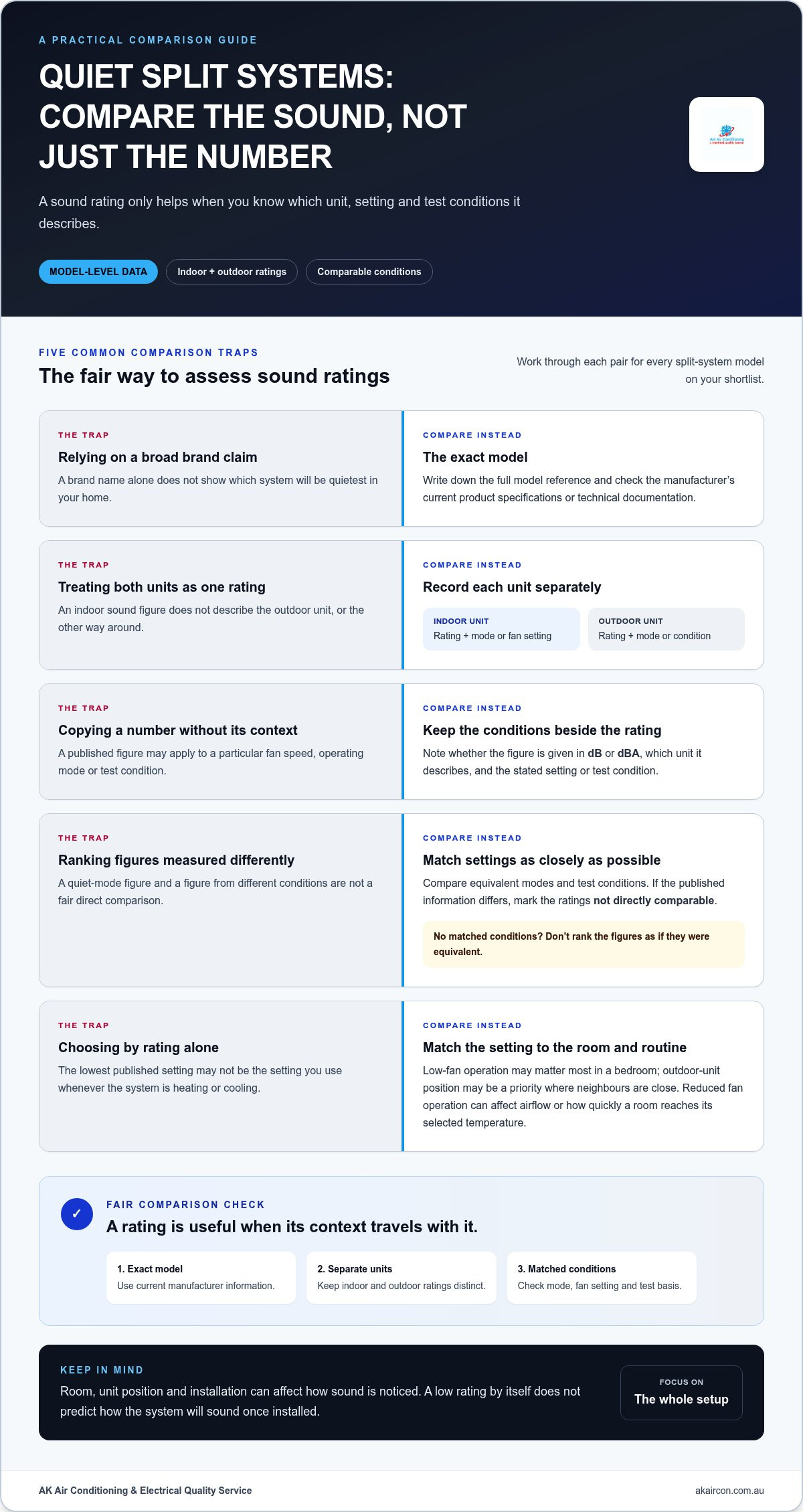
Compare like with like. A figure may apply to a particular fan speed, operating mode or test condition, rather than every way the system can run. If one specification gives a quiet-mode figure and another gives a figure measured under different conditions, the numbers aren’t a fair direct comparison. The rating is useful, but only with its context.
Can a quiet air conditioner still be noticeable?
Yes. Fan speed and operating mode can change the sound you hear, and the room affects how noticeable it feels. A sound that fades into the background while you’re moving around may stand out more in a quiet bedroom at night. The lowest published setting may not be the setting used whenever the system is cooling or heating.
Air moving through an indoor unit can create a steady airflow sound. Rattling, unexpected vibration or a new, unusual noise is different and shouldn’t be dismissed based on a product’s quiet rating. Sound alone can’t identify a fault. If the system seems to be operating abnormally, arrange an assessment by a qualified air-conditioning technician.
That distinction matters when choosing the quietest split system air conditioner australia 2026 for your home: compare the specifications, but also consider how and where the system will operate.
Comparing quiet split system air conditioners in 2026
A useful comparison starts with model-level data, not a broad claim that a brand is quiet. When comparing options for the quietest split system air conditioner australia 2026, use the same steps for each model so you can see which published figures genuinely line up.
- Identify the exact model. Record the full model reference and check the manufacturer’s current product specifications or technical documentation.
- Note the indoor-unit sound rating. Record the stated fan speed, mode and any other operating condition attached to the figure.
- Record the outdoor-unit rating separately. Don’t treat it as part of the indoor figure or assume one tells you how the other will sound.
- Compare equivalent settings. Match modes and test conditions as closely as the published information allows. If conditions differ, mark the figures as not directly comparable.
- Consider your room and use. Low-fan operation may matter most for a bedroom, while outdoor placement may be a priority where neighbours are close.
Sound figures are only a fair comparison when they describe the same unit under comparable operating and test conditions.
Which sound specifications should you compare?
Look for separate indoor and outdoor sound specifications in the manufacturer’s current documentation. Write down each rating alongside its mode or operating condition rather than copying a number without context. If one model’s figure is for low fan and another’s is for a different condition, don’t rank them as though the measurements were equivalent.
Do quiet or sleep modes make a split system quieter?
Mode names and settings vary between models. A manufacturer may publish a sound figure for a quiet, sleep or low-fan mode, but the label itself doesn’t prove a particular noise level. Check whether the specification gives a figure for that setting.
Reduced fan operation may also affect airflow or how quickly the room reaches its selected temperature. The effect depends on the system and room conditions, so consider this trade-off alongside the sound information.
How should you compare available brands?
Compare specific models from Daikin, Mitsubishi Heavy Industries, Mitsubishi Electric, ActronAir, Fujitsu and Samsung using the same method. The brand alone doesn’t establish which system will be quietest in your home. AK Air Conditioning & Electrical Quality Service supplies and installs split systems, but this is not a ranked list of the quietest models. For guidance on choosing and fitting a system, read about split-system air conditioner installation.
Once you have a shortlist, AK Air Conditioning & Electrical Quality Service can consider the room and proposed unit positions as part of split-system supply and installation. Learn about arranging an installation assessment for your Sydney home.
Is the lowest decibel rating always the quietest split system choice?
No. The lowest published sound figure can help you compare models, but it doesn’t establish the best fit for every home. A rating describes a particular unit and operating condition. Your experience also depends on where the system is installed, the room layout and how you use it.
Manufacturer sound data is a valuable reference, not a promise that every room will sound the same. A unit near a reflective surface may be experienced differently from one in a more open position. Installation location can also affect how sound or vibration carries through the building. Choosing the quietest split system air conditioner australia 2026 means weighing the figures alongside your home’s needs.
Rated noise versus the sound you hear at home
Use ratings to compare systems, but check what each figure describes before drawing a conclusion. Indoor and outdoor sound ratings relate to different parts of the system, while operating modes and test conditions can vary between specifications. The sound you notice at home may also depend on placement and nearby surfaces. A low published figure is useful, but it can’t guarantee the same listening experience in every room.
| Rating or factor | What it describes | What to check |
|---|---|---|
| Indoor-unit rating | Sound from the unit inside the room | Which mode, fan setting or operating condition applies? |
| Outdoor-unit rating | Sound from the unit outside | Is it a separate figure, and what conditions were used? |
| Room experience | How sound is heard in your space | Could the unit position or nearby reflective surfaces affect what you notice? |
Quiet operation versus room suitability
A quiet rating doesn’t tell you whether the system can meet the room’s heating and cooling needs. Capacity, room layout and typical use matter too. A bedroom used overnight may have different priorities from a living area used throughout the day. The system still needs to suit the space, so treat sound ratings as one part of the decision rather than the only selection rule.
Room assessment helps balance these needs. Consider the room’s layout and how you expect to use the system, then weigh those details against the manufacturer’s specifications. For more detailed capacity guidance, use the Sydney split-system sizing article alongside this noise comparison.
How can split system placement affect noise in Sydney homes?
A split system’s position can shape what you hear indoors and outdoors. In a Bankstown home, for example, a bedroom may share a wall with a living area, or the outdoor unit may sit near a neighbour’s window or outdoor space. The layout matters as much as the model’s sound specifications when planning for quieter operation.
Placement belongs in a quietness assessment because the sound you experience depends on both the selected system and the conditions around its indoor and outdoor units. A suitable location and careful installation can help manage avoidable vibration and sound transfer, but no position can promise silence.
Where should an indoor split-system unit go for quieter comfort?
Start with how you use the room. In a bedroom, consider where you sleep and where the airflow will travel. In a study, think about where you sit for calls or focused work. The mounting surface also matters. An installer can assess whether it is suitable and consider how vibration might transfer through the structure, rather than choosing a position based on convenience alone.
What should you consider when positioning the outdoor unit?
Include nearby bedrooms, shared walls and neighbouring outdoor areas in the site discussion. A position close to a window or adjoining living space may make operating sound more noticeable to household members or neighbours. The unit also needs suitable airflow clearance, so the quietest-looking spot isn’t automatically appropriate. AK Air Conditioning & Electrical Quality Service considers the system and its proposed location together as part of Sydney split-system installation.
When might a site assessment help?
An assessment is useful when room layout, mounting surfaces or close neighbouring spaces make placement less straightforward. The installer can consider the system’s specifications alongside conditions at your property, including practical mounting and clearance requirements. This helps you make a considered choice before installation, whether your home is in Bankstown or a nearby Sydney suburb.
AK Air Conditioning & Electrical Quality Service supplies and installs split systems. Its licensed and insured technicians consider positioning as one factor in managing avoidable vibration and sound transfer, without promising a particular noise outcome.
Choosing and installing a quiet split system with a Sydney air-conditioning team
A quieter choice starts with a clear picture of how the room is used and where the units could go. Before deciding which system may suit, follow this sequence:
- Identify whether your main priority is a bedroom, study or living area.
- Compare current manufacturer sound specifications for shortlisted models, checking which unit and operating mode each figure describes.
- Assess the room and possible indoor and outdoor unit positions.
- Plan installation around the selected system and proposed locations.
This keeps the focus on the whole installation, not just a single low figure when comparing the quietest split system air conditioner australia 2026.
What to prepare before discussing a quiet split system
Make a note of the room’s main use and when sound is most likely to matter, such as overnight in a bedroom or during calls in a study. Consider possible indoor and outdoor locations, including nearby sleeping areas and shared spaces. If you’ve shortlisted models, bring their current sound specifications and note which modes or settings each figure refers to.
How AK can help with split-system selection and installation
AK Air Conditioning & Electrical Quality Service supplies and installs split systems across Sydney, including the Bankstown area. Installation planning considers the room, proposed unit positions and current manufacturer information, so sound priorities can be discussed alongside the system’s suitability for the space.
AK Air Conditioning & Electrical Quality Service’s licensed and insured technicians are ARC-licensed. Licensed, compliant installation is one factor in managing avoidable vibration and sound transfer; the specific outcome depends on the system and installation conditions. Find out more about split-system air-conditioning installation.
What to do next if quietness is a priority
When making an enquiry, explain which room you’re planning to cool or heat, what sounds concern you and where the units may be positioned. Sharing those details helps guide an assessment of the system and installation together. It also gives you a practical opportunity to discuss model specifications without assuming that one brand or rating will suit every home.
Choose a quieter system with confidence
The quietest split system air conditioner australia 2026 isn’t simply the model with the lowest number in a brochure. Compare current specifications for the exact model, checking whether each figure refers to the indoor or outdoor unit and which operating mode it describes. Then consider how you use the room and where both units could be positioned.
A suitable choice balances sound priorities with the room’s heating and cooling needs. Placement and installation matter too: assessing mounting surfaces and nearby rooms can help manage avoidable vibration and sound transfer, though no system or position can promise silence.
AK Air Conditioning & Electrical Quality Service supplies and installs split systems across Sydney, including the Bankstown area. The business is ARC-licensed, and its licensed and insured technicians can consider your room, shortlisted specifications and proposed unit positions as part of an assessment.
With clear priorities and a careful comparison, you can make a more informed choice for your home and household. A thoughtful plan is a sound place to start.
Frequently Asked Questions
Which is the quietest split system air conditioner in Australia in 2026?
There isn’t one model that’s quietest for every home. The quietest split system air conditioner australia 2026 depends on the exact model, operating mode, room and installation. Compare current manufacturer specifications for indoor and outdoor units separately, and check the conditions behind each sound figure. A low rating is a useful starting point, but placement and room suitability also matter when deciding which option fits your household.
Is a lower decibel rating always better for a split system?
A lower decibel figure can indicate a lower rated sound level, but it doesn’t automatically make a system the right choice. Check which unit the figure describes, its operating mode and the manufacturer’s measurement conditions. A low indoor-unit rating won’t tell you the outdoor-unit rating or whether the system suits the room’s heating and cooling needs. Compare like-for-like specifications, then consider your room and likely use.
How quiet should a split system air conditioner be for a bedroom?
There isn’t one manufacturer rating that guarantees a system won’t disturb sleep. Compare the indoor-unit sound figures for the modes you expect to use, such as low fan or sleep mode, if the manufacturer publishes them. Also consider where the unit would sit in relation to the bed and likely airflow direction. Room conditions and personal sensitivity to sound vary, so treat specifications as a guide rather than a promise.
Are split system air conditioners noisy outside?
The outdoor unit produces sound, so check its rating separately from the indoor unit’s. How noticeable it is around your home can depend on the proposed position and nearby bedrooms, shared walls or neighbouring outdoor areas. Discuss these surroundings as part of installation planning while allowing for the unit’s airflow and clearance requirements. A quieter indoor rating alone doesn’t describe the sound people may hear outside.
Do quiet or sleep modes reduce split system noise?
They may run the system differently, but mode names and settings vary by model. Check the current manufacturer specifications to see whether a sound rating is published for the particular quiet, sleep or low-fan setting. A lower fan setting may affect airflow or how quickly the room reaches its selected temperature. Don’t assume a mode name guarantees a particular sound level or operating result.
Can split system installation affect how noisy the air conditioner seems?
Yes. Unit position, the mounting surface and nearby rooms can influence how sound or vibration is experienced. During installation planning, consider where the indoor unit will direct airflow and whether vibration could transfer through the structure. The outdoor unit’s location also matters, especially near bedrooms or neighbouring spaces. A professional assessment can consider the proposed system and installation conditions together, though it can’t promise a particular noise outcome.
Which split system brands should I compare for quieter operation in Sydney?
Compare current model specifications from Daikin, Mitsubishi Heavy Industries, Mitsubishi Electric, ActronAir, Fujitsu and Samsung. Focus on exact model data, separate indoor and outdoor ratings, and the modes or conditions attached to each figure, rather than relying on brand reputation alone. AK Air Conditioning & Electrical Quality Service supplies and installs split systems across Sydney, including Bankstown, Yagoona, Greenacre, Punchbowl, Bass Hill, Condell Park, Revesby, Padstow, Panania, Chester Hill, Auburn, Parramatta, Liverpool, Fairfield, Strathfield, Campsie, Blacktown, Seven Hills and Lalor.
Important Information
This article provides general information only. Air-conditioning requirements, installation costs, energy savings and rebate eligibility vary between properties and systems. NSW program rules, certificate values and eligible models may change. Contact AK Air Conditioning & Electrical Quality Service Pty Ltd for a property-specific assessment and confirmation of current eligibility before making a purchase or installation decision.


