
You're relaxing at home during a typical Sydney swelter when you notice a steady drip hitting your carpet or, worse, pooling on your polished timber floors. It’s a moment that instantly replaces comfort with a sinking feeling of dread. You start wondering if your unit is about to fail completely or if that water is creeping toward a power point. If you find your air conditioner leaking water Sydney experts recommend turning the system off immediately to prevent electrical hazards and protect your interior finishes.
We know that a leaking unit often feels like a race against time to save your flooring and maintain your comfort. You're likely looking for a way to stop the drip while avoiding unnecessary costs or a total loss of cooling. This guide promises to show you how to protect your home from moisture damage and electrical risks. We will walk through the most frequent causes of drainage failure, identify when a simple DIY fix is possible, and explain how a professional service can restore your system’s efficiency for the 2026 season.
Key Takeaways
- Learn why an air conditioner leaking water Sydney homeowners encounter is often caused by blocked drain lines or frozen coils, and how to identify the source.
- Understand the critical safety steps to take when water pools near power points or light fittings to prevent electrical hazards and structural damage.
- Discover how to protect your timber flooring and gyprock ceilings from permanent moisture damage while waiting for a professional technician.
- Identify if your leaking system is eligible for the 2026 NSW Energy Savings Scheme, which could provide a significant discount on a more efficient replacement.
- Find out how regular summer-ready servicing can prevent sludge and pest-related blockages before they lead to an expensive emergency.
Why Your Sydney Air Conditioner is Leaking Water
Understanding why your system has started to drip requires a quick look at the physics of cooling. Your air conditioner doesn't just lower the temperature; it acts as a powerful dehumidifier for your home. As warm, humid air from your living room is pulled across the freezing evaporator coils, the moisture in that air turns into liquid. To gain a deeper understanding of this process, it's helpful to look at the technical principles of How Air Conditioners Work. This liquid is known as condensate. Condensate is the moisture removed from indoor air that must be drained safely.
You should distinguish between normal operation and a genuine fault. If you notice water dripping from a PVC pipe near your outdoor unit or into a garden bed, your system is likely performing exactly as it should. The problem arises when that water finds its way inside your home. When we see an air conditioner leaking water sydney households usually have a failure in the drainage path. Instead of flowing outside, the water is backing up and overflowing the internal collection tray.
The Role of Sydney’s Humid Climate
Sydney’s unique geography plays a significant role in how much water your unit produces. During a summer swelter, humidity levels in the Harbour City often climb above 70 percent, especially in the afternoon. On these muggy days, your air conditioner has to work overtime to strip litres of water from the air. In coastal suburbs, the salt air can also cause a sticky residue to build up inside the drain pan, which traps dust and lint more easily. In such high-moisture conditions, a small bit of debris that might not cause an issue in a drier climate can quickly lead to a major overflow and a soaked carpet.
Signs of a Leak You Should Not Ignore
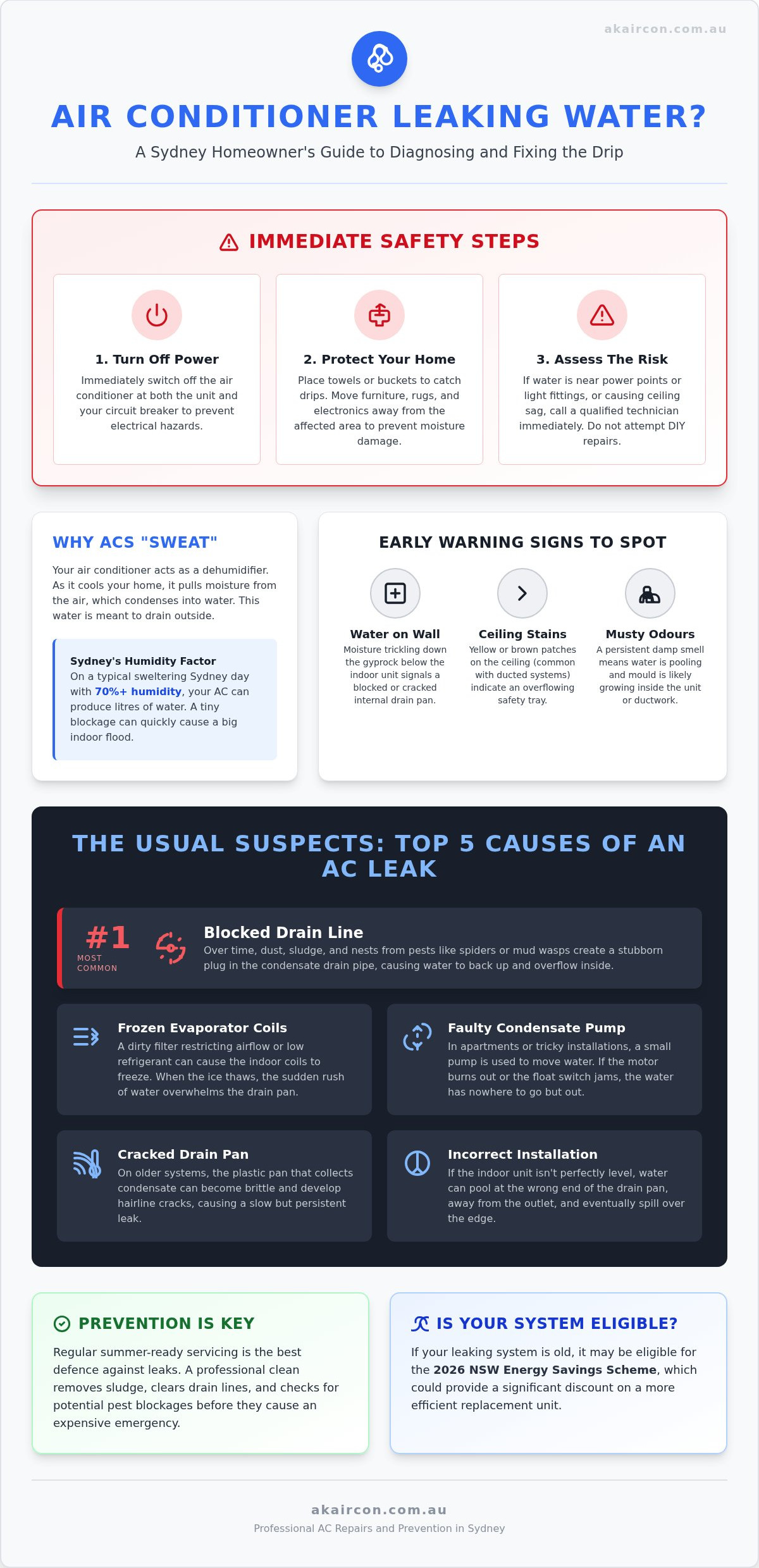
Identifying a leak early can save you thousands in repair bills for your flooring or walls. Keep a close eye out for these specific warning signs:
- Water on the wall: If you see moisture trickling down the gyprock behind your split system, the internal drain pan is likely blocked or cracked.
- Ceiling discolouration: For those with ducted systems, yellow or brown patches on the ceiling are a major red flag that the safety tray is overflowing.
- Musty odours: A persistent damp smell often indicates that water is pooling somewhere it shouldn't be, leading to mould growth inside the unit or ductwork.
Common Culprits: Why the Water Isn’t Draining
If you find your air conditioner leaking water Sydney technicians often point to a few usual suspects. While the humidity provides the moisture, it's usually a physical blockage or a mechanical failure that causes that moisture to end up on your carpet. It's a frustrating situation, but most causes are well-understood and fixable by a qualified specialist.
The most frequent issue involves the condensate drain line. Over time, household dust mixes with water to form a thick grime. Local Sydney pests like spiders or mud wasps also love the damp exit points of these pipes, often building nests that create a stubborn plug. In older systems, particularly some ActronAir or Daikin models that have seen many years of heavy service, the plastic drain pan can become brittle. Even a small hairline crack in the pan is enough to cause a persistent drip that bypasses the drainage pipe entirely.
In some installations, especially in modern Sydney apartment blocks, gravity isn't enough to move the water. These systems rely on small condensate pumps to push the liquid to a distant drain. If the pump's motor burns out or the float switch gets stuck, the water has nowhere to go but out the front of the unit.
The Frozen Coil Phenomenon
When airflow is restricted by a dirty filter, the temperature of the evaporator coil drops below freezing. Moisture doesn't just condense; it turns into a thick layer of ice. Once you turn the system off, this ice thaws rapidly, overwhelming the drain pan and causing a sudden flood. This can also happen if your refrigerant levels are low, which causes the remaining gas to operate at a much lower temperature than designed. If you see ice on the indoor unit, it's a clear sign your system needs professional attention.
Mechanical and Installation Failures
Sometimes the fault lies in how the unit sits on the wall. An indoor unit must be perfectly levelled to allow water to flow toward the drain hole. If the bracket has shifted or the wall has settled, water will pool at the wrong end of the pan. The combination of high humidity and stagnant water creates a perfect breeding ground for biological sludge, an algae-like substance that thrives in the warm, dark environment of Sydney’s AC drainage systems. If you suspect a mechanical failure or a blocked pump, booking a professional AC repair is the most reliable way to prevent structural damage to your home.
Is it an Emergency? Assessing the Risk to Your Home
A few drops of water on a tiled floor might seem like a minor nuisance, but the location of the drip determines whether you're looking at a simple fix or a genuine household emergency. When an air conditioner leaking water sydney homeowners often overlook the hidden pathways that moisture follows. Water rarely stays in one place; it travels along electrical conduits, inside wall cavities, and through ceiling insulation. Understanding the severity of the situation helps you decide whether to wait for a standard service or call for urgent assistance.
The most immediate danger involves water making contact with your home’s electrical infrastructure. If you notice moisture dripping near power points, light switches, or directly into a light fitting, you must act instantly. Electrical "shorting" sounds, such as a faint crackling or popping, or a distinct burning smell near the unit, are signs of a critical failure. Beyond the electrical risks, ignored leaks create a breeding ground for mould and mildew. In Sydney’s warm climate, these fungi can take hold within 24 to 48 hours, posing long-term respiratory health risks for your family.
The Electrical Connection: A Sydney Sparky’s Perspective
Water and electricity are a volatile combination. In modern split systems, the internal control boards are sophisticated pieces of electronics. While premium brands like Mitsubishi build robust units, their delicate circuitry can be fried by a single persistent leak. As licensed electricians and AC technicians, we often see internal leaks that have bypassed the drainage tray and dripped directly onto the main PCB. If the leak is causing your safety switch to trip, you need a technician who is also a qualified sparky. A standard AC mechanic might fix the leak, but they won't always have the licensing to repair the damaged electrical components safely.
Potential for Costly Water Damage
Structural repairs are almost always more expensive than a mechanical AC service. Gyprock ceilings are particularly vulnerable; once they absorb enough water, they lose their structural integrity and can collapse without warning. Replacing water-damaged insulation and saggy ceiling panels is a messy, costly job that often requires multiple trades. Your flooring is equally at risk. Expensive carpets can develop permanent stains and odours, while timber floorboards can warp or "cup" within just two days of exposure to a steady drip. Taking immediate action is significantly cheaper than dealing with a major structural restoration or a complete flooring replacement.
Immediate Steps: What to Do Before the Technician Arrives
If you've just discovered your air conditioner leaking water Sydney humidity hasn't done you any favours, but panicking won't help. The first few minutes after spotting a leak are the most important for protecting your home. While you wait for a specialist to arrive, your priority is to stop the flow of water and ensure the area is safe for your family and your belongings. Following a methodical approach can prevent a small drip from turning into a major structural headache.
Your first move should be to isolate the power. Don't simply turn the unit off with the remote. Go to your main switchboard and flip the circuit breaker labelled for the air conditioning. This completely eliminates the risk of water making contact with live electrical components inside the wall or the indoor unit itself. Once the power is dead, clear the area. Move any electronics, timber furniture, or valuables away from the drip zone. Place a bucket or several heavy towels directly under the leak to contain the moisture. Finally, take a walk outside and check the end of the PVC drain pipe. If the outlet is buried in garden mulch or blocked by a mud wasp nest, clearing it might provide instant relief to the internal overflow.
Safe DIY Checks for Homeowners
There are a few basic checks you can perform safely once the power is off. Gently pop open the front cover of your split system and inspect the air filters. If they are caked in thick dust, they are likely starving the system of air and causing the evaporator coils to freeze. You can wash these filters in lukewarm water and let them dry completely before reinserting them. While you are at it, take a second look at the outdoor drain outlet for any obvious spider webs or dirt. Crucially, never poke sharp objects like screwdrivers or wire into the indoor unit's drain port. You risk piercing the delicate copper coils or cracking the plastic tray, which turns a simple blockage into a far more expensive repair.
When to Stop and Call a Professional
Some situations are far beyond a DIY fix and require the tools and expertise of a licensed technician. If the water is seeping out from behind the gyprock wall or dripping directly from a ducted ceiling vent, the problem is likely a disconnected internal hose or a failed condensate pump. If you notice white frost or solid ice forming on the copper pipes or the indoor fins, your system has a refrigerant issue or a deep-seated blockage. Grinding, buzzing, or unusual clicking noises are also clear warnings of a mechanical failure. For any of these complex issues, it's best to book a professional air conditioning repair to ensure your system is restored correctly and safely.
Professional AC Repairs and Prevention in Sydney
When an air conditioner leaking water sydney homeowners experience persists after basic checks, it requires a technician's diagnostic tools to find the hidden fault. At AK Air Conditioning & Electrical, we don't just clear the immediate blockage. We investigate the root cause, whether it's a hairline crack in a Daikin drain pan or a failing condensate pump in a high-rise apartment. Our team uses specialised pressure-flushing equipment to ensure the entire drainage run is clear, not just the visible section. Because we are also licensed electricians, we can safely inspect the internal control boards of premium Mitsubishi or ActronAir units that may have been exposed to moisture.
The Value of Regular Maintenance
Preventing a leak is always simpler and more cost-effective than repairing structural water damage. A professional "summer ready" service involves much more than a basic filter wash. We perform a high-pressure flush of the condensate lines to remove the biological sludge and debris that thrive in Sydney’s humid conditions. Our technicians also use pH-neutral chemical cleaners on the evaporator coils. This process removes the sticky residue that traps dust and causes the unit to "sweat" excessively. We also check the refrigerant charge. If the gas levels are incorrect, the coil will freeze and eventually flood your floor when the ice thaws. An annual service typically extends the life of your system and ensures it operates at peak efficiency during a heatwave.
Upgrading Your Old Leaking System
Sometimes, a persistent leak is a clear signal that a system has reached the end of its reliable life. Older, inefficient units are far more prone to drainage failures and mechanical breakdowns. If your system is over 10 years old and the repair costs are mounting, it's worth exploring a replacement. The 2026 NSW Energy Savings Scheme provides financial incentives as upfront discounts for installing energy-efficient air conditioning. For example, replacing an old system with a new 6kW split system can attract indicative discounts of up to $560. We specialise in supply and installation of these rebate-eligible systems from brands like Samsung, Fujitsu, and Mitsubishi Electric. We can help you navigate the eligibility criteria to ensure you get the best value for your upgrade.
Contact AK Air Conditioning for a professional leak diagnosis and service today.
Restore Your Home Comfort and Safety Today
Managing an air conditioner leaking water sydney homeowners often encounter during high-humidity days is a task that requires both technical skill and electrical awareness. You've learned that immediate isolation of the power is the first step in protecting your property from gyprock damage and short circuits. While keeping filters clean helps, professional intervention is the only way to ensure drainage lines are clear and internal components remain dry.
Don't let a small drip turn into a major renovation bill for your flooring or ceilings. As licensed electrical and AC specialists and authorised Daikin and Mitsubishi dealers, AK Air Conditioning & Electrical has been serving Sydney families for years with transparent, expert service. Book Your Sydney AC Repair & Service with AK Air Conditioning today to secure your home's comfort and take advantage of potential energy-efficient upgrade rebates. We are here to ensure your system runs safely and reliably all season long.
Frequently Asked Questions
Is it safe to run my air conditioner if it is leaking water?
No, it is not safe to continue operating a leaking unit. Water can easily enter the electrical circuitry or travel along conduits to power points, creating a significant fire or shock hazard. If you find your air conditioner leaking water sydney technicians recommend isolating the power at the main switchboard immediately. Running the system while it drips can also lead to structural damage in your walls or ceilings and encourage rapid mould growth.
How much does it cost to fix a leaking air conditioner in Sydney?
Repair costs depend on the underlying fault, but industry data for 2026 indicates that typical repairs for a leaking unit in Sydney range between $150 and $400. This usually covers common tasks like clearing blocked drain lines or fixing minor mechanical issues. Standard call-out fees across the Sydney metropolitan area generally range from $95 to $180, which often includes the initial diagnostic work to identify why the drainage system has failed.
Can a dirty filter really cause my AC to leak water?
Yes, a dirty filter is a primary cause of internal water leaks. When dust restricts the airflow, the evaporator coil becomes too cold and moisture on the fins turns into solid ice. When you turn the unit off or the ice becomes too heavy, it thaws rapidly and overwhelms the internal drainage tray. Regularly washing your filters every three months is the most effective way for homeowners to prevent this specific type of moisture damage.
Why is my ducted air conditioning leaking through the ceiling?
Ceiling leaks in ducted systems usually mean the primary drain line is blocked and the safety tray located underneath the indoor unit is overflowing. This is often caused by a buildup of algae sludge or debris in the main PVC pipe situated in your roof space. Because these units handle large volumes of water, a failure here can quickly lead to sagging gyprock, ruined insulation, and permanent staining on your ceiling panels.
How often should I have my AC serviced to prevent leaks?
You should have your system professionally serviced at least once a year, ideally before the peak of the summer heat. In Sydney’s humid coastal environment, salt air and dust can quickly create blockages in your drainage system. A routine service includes a high-pressure flush of the drain lines and a chemical clean of the coils. This proactive maintenance identifies small drainage issues before they turn into emergency leaks that damage your flooring.
Can I use a vacuum to clear a blocked AC drain line?
While some DIY guides suggest using a wet-dry vacuum on the external pipe, it is rarely a permanent solution. A vacuum might pull out a surface blockage, but it won't remove the sticky biological sludge that often lines the inside of the entire pipe run. You also risk damaging internal connections if the suction is too high. A professional pressure flush is the only reliable way to ensure the line is completely clear and safe.
What happens if water gets into the electrical components of my AC?
Water entering the electrical section can cause immediate short circuits and permanent damage to the expensive main printed circuit board. This often leads to your safety switch tripping at the main board to protect your home. Because we are licensed electricians as well as AC specialists, we often see cases where a simple leak results in a costly electrical repair. Moisture near live wires also creates a serious fire hazard inside your wall cavity.
Does a leaking AC mean I need a regas?
Not always, but there is frequently a link between the two issues. If your system is low on refrigerant gas, the indoor coil will freeze over and then leak water as the ice thaws. However, the liquid you see is condensate water, not the refrigerant itself. If a technician determines that low gas caused the freezing, they must find and repair the gas leak before performing a regas to ensure the problem does not happen again.
Important Information
This article provides general information only. Air-conditioning requirements, installation costs, energy savings and rebate eligibility vary between properties and systems. NSW program rules, certificate values and eligible models may change. Contact AK Air Conditioning & Electrical Quality Service Pty Ltd for a property-specific assessment and confirmation of current eligibility before making a purchase or installation decision.


