
Buying an air conditioner based only on your floor plan is the quickest way to guarantee high power bills and a home that never feels quite right. It's a common mistake, but in a city where summer humidity can be as brutal as the heat, "near enough" isn't good enough. If you're currently wondering, "what size split system do i need?" you're already ahead of the curve. Most people get lost in the jargon of kilowatts and horsepower, or worse, they fall for bait-and-switch pricing from uncertified installers who don't understand the demands of Sydney's unique climate.
We agree that technical specs should be simple, not a barrier to your comfort. This guide provides a clear roadmap to mastering aircon sizing, ensuring you get a system that's perfectly matched to your room's volume and insulation levels. You'll learn the exact kW recommendations for various spaces, how to account for local heat factors, and the simple steps to claim 2026 NSW energy rebates that provide a significant upfront discount on your installation. It's time to take the guesswork out of your home comfort and start saving on your energy costs.
Key Takeaways
- Learn why matching capacity to your room size is essential for effective dehumidification and to prevent the unit from wearing out too early.
- Use our updated 2026 guidelines for different room types to finally answer "what size split system do i need" before you request a quote.
- Understand how your Sydney suburb and the direction your windows face can drastically change the cooling power your home actually requires.
- Find out how to claim the latest NSW government rebates to help lower the upfront cost of installing a high-efficiency split system.
Why Correct Sizing is Crucial for Your Sydney Home
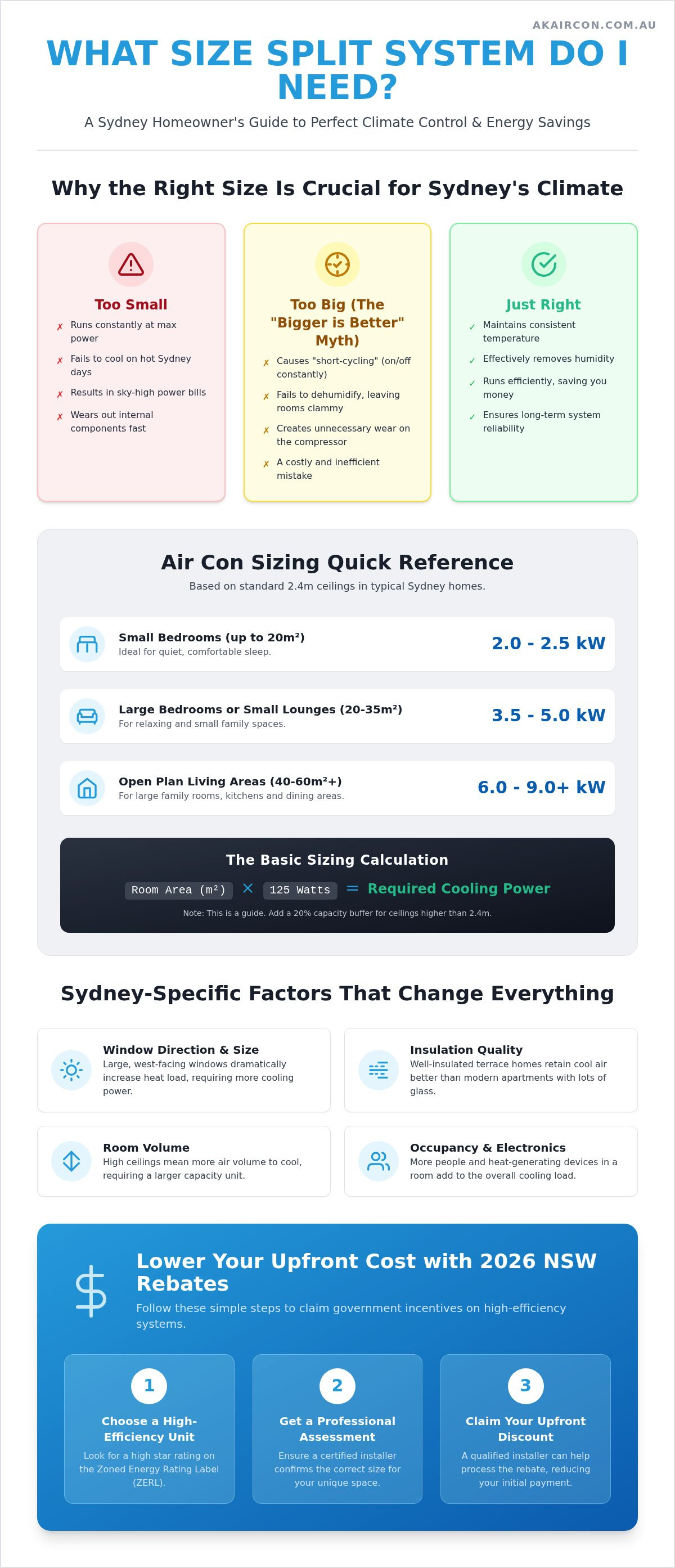
Choosing an air conditioner isn't like buying a television; you can't just pick the biggest one on the shelf and hope for the best. When homeowners ask, "what size split system do i need?", they are really asking about capacity. In Australia, we measure this in kilowatts (kW). This figure represents the unit's ability to move heat. A 2.5kW unit removes 2.5 kilowatts of heat from your room every hour. Getting this Basic Sizing Calculation right is the difference between a refreshing sanctuary and a noisy, expensive box on the wall.
Sydney’s climate presents a double challenge. Our summers are punishingly humid, while our winters in areas like Western Sydney can drop toward zero. A reverse cycle split system handles both, but only if the capacity matches the room volume. If you install a unit that is too small, it will run at maximum power indefinitely. It won't just fail to cool you down on a 40-degree January afternoon; it will also send your electricity provider a very generous donation in the form of a massive bill.
The "Bigger is Better" Myth
Many people assume a larger unit will cool a room faster. This is a costly mistake. An over-sized unit leads to "short-cycling," where the system reaches the target temperature too quickly and shuts off. Because it doesn't run long enough to move air through the heat exchanger, it fails to remove moisture. You end up sitting in a room that is cold but feels clammy and uncomfortable. If you are wondering what size split system do i need to keep a west-facing lounge cool, you have to look beyond the physical dimensions of the room. Modern inverter technology from brands like Daikin or Mitsubishi Heavy Industries can adjust their output, but even the best inverter has limits. Constant starting and stopping puts immense strain on the compressor, leading to premature mechanical failure and higher maintenance costs.
Efficiency Ratings and Your Hip Pocket
Once you know the capacity required, you need to look at how efficiently that unit uses power. Australian units now feature the Zoned Energy Rating Label (ZERL). This label is helpful because it shows how a unit performs in different climates. For Sydney residents, looking at the "subtropical" or "temperate" ratings provides a realistic view of seasonal performance. The Energy Efficiency Ratio (EER) represents the ratio of cooling capacity to power input, where a higher number indicates a more efficient unit for your home. Investing in a higher star rating for a correctly sized unit usually pays for itself through significantly lower running costs over the system's life.
The Basic Sizing Calculation: kW vs Square Metres
Most Sydney homeowners start their journey with a simple question: "what size split system do i need?" While a professional assessment is the only way to be completely certain, you can get a very accurate estimate by looking at your floor area. The standard Australian rule of thumb for a living area is roughly 125 watts per square metre. For a bedroom, this often drops to between 80 and 100 watts per square metre because these rooms are typically used when the sun isn't at its peak and they generally have fewer occupants and electronic devices generating heat.
To calculate your requirement, multiply the length of your room by the width to find the square metres, then multiply that by the wattage requirement. For example, a 20m2 living room would require 2,500 watts, or a 2.5kW unit. However, this calculation assumes a standard ceiling height of 2.4 metres. If your home has high ceilings or an open mezzanine, you must calculate the volume of the room in cubic metres (m3) instead. In these cases, we typically add a 20% capacity buffer to ensure the unit doesn't struggle to move air through that extra vertical space.
Sydney Sizing Chart: A Quick Reference
This chart provides a starting point based on typical Sydney room dimensions and standard ceiling heights:
- Small Bedrooms (up to 20m2): A 2.0kW to 2.5kW unit is usually perfect for keeping these spaces quiet and comfortable.
- Large Bedrooms or Small Lounges (20-35m2): These spaces generally require 3.5kW to 5.0kW units to manage the higher air volume.
- Open Plan Living Areas (40-60m2+): Large family rooms or combined kitchen and dining areas often need 6.0kW to 9.0kW+ units to maintain a consistent temperature.
Accounting for Sydney Architecture
Sydney's diverse building styles mean a "one size fits all" approach often fails. If you live in a classic Inner West terrace, your shared walls provide excellent natural insulation, which might allow for a slightly smaller unit. Conversely, modern apartments in the CBD or Parramatta often feature floor-to-ceiling glass. These windows act like giant radiators in the afternoon sun, significantly increasing the heat load. If your lounge is wrapped in glass, you will likely need to move up to the next available unit size to stay cool.
High ceilings are another common feature in renovated Sydney homes. A 3-metre ceiling increases the air volume of a room by 25% compared to a standard build. If you don't account for this extra air, even a premium unit will run constantly without ever reaching your target temperature. Our professional installation team can help you navigate these architectural quirks to ensure your system is sized for efficiency and longevity.
External Factors: Why Your Location in Sydney Matters
Sydney is a city of microclimates. While the Bureau of Meteorology might give a single temperature for the CBD, residents in Penrith or Campbelltown know that figure rarely reflects their reality. When you're trying to figure out "what size split system do i need?", your postcode is just as important as your floor plan. The cooling capacity required for a lounge room in Bondi is often vastly different from what's needed for an identical room in the Hills District. Local heat loads, humidity levels, and your home’s construction materials all dictate how hard your air conditioner has to work.
In the Eastern Suburbs and Northern Beaches, coastal humidity is the primary concern. While temperatures stay lower than out west, the air is heavy with moisture. A split system here needs excellent dehumidification capacity to keep the air feeling crisp rather than clammy. Conversely, Western Sydney experiences dry, searing heat. On a day when the coast is a pleasant 28 degrees, Western Sydney can easily hit 45 degrees. This extreme temperature gradient means a unit in the west must have more raw "grunt" to overcome the massive difference between the outdoor air and your desired indoor temperature.
West vs. Coast: The 2kW Difference
The "Western Sydney Factor" often adds a significant load to our sizing calculations. For a standard 30-square-metre living area, a 3.5kW unit might be perfectly adequate in a sea-breeze-cooled home in Coogee. However, that same room in Blacktown or Liverpool will likely require a 5.0kW unit to cope with 45-degree summer peaks. If you under-size a unit in the west, it will run at 100% capacity for hours, skyrocketing your power bills without ever actually reaching a comfortable temperature. We also recommend prioritising high-quality reverse cycle systems for these areas, as they provide the most efficient heating during the frosty winter mornings typical of the Sydney basin.
The Impact of Windows and Insulation
Your home's orientation and building materials are the next pieces of the puzzle. Unshaded glass is the biggest entry point for heat; up to 87% of a home’s heat gain in summer comes through the windows. If you have large, west-facing windows that soak up the afternoon sun, you'll need to increase your split system capacity by at least 15% to 20% to compensate for that "heat-soak" effect. Modern 7-star energy-rated apartments with double glazing are much easier to cool than "leaky" older weatherboard cottages or uninsulated double-brick terraces that hold onto the day's heat long after the sun goes down.
Roof insulation is the single best partner for your new air conditioner. A well-insulated ceiling can reduce the required cooling capacity significantly, allowing you to install a smaller, more efficient unit. Before settling on a size, check if your home uses modern cladding or traditional brick, as the thermal mass of brick can radiate heat into your living space well into the evening, requiring a unit that can handle sustained loads.
Choosing the Right Brand for Your Capacity Needs
Once you've determined "what size split system do i need", the next logical step is selecting a manufacturer that can reliably deliver that capacity. Not all kilowatts are created equal. A premium unit is designed to maintain its rated output even when it's 42 degrees in Parramatta, whereas a budget unit might see its performance drop significantly as the outdoor temperature rises. Choosing a brand that matches the specific demands of your Sydney suburb ensures that the "2.5kW" you paid for actually delivers 2.5kW of cooling when you need it most.
Daikin remains a top-tier choice for Sydney families who value whisper-quiet operation and surgical precision in temperature control. Their inverter technology is industry-leading, making them ideal for bedrooms where you don't want to hear the unit cycling on and off throughout the night. If heating is just as important to you as cooling, Mitsubishi Heavy Industries is a powerhouse. While we focus on summer, Sydney winters can be biting; MHI units are built with heavy-duty engineering that ensures high-performance heating even when the mercury drops toward zero.
For those who want a system designed specifically for our local climate, ActronAir is an Australian success story. They engineer their systems to keep cooling even when outdoor temperatures hit the mid-forties, which is a common occurrence in our western suburbs. Fujitsu also remains a household favourite across Sydney, often referred to as "Australia’s Favourite Air" for its excellent balance of user-friendly features and long-term mechanical reliability.
Premium vs. Budget Units
Cheap retail units often look attractive on a quote, but they frequently fail the "Sydney Stress Test." When our city hits those extreme summer peaks, budget compressors can overheat and shut down right when you need them. We always prioritise brands with strong local parts availability. If a small component fails in five years, you want a brand with a Sydney-based warehouse; you don't want to scrap a whole unit because parts are no longer imported. A professional split system aircon installation from an authorised dealer ensures your warranty is fully protected and that the unit is matched to your home's specific heat load.
Smart Features for Sydney Living
Modern split systems offer more than just a temperature dial. Wi-Fi control has become a game-changer for the Sydney commute. You can use your smartphone to turn the aircon on while you're still on the train from the City, ensuring you walk into a perfectly cooled home. Human sensor technology is another brilliant addition for your hip pocket. These sensors detect when a room is empty and automatically reduce the output, which prevents you from cooling an empty lounge room. For residents living near busy roads or in high-pollen areas, advanced air purification filters are essential for managing Sydney dust and seasonal allergens.
The Final Step: Professional Assessment and NSW Rebates
While floor plans and sizing charts provide a solid starting point for answering "what size split system do i need", they cannot replace a physical site inspection. An online calculator doesn't see the specific way your roof pitches or the exact condition of your home's electrical switchboard. A professional assessment ensures your new unit is positioned for optimal airflow, which prevents the system from working harder than it needs to. With air conditioning installation prices in Sydney rising by 2.3% in the first quarter of 2026 due to trade shortages, getting the sizing right the first time is essential to avoid costly retrofits or high running costs.
The installation process involves more than just bolting a unit to the wall. Because a split system is a high-draw electrical appliance, we must ensure your existing circuits can safely handle the load. Our team combines refrigeration expertise with licensed electrical skills, providing a seamless service that covers everything from the initial kW calculation to the final safety certification. This integrated approach is particularly important for Sydney's older homes in the Inner West or Eastern Suburbs, where wiring may require minor upgrades to meet modern standards.
Saving with NSW Government Rebates
In 2026, the NSW government continues to incentivise energy efficiency through the Energy Savings Scheme (ESS) and the Peak Demand Reduction Scheme (PDRS). This is not a traditional cashback programme where you wait weeks for a refund; instead, it's an upfront discount applied directly to your installation quote by an accredited provider. If you are replacing an old, inefficient unit with a high-efficiency model like a Daikin or Mitsubishi Heavy Industries system, you could see a significant reduction in your initial costs.
Typical discounts for a 6kW split system currently range between $550 and $700, though high-efficiency upgrades can attract savings of over $2,600 depending on the specific model and your property's climate zone. To qualify, the system must meet strict energy efficiency requirements and be installed by a certified provider who can handle the necessary documentation. We manage this entire process for you, ensuring you receive the maximum benefit without the administrative headache.
Why AK Air Conditioning & Electrical Quality Service is Your Local Sydney Choice
We've built our reputation on honest advice and technical precision across the entire Sydney basin. From the growing suburbs around Castle Hill to the high-density apartments of the CBD, AK Air Conditioning & Electrical Quality Service understands how local building styles impact your cooling needs. We don't just sell boxes; we provide a "Quality Service" guarantee that ensures your system is sized for longevity and peak performance during those brutal 40-degree Sydney afternoons. Our authorised rebate checkers will walk you through your options, helping you choose a system that balances upfront value with long-term energy savings.
Ready to find the perfect match for your home? Check your NSW rebate eligibility and get a sizing quote today! Our team is ready to help you finally settle the question of what size split system do i need while ensuring your home remains a sanctuary of comfort all year round.
Secure Your Home’s Comfort and Efficiency Today
Choosing the right air conditioner is about more than just floor space; it's about understanding how your specific Sydney microclimate and home architecture interact. By now, you should have a much clearer idea of the answer to "what size split system do i need" for your property. Whether you're in the humid East or the scorching West, selecting the correct capacity ensures your system runs efficiently, stays quiet, and keeps your power bills under control for years to come.
Don't leave your comfort to chance or a generic online estimate that ignores the unique heat load of your home. As a local, family-owned and operated business, we take pride in providing the technical precision and honest advice your family deserves. As authorised Daikin and Mitsubishi installers and NSW government rebate specialists, we'll ensure you receive the maximum upfront discount on a premium system that's perfectly matched to your space. Take the next step toward a more comfortable home and lower energy costs by reaching out to our expert team.
Book a Professional Sizing Assessment & Rebate Check with AK Air Conditioning & Electrical Quality Service. Let's get your home ready for whatever the Sydney weather throws your way.
Frequently Asked Questions
Can I use a 2.5kW split system for a large living room in Sydney?
A 2.5kW unit is generally insufficient for a large living area. These units are best suited for small bedrooms or home offices up to 20 square metres in size. For a larger lounge, you will likely need a 5.0kW to 7.1kW system to maintain comfort during a peak Sydney heatwave. Installing a unit that is too small leads to constant operation and unnecessarily high power bills.
How much does it cost to install a split system in Sydney?
Total costs for a fully installed split system in Sydney typically range from $1,375 to $5,200 in 2026. This variation depends on the brand, the unit capacity, and the complexity of the electrical work required for your specific property. Labour costs for the installation alone usually fall between $600 and $750, though these prices saw a 2.3% increase in the first quarter of this year.
Is reverse cycle air conditioning cheaper than gas heating in NSW?
Modern reverse cycle air conditioning is now widely considered the most cost-effective way to heat a home in NSW. Unlike gas heaters that create heat, these systems move heat from the outside air into your home. This process is much more efficient; it often delivers three to four units of heat for every unit of electricity consumed, which is far superior to traditional gas or electric bar heaters.
Do I need to upgrade my switchboard for a new split system aircon?
You might need a switchboard upgrade if your home is older or if your current board is already at capacity. Split systems require a dedicated electrical circuit to operate safely and prevent your breakers from tripping. Our team assesses your electrical infrastructure during the initial quote to ensure your home meets current Australian safety standards before the installation begins.
What is the most energy-efficient air conditioner brand for Sydney homes?
Daikin and Mitsubishi Heavy Industries consistently rank as the most energy-efficient brands for the Sydney climate. When choosing, look for the Zoned Energy Rating Label (ZERL) and prioritise units with high star ratings for the "subtropical" or "temperate" zones. These brands invest heavily in inverter technology that reduces power consumption once your room reaches the target temperature.
How often should I service my split system to keep it efficient?
We recommend a professional service at least once every twelve months to maintain peak efficiency and protect your warranty. You should also clean the internal dust filters yourself every few months, especially during heavy use in summer. Regular maintenance prevents dust build-up on the coils, which can force the unit to work harder and increase your running costs over time.
Are there still government rebates for air conditioning in NSW for 2026?
Yes, the NSW Energy Savings Scheme (ESS) is legislated to continue until 2050, with active incentives available throughout 2026. These are applied as upfront discounts on your quote by an accredited provider rather than a traditional cashback. When asking "what size split system do i need", remember that larger, more efficient units often qualify for higher discount amounts under these government schemes.
Does a west-facing bedroom need a larger air conditioner?
A west-facing bedroom definitely requires a larger air conditioner due to the intense "heat-soak" effect of the afternoon sun. We typically recommend adding a 15% to 20% capacity buffer for these rooms to compensate for the radiant heat. If a standard room needs 2.5kW, a west-facing version of that same space might require a 3.5kW unit to stay cool effectively without straining the compressor.
Important Information
This article provides general information only. Air-conditioning requirements, installation costs, energy savings and rebate eligibility vary between properties and systems. NSW program rules, certificate values and eligible models may change. Contact AK Air Conditioning & Electrical Quality Service Pty Ltd for a property-specific assessment and confirmation of current eligibility before making a purchase or installation decision.


