
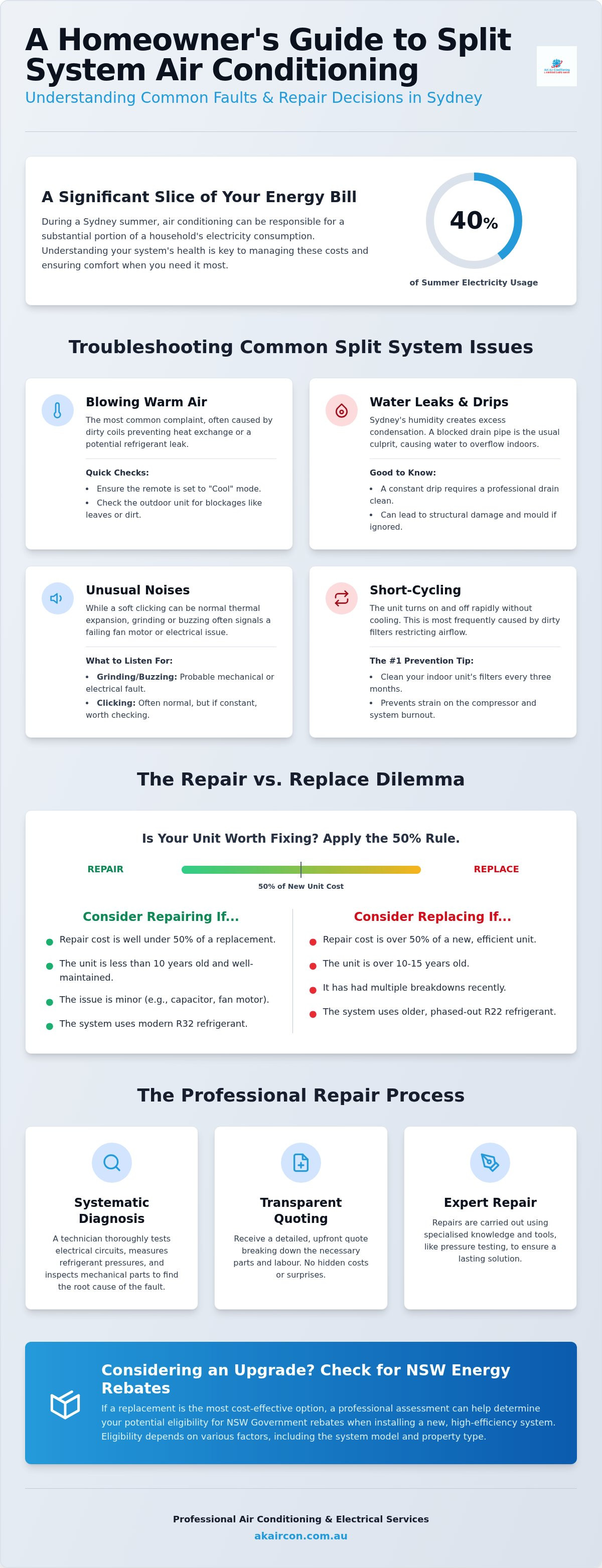
Did you know that air conditioning can account for around 40% of a Sydney household's electricity bill during the peak of summer? It is a significant figure, particularly when your unit starts blowing warm air or leaking during a humid afternoon in Bankstown. At AK Air Conditioning & Electrical Quality Service Pty Ltd, we understand that a malfunctioning system is stressful enough without the added worry of "cowboy" tradies overcharging for unnecessary gas refills. You deserve a cool home and a transparent process for your split system air conditioning repair Sydney, ensuring your property returns to a comfortable temperature without hidden costs.
This guide simplifies the essentials of air conditioning maintenance and troubleshooting in 2026. We'll help you identify common faults like humidity-driven drainage leaks and explain exactly when a repair makes sense versus when a replacement is the smarter long-term move. You'll also learn how current NSW energy rebates can assist with high-efficiency upgrades. Our team is here to provide the professional clarity you need to lower your energy bills and restore comfort to your home.
Key Takeaways
- Identify why your unit is blowing warm air or leaking, and learn how Sydney's high humidity levels contribute to common drainage issues.
- Understand the professional diagnostic process for split system air conditioning repair Sydney and why pressure testing is essential for lasting results.
- Apply the "50% Rule" and age benchmarks to decide whether fixing your current unit is a sound investment or if a replacement is more cost-effective.
- Discover simple DIY maintenance tasks, like cleaning filters every three months, that can prevent unexpected breakdowns and lower electricity bills.
- Learn how a repair assessment can determine your eligibility for NSW energy rebates when upgrading to a high-efficiency system.
Troubleshooting Common Split System Issues in Sydney
Sydney’s unique climate, characterised by high coastal humidity and dusty winds across Western Sydney, places specific demands on Heating, ventilation, and air conditioning (HVAC) systems. When you require split system air conditioning repair Sydney technicians often find that environmental factors are the primary culprits behind system failure. If your unit is blowing warm air, it might be a refrigerant leak or simply a layer of grime on the indoor evaporator coils. Blocked coils prevent the heat exchange process, forcing the compressor to work harder and drive up your electricity bills. Unusual noises also tell a story. A clicking sound is often just the plastic casing expanding as it cools, but grinding or buzzing usually indicates a failing fan motor or an electrical component that needs professional attention.
Dirty filters are the most frequent cause of "short-cycling." This happens when the unit turns on and off rapidly without ever reaching the set temperature. This constant cycling puts immense strain on the compressor and can lead to a total system burnout if left unaddressed. Regular cleaning is essential for maintaining airflow and system health.
Why is my aircon not cooling properly?
Before booking a diagnostic visit, check your remote. It is surprisingly common for units to be accidentally set to "Fan" or "Dry" mode instead of "Cool." If the settings are correct, look at your outdoor unit. In Western Sydney gardens, dust, dry leaves, and pet hair can clog the condenser fins. This airflow restriction causes the system to overheat and shut down. Sensor malfunctions can also occur if the unit's internal thermometer is covered in dust, leading to inaccurate readings and poor performance. If these basic checks don't solve the issue, a professional air conditioning repair is likely necessary to inspect the internal sensors or refrigerant levels.
Water leaks and drainage problems
The "Sydney drip" is a frequent headache during humid summer afternoons. High humidity causes the indoor unit to produce more condensation than usual. If the condensate drain is blocked by algae or dust, that water has nowhere to go but down your gyprock walls. This can lead to costly structural damage and mould growth. While "sweating" vents are common when cold air hits humid room air, a constant leak usually requires a professional drain clean. In some cases, if your unit uses a condensate pump to move water away, a total pump failure might be the cause, requiring a technical replacement to restore proper drainage.
Understanding the Process of Split System Air Conditioning Repair Sydney
When a technician from AK Air Conditioning & Electrical Quality Service Pty Ltd arrives at your home, the process begins with a systematic diagnostic evaluation. It isn't just a quick glance at the indoor unit. A professional assessment involves testing the electrical circuits, measuring refrigerant pressures, and inspecting the mechanical integrity of the compressor. This thorough approach ensures that the root cause of the fault is identified rather than just the symptoms. Whether you have a Daikin, Mitsubishi Heavy Industries, or an Australian-made ActronAir system, each brand has specific error codes and internal configurations that require specialised knowledge to interpret correctly.
Our technicians focus on transparency. We believe you should have a clear understanding of the fault before any work begins. If your system requires a complex split system air conditioning repair Sydney specialists will provide a detailed breakdown of the necessary parts and labour. This eliminates the fear of "hidden" costs that often come with less reputable providers who might charge for unnecessary gas refills without identifying the underlying electrical or mechanical issue.
The diagnostic and quote phase
Upfront pricing is a cornerstone of our service. During the diagnostic phase, technicians use digital manifolds and multimeters to check the health of capacitors, fan motors, and printed circuit boards (PCBs). We also evaluate the age of your system. For older units using R22 refrigerant, which is now phased out, parts can be difficult and expensive to source. In contrast, modern R32 systems are more readily serviceable. If you are unsure about the state of your unit, you can request a professional assessment to see if a repair is viable.
Refrigerant and gas leak repairs
A common misconception in the industry is that air conditioners simply need "topping up" with gas. In reality, a sealed system should never lose refrigerant. If the gas is low, there is a leak. According to standards supported by the Australian Institute of Refrigeration, Air Conditioning and Heating (AIRAH), it is a legal requirement for licensed ARC technicians to locate and fix leaks before adding new refrigerant. We use nitrogen pressure testing to find microscopic holes in the copper pipework. This process prevents environmental damage and ensures your split system air conditioning repair Sydney provides a lasting result. Signs of a slow leak include a gradual loss of cooling power and oil stains on the outdoor brass valves.
Electrical component failures are just as common as gas leaks. Capacitors often fail during Sydney heatwaves because they can't handle the high starting torque required by the compressor. Replacing a specific electrical part can often save a system that an unlicenced tradie might suggest replacing entirely. Our goal is to provide an honest path back to a cool home. Learn more about our professional repair process.
The Repair vs. Replace Dilemma: Is Your Unit Worth Fixing?
Deciding whether to invest in a repair or commit to a new split system installation is one of the most common challenges for Sydney homeowners. It's often a balance between immediate costs and long-term reliability. A helpful industry benchmark is the "50% Rule." If the quote for a split system air conditioning repair Sydney technicians provide exceeds half the cost of a brand-new unit, replacement is usually the more economical choice. This is especially true when you factor in the improved energy efficiency of modern systems. A 10-year-old 2-star unit consumes significantly more electricity than a modern 5-star inverter model, meaning a new system can eventually pay for itself through lower utility bills.
Age is another critical factor. Most split systems are designed to last between 10 and 12 years. If your unit is approaching this decade mark, it's likely using obsolete R22 refrigerant. Maintaining these older systems is becoming increasingly expensive as the gas is phased out and parts become scarce. In many cases, the high cost of sourcing rare components makes a repair a short-term fix for a long-term problem.
When to choose repair
When you book a split system air conditioning repair Sydney service for a younger unit, fixing minor electrical or mechanical faults is almost always the better option. Repairing your system is often the right path if the fault is isolated and the unit has been well-maintained. We typically recommend repairs for:
- Minor mechanical issues like blocked condensate drains or failed capacitors.
- Systems under 7 years old that are still within their expected functional lifespan.
- Units that have received regular servicing and show no signs of severe rust or wear.
- Simple sensor replacements or remote control pairing issues.
When replacement is the smarter move
Sometimes, a repair is simply throwing good money after bad. If your compressor fails outside of its warranty period, the labour and part costs are rarely justified. Coastal Sydney suburbs like Strathfield or Campsie often see severe corrosion on outdoor units due to salt air and humidity, which can lead to terminal gas leaks in the condenser coils. These leaks are often impossible or too expensive to fix reliably.
Choosing a replacement also allows you to upgrade to a high-performance reverse cycle air conditioner. This provides superior heating during winter and cooling during summer. Additionally, replacing an old, inefficient unit may make you eligible for a NSW energy rebate, depending on your property, location, and the system model you choose. A professional assessment can help you determine if your current setup qualifies for these incentives.
Preventing Future Breakdowns: Maintenance for Air Conditioning Units
Most homeowners only think about their unit when it stops working. However, industry data suggests that a routine service can improve a unit's energy efficiency by up to 15%. Implementing a regular maintenance checklist is the most effective way to extend the lifespan of your system and avoid the stress of an emergency split system air conditioning repair Sydney summers often trigger. Taking a proactive approach ensures that small issues don't escalate into expensive mechanical failures.
DIY maintenance is simpler than you might think and can be done between professional visits. You should aim to clean your indoor unit filters every three months; more often if you have pets or live near busy roads in areas like Bankstown. Dust and pet hair act as a blanket on the coils, forcing the unit to work harder and increasing wear. Outside, ensure the condenser unit has at least 500mm of clear space on all sides. Remove any dry leaves, weeds, or storage items that might block airflow, as restricted air leads to overheating and compressor strain.
While DIY tasks are helpful, they don't replace an annual professional service. Major manufacturers like Daikin and Mitsubishi Electric often require documented proof of professional maintenance to honour their five year warranties. A licensed technician doesn't just clean; they look for early signs of component wear, such as failing capacitors or minor refrigerant leaks, that could lead to a total system failure during a heatwave.
Seasonal prep for Sydney weather
Sydney’s climate is predictable but harsh on mechanical equipment. In May, before the winter chill hits, run your system on heating mode for 20 minutes to ensure the reverse cycle function is operational. Conversely, late October is the ideal time to prep for the December humidity peak. This prevents the "Sydney drip" by ensuring the drainage system is clear before it has to handle maximum condensation. Proper airflow is your system's best friend during these peak periods.
The benefits of professional cleaning
A professional service goes deep into the system where homeowners can't safely reach. Technicians clean the evaporator coils to ensure optimal heat exchange, which directly impacts your electricity bills. If you notice a musty smell when you turn the unit on, it's usually bacteria or mould growth in the drain pan or on the blower fan. Sanitising these areas is vital for your indoor air quality. As licensed electrical technicians, we also check all electrical terminals for tightness; loose connections are a leading cause of PCB failure and can even pose fire hazards.
Professional AC Repair Sydney and NSW Energy Rebates
When a technician from AK Air Conditioning & Electrical Quality Service Pty Ltd visits your property for a split system air conditioning repair Sydney assessment, we evaluate more than just the immediate mechanical fault. If your unit is unrepairable or the cost of parts makes fixing it a poor investment, we can immediately perform an eligibility check for current NSW energy rebates. This process identifies whether you can replace an old, inefficient system with a modern high-efficiency model at a reduced upfront cost through the Energy Savings Scheme (ESS).
The advantage of working with a dual-licensed specialist is that we handle both the refrigeration and the electrical compliance. Because AK Air Conditioning & Electrical Quality Service Pty Ltd holds both licences, we ensure that your home's electrical infrastructure is ready for a high-performance inverter system without the need for external subcontractors. Using an authorised installer is critical for insurance validity and ensures that all work meets the strict standards required to generate Energy Savings Certificates (ESCs).
Local expertise in Western Sydney
Based in Bankstown, our team understands the specific infrastructure challenges in older suburbs like Auburn and Bass Hill. In these areas, household power grids can sometimes require minor upgrades to support modern, high-capacity air conditioning systems. Our dual-licensing allows us to identify these electrical requirements during a standard split system air conditioning repair Sydney call-out. For residents in Revesby and surrounding suburbs within 30km, our local knowledge ensures that any replacement system is perfectly suited to the local humidity levels and power availability.
Exploring energy-efficient upgrades
If your system is non-viable, transitioning to a rebate-eligible Daikin, Mitsubishi, or Samsung unit is a strategic move. These systems are designed to withstand the Sydney climate while significantly reducing your quarterly electricity bills. AK Air Conditioning & Electrical Quality Service Pty Ltd assists with the necessary paperwork for energy-saving upgrades, ensuring the process is transparent and compliant with NSW requirements.
Reducing your home's carbon footprint is an added benefit of choosing an energy-efficient system. However, it is important to remember that eligibility, certificate value, and the final customer benefit depend on the property, location, installation type, and the specific system model. A professional assessment is the only way to confirm if your property qualifies for these incentives. We provide the technical expertise to help you make an informed decision for your home's long-term comfort.
Restore Your Home's Comfort and Efficiency
A malfunctioning air conditioner shouldn't be a source of constant stress or unexpectedly high electricity bills. By applying the "50% rule" for repairs and staying on top of seasonal filter maintenance, you can protect your system's lifespan and your household budget. If your unit is nearing the end of its functional life, the available NSW energy rebate programs offer a clear pathway to a modern, high-efficiency upgrade. Whether you require a minor component fix or a complex split system air conditioning repair Sydney homeowners can rely on, professional diagnostics provide the clarity and confidence you need to move forward.
Our ARC licensed and fully insured technicians are specialists in Daikin, Mitsubishi, and ActronAir systems. We've proudly served Bankstown and the Greater Sydney region for years, focusing on transparent service and technical excellence. We're here to ensure your cooling system performs at its peak when you need it most.
We look forward to helping you restore the cooling performance and efficiency of your home.
Frequently Asked Questions
How much does a split system air conditioning repair cost in Sydney?
The cost of a split system air conditioning repair Sydney homeowners face depends on the specific fault and required parts. A standard industry diagnostic fee usually covers the technician's time to identify the issue. Minor repairs like clearing a drain or replacing a capacitor are generally more affordable than major mechanical work. We recommend a professional assessment to receive an accurate quote tailored to your system's condition and the complexity of the repair.
Is it worth repairing a 10-year-old air conditioner?
Repairing a decade-old unit is often a short term solution. Most split systems have a functional lifespan of 10 to 12 years. If the repair cost is high, you should consider that older units often use obsolete refrigerants and are significantly less energy efficient than modern models. Investing in a new system often provides better long term value through reduced electricity bills and the peace of mind of a new manufacturer warranty.
Why is my split system leaking water inside the house?
Water leaks are usually caused by a blocked condensate drain. As your unit removes moisture from the humid Sydney air, the water collects in a tray and flows outside. If this drain is clogged with dust, algae, or debris, the tray overflows into your room. High humidity can also cause "sweating" on the vents. A professional service can clear the blockage and ensure the drainage system is functioning correctly to prevent gyprock damage.
How often should I have my split system serviced in Sydney?
You should have your split system professionally serviced once a year. This annual check is vital for maintaining your warranty and ensuring the unit operates at peak efficiency. In addition to professional visits, you should clean the indoor filters yourself every three months. Sydney’s dusty summers and high pollen counts can quickly clog filters, which forces the system to work harder and increases the likelihood of a mechanical breakdown.
Can I regas my own air conditioner to save money?
No, it is illegal and dangerous to attempt to regas an air conditioner yourself. In NSW, only technicians holding a national refrigerant handling licence from the Australian Refrigeration Council (ARC) are authorised to handle refrigerants. Handling gas without the proper equipment and training can lead to system damage, environmental fines, and personal injury. If your system is low on gas, it means there is a leak that must be professionally repaired first.
What are the signs that my air conditioner compressor is failing?
A failing compressor often gives several warning signs before it stops completely. You might notice the outdoor unit making loud grinding or buzzing noises, or it may struggle to start up. If the system is blowing warm air despite being set to cool, or if it frequently trips your home's circuit breaker, the compressor could be drawing excessive current. These symptoms require an urgent diagnostic visit to prevent a total system failure.
Does my split system qualify for a NSW government rebate if it breaks?
Repairing a broken unit does not typically qualify for a rebate. However, if your system is unrepairable or inefficient, you might be eligible for a discount on a new, energy efficient replacement under the NSW Energy Savings Scheme. Eligibility depends on several factors, including your property type, location, and the specific system model you choose. A licensed technician can perform an eligibility check during your repair call out to explore your options.
Why is my air conditioner making a loud buzzing noise?
A loud buzzing noise usually points to an electrical issue or a failing mechanical part. It could be a faulty capacitor, a worn out fan motor, or loose internal components vibrating against the casing. Unlike the normal clicking sounds of plastic expanding, a persistent buzz should not be ignored. It often indicates that a component is under stress and could fail soon. Turning the unit off and calling a specialist can prevent more extensive electrical damage.
Important Information
This article provides general information only. Air-conditioning requirements, installation costs, energy savings and rebate eligibility vary between properties and systems. NSW program rules, certificate values and eligible models may change. Contact AK Air Conditioning & Electrical Quality Service Pty Ltd for a property-specific assessment and confirmation of current eligibility before making a purchase or installation decision.


